Friday, December 30, 2005

Revenge! Man on Fire and Munich

Over the past couple of days, I've seen two rather different revenge films. Some of my favorite films from recent years have been revenge movies, each dealing with the genre in extremely different ways. Oldboy and Kill Bill use a revenge plot as an excuse for an absurd amount of near cartoonish violence, though each ultimately fall to Earth in their own way. Irreversible is a deconstruction of the genre, altering the narrative structure to alter the audience's emotional experience of events. Man on Fire and Munich are more conventional revenge films, Man on Fire is basically a 70s exploitation movie made today, while Munich engages with the traditional contradiction of the genre, simultaneously exulting in the violence and condemning it.

Man on Fire was the film where Tony Scott reinvented his style and became basically the ultimate MTV-style filmmaker, with a style that uses constant cutting and image manipulation. The culmination of this style was Domino, which I loved. Man on Fire falls between that style and a more conventional style, and you can see Tony pushing at the boundaries of what he can do with the medium.

The really interesting thing about this movie is the fact that Scott does not condemn the revenge. Most revenge movies end with the ultimate realization that seeking vengeance wasn't such a good idea, often creating a cycle of violence that wrecks the lives of all involved, as seen in Irreversible, Sympathy for Mr. Vengeance and Munich. Man on Fire either takes place in an alternate film world, where such violence is okay, or it's making a really odd comment on reality. This is a film that's so gleeful in the violence the characters enact, it would be easy to imagine the filmmakers condoning the act. However, I think it's more that the filmmakers are taking the joy in the filmic depiction of the violence.

Tracking back a bit, after a hyper opening sequence, the film slows down to a pretty normal speed and for about 45 minutes is the story of Creasy bonding with Pita. This stuff is all pretty effective, and you really feel that the bond is earned, largely because so much screentime is invested in it. When he's riding in the car with her and won't answer her questions, it's tough to watch because you want him to embrace her. After the really cool attempted suicide scene, things pick up and we get some nice scenes of the two of them bonding.

The fact that we believe in the bond that they form is essential because it provides the emotional justification for Creasy's revenge quest. I read a couple of reviews that criticize the screentime spent on their relationship, however to cut down on that time would remove the primary emotional component of the film. When Pita is kidnapped, you really do want Creasy to go out and get her.

Once she's taken, the film takes a dramatic shift in tone and style, becoming a series of increasingly violent and sadistic scenes as Creasy goes around taking vengeance on the people who kidnapped Pita. The film has a very 70s exploitation feel, there's no attempt to provide a moral counterpoint, when Pita's mother condones the revenge quest we're basically at a point where anything's acceptable, and this excuses the film from dealing with any of the moral questions that arise from what Creasy is doing. As the viewer, you're aware that he's going way too far right around the time he implants a bomb in someone's ass. Seriously.

But Scott is making a film that's purely devoted to showing this violence in the coolest way possible. It's basically updating the archetypal Death Wish or Dirty Harry story, girl kidnapped and wronged, police won't deal with it, so our hero takes it into his own hands. So, unlike Tarantino who created the ultimate 70s exploitation film with Kill Bill, Scott is just updating the setting and style, but keeping the narrative on roughly the same level.

The thing that really makes this film interesting to watch is the filmmaking. A lot of people will call the style gimmicky or "distracting," but the style is the film. Considering that he chose to follow up this film with a practically non-narrative movie, it's clear that Scott was really interested in how he was showing what he was showing. I think this film's style is more open to criticism because it's so jarringly removed from what had come before, whereas Domino was united in terms of tone and style.

The film reaches its peak with the incredible rave scene. When I heard that Creasy had to get someone who runs a rave, the film instantly took up a notch. The thought of Tony Scott visual style in a rave was almost too much to contemplate and the scene certainly delivered. Rave scenes are one of my personal favorite filmmaking things, and this one was full of energy, hyped up with effects and cutting. This was the best example in this film of what Scott did a lot in Domino, and that's build the film to suit the music, really integrating the cutting into what was going on with the track. The sequence is sensual saturation and is certainly the highlight of the film, particularly the ending where the whole club blows up and everyone just keeps raving outside.

The thing about Scott that a lot of people criticize is how hyperactive the films are, the fact that dialogue will just appear on screen, but I think it's great. I don't think every movie should be made like Tony Scott, but watching this thing or Domino, it's a really unique film experience. The story of this movie is decent, but in the second half, it's really the style that keeps things going. At his best, the editing and images create a rhythm to the point that it becomes more like visual music than a narrative. It's interesting that some of the most avant garde, unique stuff in the medium is being done within the context of these really average narrative, Hollywood studio films.

The film is basically about going more and more over the top. At the point where Creasy fires a rocket at a car out in the street, you basically choose either to reject this as absolutely ridiculous or just go along with it and accept whatever happens. The afforementioned anal-bomb scene is another example of this. After the father killed himself, the film started to drift for me. Two and a half hours for this type of movie is a bit much, and I felt like that moment was the big reveal, when you saw that her father betrayed her, there was really nowhere left to go from there.

However, they did go further and it turns out that Pita is in fact alive. From a narrative point of view, this certainly makes sense, but thematically, it seemed like it was there to justify Creasy's actions throughout the film. If he's with Pita for 45 minutes and kills people for an hour and a half, we might get a bit morally skewed at the end. However, by having Pita actually be alive, and having Creasy's actions save her validates the entire vengeance quest, meaning that everything he's done over the course of the film has had a purpose. It's been about saving her rather than avenging her.

So, it felt a bit weird that the film seemed to wallow in this violence without real motivation and then at the end chose to validate it completely, rather than question at all his decision to kill all these people. Unlike most revenge films, this one allows you to enjoy the violence without the pesky conscience. It's certainly more emotionally engaging than Domino, but the need to stick to a narrative seems to constrain some of the more experimental filmmaking. It was clearly a neccesary step, but I think Domino is a better film. Man on Fire is so sadistic, it becomes a bit depressing, whereas Domino presented a more fun, glossy fantasy world that you could enjoy.

So, switching gears from the genre ghetto to the uptown neighborhood of the prestige film. Munich is a more issue based film than most revenge movies, and that causes some problems. By taking a global focus, we're deprived of the personal emotional investment than usually motivates a revenge film. However, that was likely the intention, to throw the characters into a morally ambiguous world where revenge is something they're supposed to seek, even if they're increasingly unsure about whether they want to.

I think the film was very effective in creating a morally uncertain world. Even as the mission begins, it's clear that not everyone is totally on board for what they're doing. As things go on, they make more and more compromises, willing to kill civilians, and also taking out people on the periphery. The very act of killing loses its taboo status, something that Avner makes explicit when he says he doesn't even think about it as he's going to sleep. Yet, at the same time, each member of the crew is starting to question whether or not what they're doing makes any difference, and gradually they each fall away from the mission.

By killing others, they make themselves targets, and in the best sequence in the film, end up having to kill a woman assassin, solely out of their own desire for vengeance, with no connection to the general mission. The reason why that sequence is so powerful is because it's the primary crossing the line. There's no political reasoning behind this killing, it's just a pure desire for revenge.

That's the primary arc of the film, showing the dehumanization due to their violence. So, my primary issue with the movie was we never got a really strong moment where Avner reacts against this and reclaims his humanity. The ideal place to do this would have been after they're chased out of the Salemeh compound. This is the first time that Avner's life is really in danger, and confronting that would have allowed him to recognize the seriousness of what he's doing. Thematically, it's definitely conveyed, and we see him rejecting the original quest, but you never get that strong moment where he chooses to put down the sword and choose peace over the cycle of violence.

I guess the moment I'm looking for is like in Return of the Jedi, when Luke chops off Vader's hand, and then stops, recognizes what he's become and throws down the saber. That's one of the best moments of the film, and you miss it here. The entire character arc is building to this moment and it's not shown. Now, this may have been deliberate, it would be tough to do, but I just felt emotionally incomplete after the film ended.

The intercutting of the sex with the murder of the athletes provided some emotional impact, but the sequence didn't directly comment on Avner's actions. I suppose you could read it as Avner seeing himself in the terrorists, it certainly works on an intellectual level, but not emotionally.

It's a really strong film, but it stops just short of greatness. Part of this is because it's putting forth the exact same theme as Irreversible, and Irreversible absolutely immerses you in the violence, to the point that you literally cannot imagine wanting to seek revenge. This film presents things from a more de-dramatized perspective, telling us at the end that violence creates cycles, so we understand the idea, but we don't feel it. Part of what's preventing me from really embracing the film is just that Irreversible took the same themes, but told them in a much more exciting, personal way.

Now, you may say that Munich isn't a revenge film in the same way those are, but thematically and narratively, it is. It has the same structure, and a film with this much violence certainly belongs with those others. Just because something's about historical events doesn't automatically exclude it from genre classification. It's a much more socially responsible film than Man on Fire, but the two films are not that far removed.

Filmmaking wise, this is a really well made film, but it doesn't immerse you in the world. Revenge stories are so simple that they're the perfect excuse for stylistic excess. My beloved revenge trinity (Irreversible, Oldboy, Kill Bill) are three of the most exhilirating movies ever made, constantly wowing you with the shot and music choices. That's the difference between a well made film and a virtuostic masterwork, a well made film you respect and admire, whereas a masterwork draws you in and makes you gasp at watching the medium used in a new way.

There seems to be a conception that any film that uses over style or editing is somehow cheap and gimmicky. People put them down as all style and no substance, but all substance and no style is no fun either. I want that moment where you are just in awe of the film, and that's what this was missing. I would consider it a compliment to the movie that I'm talking about it in those terms, since it means it nailed everything else, it just couldn't go the extra mile to greatness.

Vengeance continues when I get the DVD of Sympathy for Lady Vengeance from Hong Kong, which should be in the next couple of days. Oldboy was one of the best films of recent years, and I'm a big fan of films with women killing people, so it should be quite the film.

Tuesday, December 27, 2005

Looking to '06

The year is almost over and 2005 has not turned out to be a great year for film, in large part due to the fact that a lot of the films I was really looking forward to got pushed back to 2006. But now that we're almost at 2006, this has become a good thing, and there's a whole bunch of movies I'm really looking forward to next year. Once again, some of these films might not make it out next year, but hopefully they all will and hopefully they'll be great. So, here's my ten most anticipated films of 2006.

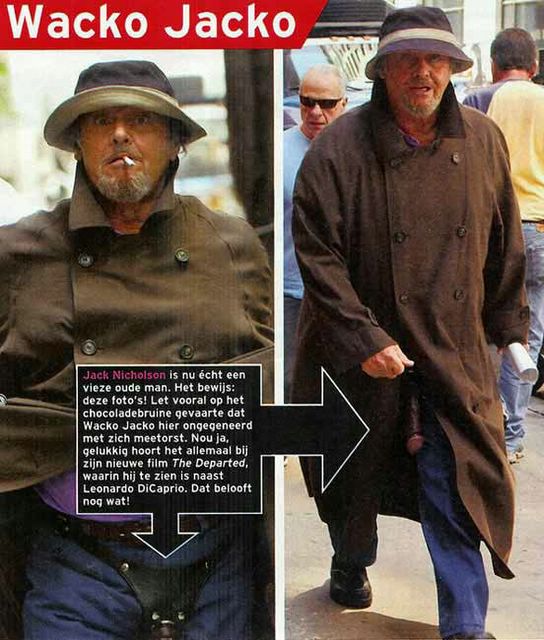
12. The Departed - This is Scorsese's remake of the fantastic Hong Kong film Infernal Affairs. Normally I won't condone remakes, but in this case, it's such a great premise, it almost begs to be told again. I think IA was fantastic, but there are a lot of different things you can do with the basic premise, and it sounds like Jack Nicholson is going insane on this project. I think this picture speaks for itself. Hopefully he's going to give the kind of performance that makes this something unique, different from the pre-existing film.

11. Miami Vice - Once again, a remake, but this time it's Michael Mann updating his own TV series, so again, it's taking a basic premise and doing something different. Mann is always good, but I wasn't totally excited about this project until I saw the trailer, which is very cool, and features some very cool looking club scenes. The high point of Mann's Collateral was the shootout in the nightclub. Plus, it's got Gong Li, of 2046 fame, it looks to be a really stylish action film, regardless of whether or not it's pastel t-shirt under that suit jacket.

10. V For Vendetta - This is a movie I'm a bit wary of, Alan Moore disowned it and initial script reviews were weak, but the reviews coming out from early screenings are all exuberant, citing it as not only a great film, but an important cultural event. Moore's book is one of my favorite graphic novels, and there's certainly the potential for a good film. It's true that it's even half as good as the book, it'll be a strong film, and this looks like it'll be the biggest stretch of Natalie Portman's career, hopefully bringing back some of the steel resolve she had in Leon, when she gave one of the best performances in any film ever.

9. Angel-A - Speaking of Leon, Luc Besson has his first new film in six year coming out. It was actually released in France last week, and will hopefully make it over here next year. It seems to be an action/comedy/romance, filmed in striking black and white. Besson's stuff is always visuallly interesting, and the plot seems to play to his strengths, his films always feature strong women in action, and the title character here will definitely fill that role. Watching the trailer, the film looks to have some of the spirit of Amelie, but a bit darker, and most notably, it's got some very, very strong images. If Besson can come close to the level of The Professional, we'll have a great film.

8Art School Confidential - This is Terry Zwigoff and Daniel Clowes' followup to one of my favorite films, Ghost World. I loved the stuff with Claire in art school in season three of Six Feet Under, the odd dynamic of simultaneously working together and yet being each other's competition, wanting to top other peoples' work. There's a ton of potential for the cold, sarcastic characterization seen in Ghost World in this environment, the stuff with Illeana Douglas would seem to be a preview. There's not that many movies actually about the creation of art, but this would seem to be one and I'm hoping it'll be a biting dark comedy.

7. Fast Food Nation - This is one of two Richard Linklater films coming out next year, and I'm hoping it'll be a return to greatness after the weakness that was this year's Bad News Bear. Nation will apparently be a big ensemble piece, and that's definitely one of Linklater's strengths. Dazed and Confused did Altmanesque better than Altman himself ever did, and this film will likely touch on a lot of the alienation that D&C had. This will also be Linklater's most political film yet, all of his movies are concerned with big issues, but he's never done an issue movie to the extent that this one is. I'm hoping that he'll be able to create really strong characters so this isn't just an intellectual exercise, like Traffic was, but rather it's a really difficult emotional experience.

6. Clerks 2 - This is another one I'm not sure about. Smith hasn't made a really strong film since Chasing Amy, but I'm hoping that a return to low budget filmmaking will help curb some of the badness that plagued his last two films. On the one hand, it's a bit ridiculous to make a sequel to Clerks, it would indicate the failure to come up with anything new and a bottoming out after his attempt to go mainstream. But at the same time, Before Sunset showed how powerful the ten years later sequel can be, and if Smith does something along the lines of that film, we could have a great movie here. The early buzz sounds pretty good, but I'm going to have to reserve judgment until I've seen the film.

5. Marie Antoinette - Sofia Coppola is one of the most exciting voices in American film right now, and I basically trust that whatever she makes will be great. Normally, I'm not a fan of period pieces, but watching the trailer for this, the characters feel very contemporary and real, in the same way that the people in Barry Lyndon did. The whole thing has a very Lyndon feel, with characters who crash against the absurditities of their society. It's an interesting cast, and I'm really confident that this will be a great movie, we shall see.

4. A Scanner Darkly - Another Linklater film, it's great to see one of my favorite filmmakers adapting a book by one of my favorite authors. As Linklater's speech in Waking Life shows, he's a big PKD fan, and this project is definitely suited to his philosophizing stoner sensibility. PKD wasn't about glossy futures, as seen in Minority Report or Paycheck, he was much more about dirty, gritty lives that are inherently tied to the 60s and 70s society he lived in. This film seems to embrace that style, even as he uses the sci-fi technology. Plus, if anyone's ready to played a burnt out detective with an identity crisis, it's Keanu.

3. The Science of Sleep - Gondry's music video work is some of the most astonishing filmmaking you'll ever see, and Eternal Sunshine is one of the best fusions of crazy dreamlike filmmaking with a really strong emotional throughline. Science of Sleep follows along the lines of the video for 'Everlong,' which chronicles a man's attempts to save his girlfriend as he moves through a world of dreams. Other than the weak anomaly that was Human Nature, everything that Gondry's done has been fantastic, and this sounds like his most personal project yet, seeing as how it's written and directed by him. Gondry's done so much good work in the past, I'll see pretty much anything he puts out.

2. INLAND EMPIRE - After a five year wait, we'll at last have a new Lynch film. This is another one that has some concerns, for one it's shot on digital at Lynch's house, and he's been filming on and off for two years. This would not seem to lead to a cohesive film, however MD had a similar on and off production and that worked well, so hopefully this will too. The other potential holdup is his quest for world peace, which may make him feel a bit guilty about chronicling depression, death and violence. However, I'm confident that Lynch the filmmaker will remain seperate from Lynch peace crusader, and hopefully we'll get a great film here. The man is on a roll with Lost Highway and MD, I'm really excited to see what he does next.

1. The Fountain - This is a movie that's been in the works forever, and hopefully will finally make it to theaters next year. Aronofsky's Requiem for a Dream was one of the most intense pieces of filmmaking I've ever seen, you don't walk out of that final montage unaffected. With this new film, Aronofsky goes off into three different time periods, with stories that connect across time and space. This seems like it might be the most mind blowing sci-fi film since 2001, the only film to approach the blend of sci-fi and metaphysical truth that makes Kubrick's film one of the best ever made. The Fountain seems like it will touch on practically all my favorite topics, metaphysics, large cast, multiple time storytelling, and groundbreaking filmmaking. I need to see this movie.

So, it's looking like a pretty good year. There's the chance we could have a Paul Thomas Anderson film as well, and a very remote chance that Wong Kar-Wai will finish The Lady From Shanghai. But even with just this, it's looking like a great year. Looking at my preview of 2005, I only had seven films and three of them didn't even come out, so it's understandable it was a weak year, but with 06, if even half these films hit, it'll be a great year for cinema.

Monday, December 26, 2005

Review Revue

With winter break in full swing, I'm busy working on my new film, and also watching a bunch of films. So, here's the latest stuff I've seen.

King Kong - There was a really great movie in there, but I feel like there was way too much fat to make it an enjoyable film experience. First, it took way too long to get to Kong, there were a ton of scenes that felt like stuff I'd usually see in a deleted scenes section and say "Yeah, I can see why they cut that."

I feel like the dinosaurs took away from the majesty of Kong. If we've already got a giant ape, why do we need dinosaurs, it just felt gratuitous and added nothing to the film's emotional center, which was Kong and Ann Darrow. The stuff with the dinosaurs was completely pointless, not cool enough to justify its existence, and certainly not relevant to the narrative.

I think Naomi Watts was phenomenal in this movie, they used a lot of very tight closeups on her and you could see everything that needed to be said in her face. And Kong too was amazing, totally convincing. The stuff with the two of them worked wonderfully, and the ending sequence was a real highlight. The sensation of height was conveyed so well that I was actually feeling uncomfortable, with the shot of Ann on the broken ladder as a particular highlight.

I would have liked to see about 45 minutes cut, to bring the focus on Kong and Darrow, without the distractions of the other people. The crew was never particularly developed, but there was a ton of time spent on them, and then they just disappeared once the movie went back to New York, meaning there was no payoff for all that time spent. It's like two seperate movies, one about King Kong, the other about random people fighting stuff.

Heavenly Creatures - Mixing it up, I checked out some earlier Peter Jackson. This was made in 1994, before he rose to fame with Lord of the Rings, and even though it's a much more conventional drama, you can see a lot of both the stylistic and narrative trends that would flower in his work on LotR. The film's about a very close relationship between two girls who together create a fantasy world. The thing that makes the film work is the depiction of the relationship, it sets up a really strong us vs. the world vibe, as the two girls become closer and closer. This was one of Kate Winslet's first roles and she's great, you can see why she would go on to become a star. Whenever she's on screen, the film has a lot of energy.

The main thing holding the film back from greatness is the sort of haphazard narrative progress. A whole bunch of events happen, but becuase things take place over such a long period of time, it's sometimes difficult to piece together exact cause and effect, meaning that a lot of events pop up out of nowhere. However, pretty much every issue is redeemed by the haunting ending, particularly the final titles which leave you with a really odd feeling. So, it's not Lord of the Rings, but it's a disciplined, character based emotional film, that does have a large scope, even though it's just about two people.

The Messenger: The Story of Joan of Arc - Continuing with the slightly insane girl theme, I also saw this film. Messenger was directed by Luc Besson, who directed Leon: The Professional, one of my absolute favorite films ever made. Messenger was not well received, but I really liked it. Cinematically, the story of Joan of Arc is most notably represented in Dreyer's Passion of Jeanne D'Arc, a really powerful silent film. However, that film focused on her trial, while Messenger takes a wider view, showing her rise to glory and ultimate fall.

The thing that made the film effective for me was the innovative filmmaking. There's a lot of dream moments, and the imagery in these is phenomenal, some cool time lapse and lush lighting. Towards the end of the film, Dustin Hoffman appears as some kind of supernatural being, who forces Joan to question all her beliefs. She believes she's doing God's will, but he basically poses the idea that she is actually insane, and has tried to see God where there is nothing but coincidence. Throughout the film, Joan is rather emphatic, believing herself to be God's servant and not considering an alternative. So, at the end, her self doubt is logical and interesting to watch.

The more conventional parts of the film are also interesting. It's got a lot of medieval action that recalls Braveheart or Lord of the Rings, but it's all well done and entertaining. Most importantly, the action is used as a way to develop Joan's character, we're more concerned with seeing the men get behind her than seeing her actually win. It's like the real battle is making them believe that they can win, if she does that, then the actual fight is easy. The film is a bit long, but the images are so strong that I was never bored. Besson shoots in a really dynamic, engaging way, so that the emotion of the visual moment is more important than the narrative. When every frame has interesting construction, there's always something to engage with.

Naked Lunch - This is David Cronenberg's take on the William Burroughs novel. I haven't read the novel, so I'm not sure if this is a strict adaptation, though I read that a lot of the film's events were actually taken from Burroughs' own life. Regardless of whether this works for a Burroughs fan, it's also got to work as a film too, and I feel like this movie runs into a lot of the issues that plagued Last Days, where you need to know a lot about the person going in. However, I feel like Last Days is enhanced by knowledge of Cobain, whereas this movie just doesn't make sense if you don't know about Burroughs.

Now, I love films with difficult, symbolic narratives, but the thing is, you need to have some kind of grounding. In Lynch's work, it's usually emotion. So, we might not be sure what's happening in the last episode of Twin Peaks, but we understand where the characters are emotionally, same thing in Mulholland Drive. However, here things just make no sense and you have no idea of where Bill's hallucinations begin and the real world ends. This means that it's difficult to engage with the movie. The unreality serves no purpose other than to just put forth a bunch of strange things. The film is so deliberately impenetrable that it's impossible to relate to the characters emotionally, and that means that we wind up just watching a bunhc of stuff happen, with little knowledge of what is real or unreal.

This wouldn't be such a problem, except the movie isn't particularly good looking. There's some wacky stuff, like the typewriter monsters, but on the whole, it's conventionally shot and designed. That means that you've basically got a standard movie, except with no logical narrative or characters. Basically, with a film, you've either got to have a good narrative, good visuals, good characters or a good emotional hook. With at least one of those, you'll have a good film, and when you've got two or three, you've got a great film. This has none of those characteristics.

This is definitely one of those be careful what you wish for movies, since I always said, why couldn't Lynch make a film that's all like Club Silencio, however without the narrative grounding, that scene would be meaningless, like this movie.

Days of Heaven - This is a film from Terence Malick, who's got his new movie, The New World, out this week. Days of Heaven was made in 1978, and has a lot of hallmarks of American cinema from the 70s, de-dramatized narrative, focus on individual visual moments over strict service to the narrative. I loved this movie, the first thing you notice is that it's absolutely gorgeous. Malick shoots the farm were events take place as a paradise on Earth, a beautiful field of endless wheat, where at first, it seems like there's no problems.

The central conflict of the film is underplayed, but is even more emotionally devestating for it. None of the characters ever really say what they feel, meaning that the emotions fester under the surface, and also means that we get some really strong visual storytelling. So, when we see the farmer looking at Bill and Abby from a distance, we know what he's feeling, the jealousy evident on his face. Abby is caught in a really difficult emotional place, because she loves both men, and if she were to choose one, it could mean losing them both once the deception is revealed.

As things come crashing down, we get more phenomenal images, the burning field at night, the locusts and ultimately the stark images of Bill and Abby on the run. The whole film is underscored by a voiceover from Linda, who speaks in a really odd accent. Her words give things a more epic feeling and unify things a bit. Like Heavenly Creatures, it's a film about things that are relatively small in big picture terms, but for these people, the things that occur are massive.

Friday, December 23, 2005

Nip/Tuck: The End of Year Three

Nip/Tuck is a show that always entertains, but rarely rises to the level of great television. It's a show that despite being for "mature audiences" is at times very immature. It's so concerned with shocking the audience that it frequently sacrifices narrative integrity. In theory a neo-nazi forcing someone to cut off a transgendered man's penis is pretty shocking, but in reality, it doesn't even come close to minor scenes on Six Feet Under, such as Ruth slapping Claire in the season premiere of year five. It's because the Six Feet Under shocks are rooted in our knowledge of the characters rather than societal taboos. So, Kit and Quentin having a semi-incestuous relationship barely registers, whereas Billy's awkward confession of love to Brenda at the end of year three is disturbing because it's happening to people we really care about.

I'd compare it to telling a story in real life. There are some stories that are hilarious and work just as anecdotes, regardless of whether you know the people. Then there's some stories that work in a specific circle, but just bomb when you tell it to strangers. It's because you inevitably care more about events that happen to people you know, and I feel like the Six Feet Under or Buffy characters are the equivalent of friends or family, whereas the people from Nip/Tuck are people you see occasionally, but don't know that well. So, they need this outrageous stuff to make up for the fact that you don't really care about the characters.

The only really strong emotional bond I care about on the show is between Christian and Kimber, and the scene with them in the hospital is heartbreaking because we see Christian completely open emotionally, getting rejected and hurt by Kimber. It's tough to watch, depriving you of the hero role we were hoping for Christian. Christian is always interesting, it's the McNamaras who frequently induce boredom or disinterest.

The episode as a whole played pretty well, the carver revelation wasn't particularly shocking, though the "He has no penis" thing was pretty funny, largely because the way she delivered the line sounded exactly like Bill Murray's delivery of "Yes it's true, this man has no dick" in Ghostbusters. I think the odd thing about the show is that it should in theory be about ultra glamourous, slick people, and that's when it works, but they constantly bring in these grotesque images, as if inducing guilt for enjoying the beautiful. Being a huge fan of Wong Kar-Wai, I'm partial to beautiful people in stylish environments suffering, and the constant nasty images get a bit annoying after a while.

The most striking thing about the episode for me was just how sadistic it was. This season, they've done a bunch of intercutting parallel scenes, advancing them simultaneously. It's something that has potential, but usually doesn't work. In the previous episode, it made no sense to disrupt the drama of Sean and Julia's discussion of the baby by intercutting it with the story of two people who had only just appeared in this episode. Here, parallels are presented between the ordeal that Matt goes through and the ordeal that Sean and Christian undergo. This makes narrative sense, the intercut climax was used brilliantly by Lucas in Empire and Jedi to build tension in each narrative line, however here the effect is something different.

So much time is spent on this graphic torture that it really crosses the line into emotional sadism towards the audience. There's definitely merit in making the audience uncomfortable, but these scenes dwell in those emotions for so long that I became numb to them and started to view it solely as a bizarre act of vengeance on the characters that they'd created. It was like they hated them so much, they wanted them to suffer this prolonged torture with no apparent narrative purpose.

Now, I'm a huge fan of both suffering characters and torture in films. Oldboy is one of my favorite movies, but there it was done with style, to build the narrative stakes, here it was so prolonged, it became an end in itself. In a film, you're not as attached to the characters, so the torture is more removed, but here they've been with these people for three years, it felt odd to put them through this awful ordeal. It's similar to the feeling I got from 'That's My Dog' in Six Feet Under, it's just this unnecessary punishment on the character.

So, the show enters season four with something of a return to the status quo, and once again leaves this season's year long guest stars off on their own, liberated from the chaos they wreaked on the lives of McNamara/Troy. This was definitely the show's weakest year, though this episode basically cleared the deck, and moved us into a new status quo for next year, or rather an old status quo, the same one the show had when it began. What's to come next year? Who knows, I'll watch, but it's not a situation where I really care. As long as Christian and Kimber give it a go, there'll be something worth watching.

Monday, December 19, 2005

Great Films

This Sunday's New York Times had an interesting article on the disappearance of stunningly bad movies, with the idea that the disappearance of colossal failures has also led to a decrease in the amount of truly great movies, leaving us with a bunch of good, but uninspiring movies. This is something I'd definitely agree with, especially coming off one of the weakest years in American cinema in a long time.

There were two American movies that I loved this year. I saw a lot of good movies, but only two really imprinted on my consciousness, and both were incredibly ambitious, frequently critically maligned films: Star Wars: Revenge of the Sith and Domino. Sith did get generally good reviews, but at the same time, the negative reviews were filled with a venom, sheer emotional expression that you couldn't find in a good review for a film like Good Night and Good Luck. Domino was really hated on, cited as a nadir for cinema. I really wanted to see a film that could provoke such strong reactions and I was not disappointed by the film, I think it's pushing the so called MTV style to its limits, creating a film were the narrative is secondary to the editing. It's practically an avant garde film, taking a fairly standard narrative and transforming it into this visual art object.

These were two films that did new things with the medium and had a startling level of ambition. Sith was about the destruction of the universe, and the complete breakdown of one man's life. It's a massive movie reaching so high that obviously some people are going to say it fails. It's not safe, and the basic problem with so many of the prestige movies coming out now is that they're safe, they distance themselves from the audience, showing us events, rather than really engaging the viewer in what's going on.

One of the big problems with a lot of the big movies coming out at the end of this year is that they're set in the past. I've got no problem with the occasional period film, but the fact that seven out of ten best picture nominees at the Golden Globes are set in the past is a bit excessive. There's a lot of issues with doing period films, most notably the fact that it's often difficult to emotionally engage with the people in these films. Frequently, they're so caught up with issues from that era that it becomes hard to relate with the characters as people, and in the case of films based on historical events, we already know everything that's going to happen. So, a film like Good Night and Good Luck is entertaining, but you're never really caught up in things emotionally because you already know what's going to happen.

The other major problem with that film is that there's too much emotional distance between the audience and the characters. The film looks good, but the filmmaking isn't used to draw the audience into the characters' minds. I would point to Irreversible as the ultimate example of the filmmaker's choices making the audience feel the events. The film wouldn't have the power that it does if the character was a stationary observer. The medium's power is in its ability to engulf the audience in events.

When I watch the films that I truly love, there's always a moment where I sit up and just smile because the film is so perfect there, you can't help but be overwhelmed. It's not even happy moments that do this, in 2046, the scene on the train where Faye stands on the train and titles show time passing, I was just in awe of the moment, the emotional impact overwhelming there. Similarly, in Domino, the end of the film when the casino is blowing up and Keira is firing two machine guns, it's so excessive and over the top, you can't help but smile. And watching the end of Revenge of the Sith, I had a huge smile on my face because the ending was perfect.

In a film like Good Night, Mystic River, countless others, they receive huge critical acclaim and awards, but there's no real excitement there. Clint Eastwood was hailed for making sturdy, classical films, implying that this new style is bad. The medium has changed a lot, I would argue for the better, but it's the fact that people make such crappy films that gives fast editing and moving camera a bad name. A film like Mystic River is good, but it doesn't even try to be great. To be great a movie needs more than just good performances and story, you need good filmmaking too. Now, good filmmaking need not be showy. Watching a film by Kim Ki-Duk, you can see a restrained style, but the way he frames shots gives them a huge amount of meaning and beauty. There's an emphasis on using the frame as a way of commenting on the characters, and you just don't get that in the weak prestige films.

And this gets back to the issue of making really bad movies. A film like Mystic River is safe because there's no personal investment, it started as a book, was turned into a screenplay by someone else and then directed by another person. Who's film is that? Can you really call it a Clint Eastwood film when all he did is direct it, and poorly I might add. Same for Milliion Dollar Baby, it's the product of so many people, there's no real emotional investment.

I've talked about this before, but why is it acceptable in films to make stories that aren't your own? It's absolutely ridiculous. Of the ten films nominated for best picture at the Golden Globes, only two aren't adapted from something else. There are two original screenplays, which is absolutely ridiculous. Why would you want to tell someone else's story? In some cases, it is worth doing because you such a passion for the material. Domino is a film where Tony Scott clearly loved the material and that's why he made it, and at the same time, his movie made great use of the medium, not jus telling the story, but truly making it into something that could only be done in film. But does anyone really care about Mrs. Henderson Presents, or was it just a case of someone looking at the demographics and thinking it had a chance of making money.

If you're making someone else's story, there's almost always a loss of quality because it's a second generation piece. You have to fit the story into the constraints of a film, rather than building a film that will use those constraints to its advantage. Look at a film like 2046, this is a movie where the creator is clearly totally emotionally invested in it, and that results in a passion and beauty far exceeding nearly any other film released this year.

Getting back to the first point, all great movies have a leap of faith moment, when they attempt something risky that could either take the film to a higher plane or end up getting laughed at. Magnolia is a film that's hugely ambitious and certainly had the potential to bomb horribly. There's a moment about two hours into the film where all the characters sing along to 'Wise Up,' an extremely risky move that could come off utterly ridiculous, but in the film, it completely works and winds up as one of the film's greatest moments. It's that creative risktaking that makes the film so powerful, and when you compare Magnolia to a film like Mystic River, Mystic River seems laughably pathetic. The epic grandeur, scope, filmmaking and emotion dwarf the "well told" story of Mystic River.

Saying that filmmakers should stick to the "classical" template that Eastwood was so praised for is absolutely absurd. The painting from the Renaissance might have been good, but is anyone saying that we should just try to replicate that style. No, things have moved on and the medium has evolved. So has film, and to try to lock it into a boring template is weak. To be honest, I too would rather see a film that aims for the stars and ends up falling short than something that just plays it safe. Sith may be more flawed than a lot of films, but it does so much good stuff, it makes up for it.

Even in my own work, Ricky Frost is pretty good storywise, but it's the filmmaking that hopefully makes it into a successful film. It's the use of music and strong images that make it more than just a teen angst story. We could have told it in the classical style, but by juxtaposing images, dialogue and music we made an engrossing film.

It may be tough to work within the system and produce an original work, but even if you have a standard story, use the filmmaking to make it extraordinary, like Domino did, or to push the emotions to an apocalyptic level, as Magnolia did. The whole world might have been at stake in Narnia, but that didn't engage me as much emotionally as did the lives of nine people in the Valley in Magnolia.

Saturday, December 17, 2005

Kim Ki-Duk's Bad Guy

Kim Ki-Duk has become one of my favorite directors recently, all of his films I've seen have been good, but it's with 3 Iron and Samaritan Girl that I've seen how great his stuff can be. Those are also two of his most recent films. Bad Guy is an earlier work, from 2001 (though it was just released here this year). It's not as emotionally potent as 3 Iron or Samaritan Girl, but it's still extremely powerful and clearly lays the roots for a lot of his later work, dealing with one of his favorite themes, prostitution.

One of the best things about Kim Ki-Duk's work is the way the films take you on a really sustained emotional journey. The journey that Sun-Hwa is similar to what the main character of Samaritan Girl goes through, but here it's even darker. By the end of the film, she's a completely different person than she was at the beginning, but unlike most movies, her arc isn't something moved forward by her own action, it's more that she's manipulated into a bad situation and just drifts along facing the ever increasing misdeeds done unto her, until at the end the person she was is basically dead.

I love the opening scenes, the casual disdain that Sun-Hwa has for Han-Ki. He clearly sees in her the woman he lost, but she sees only a brute, and his previous emotional trauma, as well as a desire to confront her disdain for him, is what prompts him to kiss her, an action that ultimately leads to a really degrading experience for Han-Ki.

Looking back, seeing Sun-Hwa is clearly emotionally traumatic for Han-Ki. At first you assume it's just the fact that she's a beautiful woman that would attract him, however, it was clearly about trying to recapture what he lost with the woman he once knew. So, being so utterly rejected, he decides to seek revenge. He manipulates the events with the wallet to get her to take it and put her into debt.

It's interesting that his plan for enslaving her relies on her own inherent darkness. Seeing her rip the page out of the book, he knows that she will take the wallet. Though she refuses her own boyfriend's advances, there's clearly a dark streak in her. I think she's caught between her own desire to act in the darkness and society's morals which tell her that that sort of behavior is unacceptable. I'm not saying that at the end of the film she gets what she deserves or wants, rather that in every person lurks a darkness, and Han-Ki preys on it to get what he wants.

Judging from this and Samaritan Girl, prositution in Korea is much more accepted than it is here. I'm not sure about the legality, but clearly it's not as outrageous as it would be here for a girl to go into prostitution. Still, for a college student, it's not the expected path. Watching Sun-Hwa gradually acclimate herself to the prositute life puts the viewer in an uneasy position. The way we've grown accustomed to narrative, she would somehow take the bad fate she's been given and turn it to her advantage, like rally the girls to change things, or fight to get out of the life.

When you first see Sun-Hwa looking so sad on display in the window, you feel bad for her, and the scene where she has her first client is almost painfullly awkward. I found myself wishing that she would just embrace the life she's been forced into, to try to please the clients and play the game like the other girls. Yet, when she finally does, it basically marks the death of the person she was. The critical turning point of the film is when she starts to actively solicit business and is told by a client that she really seemed to like it. In choosing to embrace this life, she has given up any chance of returning to what she was, and that's incredibly sad. The film, though the ending has a feeling of catharsis, is ultimately the story of someone who loses the chance to live a normal life because of the cruel actions of another person. It's an incredibly sad story when you step back and look at it.

Concurrently with all this, we've got the story of Han-Ki. I didn't find his stuff as interesting as Sun-Hwa, largely because a lot of stuff is unclear. Maybe I just missed it, but the whole thing with Dal-Su came out of nowhere. And also, he received so many life threatening injuries, it was a bit ridiculous how he kept coming back. Normally I try to just roll with what the movie is doing, but in this case, it got a bit too much by the fourth life threatening injury. Kim's films create such insular worlds that little things like that can really break the spell of the film.

However, his basic conflict is phenomenal. This is a guy who's clearly once been in love, but buried that and embraced his life as a low rent gangster pimp. He seeks revenge on Sun-hwa because she refuses to see him as a human being. Clearly, he's got some self loathing issues, most notably when he beats his friend. This could be seen as both an extension of his love for Sun-hwa, he doesn't want her sullied by this guy, as well as a desire to punish himself. With his other friend in prison, beating this guy leaves him free to move on.

The scees where Han-ki watches Sun-hwa through the two way mirror are absolutely phenomenal. The black void lighting, only broken by the embers of a burning cigarette, his face reflected in the mirror, watching Sun-Hwa's gradual degredation. I love the way Kim's frame create multiple planes of action. You can watch Han-Ki's face and the action with Sun-hwa simultaneously, in the same way that a number of scenes with Han and his crew are set so that we can see Sun and her crew soliciting customers in the background, two stories happening at once.

Over the course of the film, it's unclear how Sun feels about Sun. Clearly, he has some affection for her, and likely a lot of guilt about what he did to her. Yet, at the same time he sits watching her have sex with other men with little attempt to stop her or protect her. The one night they do spend together is chaste, with her on the floor next to him. There's the beautiful moment where he fixes her hook. It seems that he has little actual sexual desire himself, certainly not since the woman he loved killed herself.

The scene with Han and Sun on the beach is my favorite in the film. I'm assuming there's some sort of memory/dream crossing with reality, since we see the woman going into the water, yet Han makes no attempt to stop her, indicating this is something that's already happened. The music in that scene is phenomenal. Kim uses music sparingly, but he'll frequently use a song multiple times, lending it greater meaning within the context of the story, and his music choice is always impeccable. The scene here when Sun reaches for the glass is stunning because such a small action has so much significance. Sun is finally going to engage violence, seek revenge against the person who broke her, yet she is unable to go through with it. She finds herself held captive still.

The scene leads us to believe that we'll finally get the emotional payoff we've been waiting for all film, but it's quickly undermined and rather than any sort of resolution, Sun just gets carried along on her path. That's the way the whole film goes, there's no specific turning points, just a bunch of choices that eventually lead to Sun's change. It's a stunning physical transformation, the fresh faced girl from the beginning of the movie is completely worn down, with bags under her eyes, hidden only by garish makeup at the end.

That transformation is just one of the stunning visual elements. Kim moves the camera sparingly, choosing instead to create reallly strong still frames. As mentioned before, the stuff with the mirror is fantastic, as is the whole visual design of the street. I love the way the windows are constructed in such a way as to fully commodify the girls, they're on display to be leered at and bought by customers, who view them not as people but as commodities. The contrast between the showy neon streets and the drab bedroom is also effective. You never see the two environments interact, it's like the glamourous outfits and appearances of the outside are rendered moot when it comes time to do the act itself. I love how garish the wigs and color coordinated clothes she puts on are, the implication being that each night she dresses up as something else, designed solely to appeal men, and with each disguise she further loses touch with who she was to begin with.

The other strong visual motif was the pictures. They were used brilliantly when we see her face in one empty picture and a client's in the other. I also like the way it initially seems to be just a visual metaphor but then pays off in the end, giving us some information that completely changes the narrative. And finally, another standout scene is when Sun-Hwa breaks through the mirror to discover Han-Ki, very powerful visually.

The ending of the film is troubling. As I mentioned before, the stuff with the gang and the prison is a bit weak and distracts from the core relationship at the center of the film. Also, this is definitely a film with a few false endings, moments where you think it's over but comes back.

The difficult thing about the film is that the final message seems to be that Sun-Hwa has been irreprably damaged, and as a result, she must continue to be a prostitute. When she goes to the prison and yells at Han-Ki, it's not just the fact that he initially put her in this situation, and caused her a lot of pain, it's that he killed the person she was. This is the last moment of real emotional engagement we see, after this she essentially gives up and consigns herself to a life of prostitution.

When she's out on her own, she ends up having sex with the truck driver, and as a result, she's drawn back to Han-Ki. At first, I thought that they were going to have a relationship, run away from it all and be together, but we don't even get that. Instead, he sets her up as a travelling prostitute, working seaside communities, and though they are together, they're both still completely alone, Sun-Hwa is left to only imagine the life she could have had.

The film is very powerful, confronting the audience with dark events that refuse to give you easily resolution. You want Sun-Hwa to do something, to come alive, but she can't, she's been beaten by the life she's leading, and she can never be the person she used to be again. Han-Ki at first sees in her an innocence and longing for something better, but ultimately ends up bringing her down to his level instead of elevating her. Kim's stuff is always tough, but this may be the darkest yet. In The Isle, at least the two of them were together, and at the end of Samaritan Girl, she may have been through prostitution, but she was ultimately cleansed. This is no such salvation for Sun-Hwa.

The film contains all of Kim's favorite elements: prostitution, prison, water and graphic violence as emotional punctuation. I think he's one of the world's best filmmakers because, like David Lynch, his films aren't easy, there are enigmas, both narrative and moral to deal with and you leave his films needing to discuss and analyze them. They spur more thought rather than leaving everything cleanly tied up. That's why it's frequently in the analysis of the film that the depths are discovered, it's the second and third viewings where you can really enjoy the movie. And Kim is also a stunning visual composer. His frames are composed to tell a story, using visuals rather than words to convey narrative, the wordless emotional connections between people far more important than the vagaries of speech.

Thursday, December 15, 2005

X-Men 230-239

Another chunk of X-Men issues down, and at this point, I'm actually starting to get near the end of the Claremont run. Back in the 100s, it seemed like this run would never end, but now, forty issues away, the once vast expanse of issues now looks shockingly narrow. I've been reading this stuff since August, and it's odd to think that I won't have any more Claremont to read. Now, I could just keep going and read the non-Claremont stuff, but I really feel like the characters are so uniquely his that I have no desire to see what happens to them after he was tossed off the book. Plus, it's pricey and annoying to keep picking up these back issues, so this provides a good logical point to stop at.

Anyway, on to the book itself. This chunk of issues starts with further clarification of the X-Men's current status quo, based in Australia, but because of Gateway, they're able to go anywhere in the world. Having Gateway function as an all purpose transporter weakens the impact of the X-Men's isolation. With him, they're still able to go to the States and check in on the people they left there. The fact that the two four issue storylines in this chunk of issues take place off of Australia means that there's not too much significance to being based there. I suppose the idea was to give them a way to move around as a covert strike team, per their new mission statement in issue 229.

However, the fact that they're a covert strike team trying to hide their identities, yet still wear the exact same uniforms is rather nonsensical. I feel a tension between the demands of remaining the identifiable X-Men and exploring the potential of this new premise, and that tension is never satisfactorally resolved. Ultimately, the book feels basically the same, and only occasionally do they mention that they're a strike team again. Plus, the fact that Psylocke can wipe peoples' memories basically allows them to avoid any legitimate struggle in keeping their identity secret.

230 is largely designed to set up the new status quo, and to do a Christmas story. Christmas stories are usually cheesy, but this one works pretty well, largely because you don't even realize it's a Christmas thing until the end. It's not a great issue, but it certainly does what it sets out to do.

231 is a bit weaker, largely because it's primarily concerned with Ilyana and storylines that were presumably developing in New Mutants at the time. While I commend the attempt to keep strong continuity between the books, this story would probably be more at home in New Mutants. Even though it features Colossus, he's primarily there to react to what's up with Ilyana, rather than instigating things on his own.

The issue sets up the basic conundrum of how the X-Men can help the people they love if they can't even let them know they're alive, however, it undermines that conundrum by making Ilyana believe she had summoned a spirit version of Colossus. So, the entire dramatic point of the issue is rendered moot. This is another thing that Joss picked up from Claremont. Look at the episode 'Ted.' Rather than having Buffy have to deal with the fact that her desire to keep her parents together led to her accidentally killing her mother's boyfriend, they undermine the consequences by having him be a robot. So, the character goes through the emotional experience, but it feels like an emotional cheat because of what we find out later. That's what this issue feels like, an emotional cheat for Ilyana. However, there is some fun stuff in it, most notably Colossus' attempts to act llike a ghost, and I'd imagine that this sets up stuff that will come to a head in Inferno.

The next chunk of issues is concerned with the brood. The original brood storyline while a bit nonsensical set up almost all the issues from the brilliant Paul Smith era. This time, rather than aping Alien, Claremont does a riff on zombie movies, with the X-Men battling the alien among us. I don't think this storyline is particularly successful. It goes over the same territory as the previous story with the brood, i.e. is it ethical to kill them? And Havok goes through the same trauma that Storm did back then.

On the whole, the storyline is just a bunch of events without any really strong character relevance until the end. I did like in the last issue how Claremont upended the intolerant preacher cliche and instead had a preacher's faith rejuvenated through the intervention of the X-Men. There was a very cool moment where Wolverine erupts from under the stage and proceeds to kill a brood, along with a great cheesy line, something like "Ben Franklin said there's only two things certain in life...and this ain't taxes." Brilliant. The ideological conflict Wolverine and Storm have over killing is interesting, and one of the few dividers in their otherwise mutuallly respectful relationship.

The Genosha storyline follows next. Genosha has gone on from these humble beginnings to become a crucial part of X-mythology. They've seriously just been redoing Claremont's stuff for fifteen years now, even Claremont himself is. In this era, he's throwing out a bunch of incredible concepts each issue, that sense of constant invention is part of what makes the book such interesting reading. Anyway, the Genosha stuff has a mystery structure and it takes a while for things to really start up. Like the brood, this storyline is bogged down in a bit too much exposition. It takes a while to get to the real meat of things, though the payoff in the last issue is strong.

The most interesting stuff going on through all these issues is with Maddy Pryor. I think in every one of these reviews I've talked about how she's my favorite character, and that's definitely the case in this bunch of issues. Infuriated by Scott leaving her, Maddy apparently strikes a bargain with a demon to help her find her son. I really liked the dream sequence she has, where Scott takes her apart to rebuild Jean Grey. On a story level, it works great, but it's also a nice meta commentary on what's happened to the character. That's actually a big part of what's cool about the character, she had this storyline starting, but then editorial came along and brought back Jean Grey, abandoning her just like Scott does in the actual book. It's basically indefensible what he does, and if you separate editorial mandate from things, the character should really be punished for the awful choices he made. Luckily, this aspect of the character is finally addressed in Morrison's run, which takes the character in a really interesting direction.

Besides Maddy, the storyline is bit heavy handed with its mutant as slave allegory. The concepts are cool, but as played out, it's a bit too preachy, particularly in the father son conflict with the genegineer. The thing I do like is the ambiguity at the end. The X-Men may have won their battle, but they basically acknowledge that this place is not going to heal easy. It's deeply screwed up and a little victory can't heal it.

Across this chunk of issues, I noticed a lot more pointless captioning from Claremont. During the Paul Smith era, he seemed to check a lot of the exposition, but it's been coming back. I think part of it was editorial mandate, but do we really need to hear it mentioned in every issue that Wolverine has an adamantium skeleton. And too often he introduces the characters and their powers, you should be able to figure them out from what's going on in the action.

So, after a bit of drift, things come back on track with issue 239, the issue that marks the start of the Inferno crossover. I got the Inferno TPB a long time ago, like six or seven years, and read it then, but I don't remember much of it, and at the time I remember being very confused. So, it's still basically new to me. Inferno was apparently designed to be the crossover to end all crossovers, to wipe the slate clean, so things could move forward in the X books. With 239, we see the return of Mister Sinister, a cool looking villain who seems quite menacing. The issue is framed by Sinister playing with statues of the X-Men, lamenting the fact that now that they're dead he'll never have the chance to find these potential worthy opponents.

This issue marks a return to some of Claremont's greatest strengths, with a largely character and relationship based issue. Here, Storm finds out that Jean Grey is alive, prompting to rage at Wolverine who has now for a long time, but didn't tell anyone. I find it a bit ridiculous that they would never have heard about X-Factor and made the connection between that team and the original X-Men. However, it still makes for a good scene when Storm flies Wolverine into the sky and drops him down.

The best part of the issue is Madelyne Pryor and Havok. It makes a lot of sense for these two to come together, both were rejected by people they loved, and they each have a sense of inferiority, that they are the replacements for Scott and Jean rather than legitimate people in their own right. It's got so much twisted potential, particularly when these two meet up with Scott. He'll obviously be furious, but at the same time what right does he have to dictate what Madelyne does considering how he betrayed her. The writing when the two of them finally get together is really strong, both of them know what they're doing is wrong, but they do it anyway.

And on top of that there's some fun stuff with Dazzler and Longshot, who go out to a bar and generally have fun together. Claremont's strength is never in plot based storytelling. Anyone can string together a bunch of events, but he is at his best when he's creating character conflicts and letting them play out. I love the way that these basic relationship conflicts are amplified by the superpowers involved. It's the same thing with Buffy, using the superpowers to turn emotional conflict into earth threatening crisis. So, Madelyne's desire to get her son back doesn't just lead to her going slightly crazy, it turns her into a dark-powered being on a perilous quest for vengeance, a vengeance that will apparently culminate in Inferno.

Judging from the letter columns and promotional stuff in the books, Inferno was heavily hyped, so it would make sense that the previous issues sort of meander along, leading us there. However, if 239 is any indication, Inferno should bring the book back to Claremont's strengths. I'm excited to see how things turn out.

Monday, December 12, 2005

Work of Directors: The Top 21

Having now seen most of the stuff from the second Work of Directors series, I figured it was time to do a summary of my favorite videos from the seven DVDs that have been released so far. I love these discs, since they offer so much quality filmmaking in short doses, really exciting stylistic jumps in both editing and cinematography. So, here's a countdown of the top 21 videos.

21. Radiohead - 'Street Spirit' (Glazer): This video has the advantage of being for one of my favorite songs, a beautiful composition. The video features gorgeous black and white photography and a lot of interesting time lapse stuff. Even though there's cool split screen work, like with the throwing of water and one Thom jumping over a stick that the other Thom is waving, the strongest image is the extreme closeup on Thom Yorke's face. It's an elegaic video, fitting the song it was made for. Unfortunately, Jonathan Glazer's disc only had eight videos on it, this was the only one to make it on the list.


20. The White Stripes - 'Fell in Love with a Girl' (Gondry): This is the infamous lego video, which, like a lot of Gondry's stuff, is a stunning technical achievement. Everyone I've shown to says something to the effect of "That must have been very annoying to make," and that's probably true, but it's worth it. I love how you can see the lego base sometimes in the video, giving you more of a feel that this really is legos, not just a cool effect, because some of the stuff later in the video, like the faces walking away from each other, it's tough to believe it was really an individual bunch of blocks.


19. Johnny Cash - 'Hurt' (Romanek): This is considered by a lot of people to be the best music video of all time, or at least the most serious use of the form. It's a really powerful video, you can see how old and frail Johnny is, his hand shaking as he defiantly pours the cup of wine on the table. My favorite part is towards the end, when he cuts in clips of Jesus being nailed on the cross, the hammer echoing the heavy beats in the music. Considering how soon he died after the video, this feels like a perfect summation of Cash's life, and all the good and bad present therein. I haven't seen 'Walk the Line,' but I doubt anything in it is as powerful as this three minute video.


18. Aphex Twin - 'Come to Daddy' (Cunningham): Chris Cunningham's collaboration with Aphex Twin produced two of the videos on the list. This video is pretty disturbing, most notably the really odd midgets/children with the face of Richard James. The image of the monster coming out of the TV and yelling at the old lady is fantastic and the whole video has a post-apocalyptic disturbing intensity about it.


17. Chemical Brothers - 'Elektrobank' (Jonze): This is Jonze's gymnast video. It features a great performance from Sofia Coppola (who also puts in a really strong performance in Sednaoui's video 'Sometimes Salvation,' she's definitely one of the coolest people in existence today) as a gymnast. The video is pretty cool on the whole, despite some obvious doubling on the actual gymnastic sequences, however it's one moment of perfect music and visual cohesion. About 3/4s through the video, Coppola is in pain, fighting a leg injury and she pauses for a moment, before her face turns to steel and she goes right into a nasty tumbling routine as the song goes into this hard industrial breakdown, taking the song deeper than it had been before. The visual fits perfectly with the music, and this one moment makes the video a total success.


16. Audioslave - 'Cochise' (Romanek): This is another video that's sold on one big moment. The first minute or so is the band going up an elevator, all the while the music slowly building. They reach the singer who's already standing on top of the building and as they get their instruments the music explodes with a nasty guitar riff and the sky explodes with a massive fireworks display. After a minute of buildup, it's a phenomenal release and the rest of the video is propelled by this one stunning moment. The fireworks are all beautiful, but it's really that initial explosion that makes the video work. It's a great example of a director really using the song's properties to make the video great.


15. Bjork - 'All is Full of Love' (Cunningham): Bjork has done a lot of great videos, but I would consider this her best, a story of two robots in love. The most notable thing about the video is the stunning robots that Cunningham created, they look completely real, watching the making of you can see the CG enhancement, but in the video, it's completely believable. The way he used Bjork's face on the robot is stunning as well. The really impressive thing here is the fact that it's such a warm video, robots and Cunningham are both typically cold, but here, you really feel their love and the moment when they kiss causing a shower of sparks is a beautiful note to close the video on.


14. Mirwais - 'I Can't Wait' (Sednaoui): Stephane produces some of the most visually stunning stuff I've ever seen, particularly in his two collaborations with Mirwais. This video has a lot of subtext, in the way it shows all sorts of people 'phasing' out of Mirwais, his identity constantly in flux. I love the constantly changing identity, particularly in the head on shot of the body changing from person to person. It's a great song and the video contributes to its atmosphere with a lot of bizarre surreality.


13. Nine Inch Nails - 'Closer' (Romanek): Speaking of bizarre, this is a video that takes place in a really odd space, that's simultaneously past and future. It's full of so many crazy images, the monkey on a cross, the beating heart, the bald men in suits. It's got a freakshow from hell vibe, and a very dark cool. I love Trent's goggles and the image of his body rotating in the air. I love the editing on the final driving instrumental section Plus, the final image of Reznor swinging through the air, hitting the final notes of the song's melody on a mini-piano is fantastic.


12. Chemical Brothers - 'Let Forever Be' (Gondry): Gondry's work is frequently concerned with the difference between exciting dream/fantasy worlds and the mundane everyday. This video is the best depiction of that, starting with grainy digital video footage of a woman waking up and a bum on the street, then transforming into a gaudy, technicolor fantasy world where she seems to be the star of a Busby Berkley style old Hollywood musical. the transitions between the worlds are ingenious, the visuals here are phenomenal. I love the dancers with giant masks of the woman's head, or the kalidoscopic image of the bum on drums seen four times in one frame. It reads great as her daydreaming during a boring ordinary day, or just as a series of really odd images.


11. Oui Oui - 'Ma Maison' (Gondry): This is an early Gondry video and it's completely nuts. The band is dressed up as bugs, scurrying through underground tunnels, pollinating flowers, and fleeing from a giant foot out to stomp on them. I love the look of the bugs, with huge goggles and helmets. Despite being live action, the video feels like stop motion, and the stunning sets contribute to that feel of a world too odd to be real.


10. Daft Punk - 'Da Funk' (Jonze): This is more a short film set to music than a music video, what with its extensive dialogue, but it's still on the list because the song does a great job of accompanying the action. This is one of the rare videos where Jonze lets down his typical jokey, pop culture referencing style and instead engages in some weightier emotional material. It's a surreal video because the main character is a dog, but that's never commented on. He goes through the city and people disrespect him, but not because he's not human, rather because he's a newcomer to the city and seems unable to function in the demanding environment. The scenes with Beatrice and Charles are painfully awkward at first, then warm, and then tragic when he can't get on the bus. What is the meaning of the jukebox he can't let go of? It's nonsensical, and yet is perfectly representative of the issues that people carry around. He's trying to turn down or let go of that which is holding him back, and yet he just can't, he has to keep carrying it around instead of moving forward.


9. Aphex Twin - 'Windowlicker' (Cunningham): This video is a rare example of something that's both incredibly disturbing and rather funny. The video is a parody of rap videos, starting with the long opening skit featuring two wannabe gangsters using the words "nigga" and "bitch" in every sentence. They encounter two women, but are quickly bumped away by an absurdly long limousine, inside of which sits a dapper Richard James. From there, the video proper begins and it is disturbing. Cunningham draws attention to the depiction of women in these videos by doing a typical booty video, only putting Richard James' face on the women, so their bodies are the same, but their faces are disturbing. This disconnect is really odd to experience. If you thought James was scary on a bunch of midgets, check out this video for something even more disturbing. The real James does some funny tap dance work, and things amp up to him popping the cork on a bottle of champagne and spraying it on the women, an action that may possibly have a double meaning. The video seems to take place in an odd alterna-world, and that's one of its greatest advantages. It's like nothing else I've ever seen and though it's definitely disturbing, once you get past the surface, it's also hilarious in its excess.


8. Kylie Minogue - 'Come into My World' (Gondry): This video is a technical marvel. We start with Kylie taking a walk around her neighborhood, the camera rotating around following her until she returns to where she started and another Kylie walks out of the building. Watching things build to the finale where there's not only four Kylies, but also four of everyone else in the town is amazing, and making things even more stunning is the fact that there's no cuts in the video. It's a dazzling technical achievement and a great example of a video that starts out small, but continually ups the stakes. It's also great for repeat viewing so you can notice the subtle interactions between the different Kylies. The effects are totally seamless and I'm still at a loss for how this was done. And on top of all that, it fits the song perfectly, both lyrically (you're entering another world), and also structurally, with each of the cycles the length of one verse of the song.


7. Cibo Matto - 'Sugar Water' (Gondry): This is the rare music video that requires multiple viewings to really understand what's going on. What at first appears to be a simple split screen two stories set up soon crosses over, bending time and character interactions, with simultaneous forward and reverse action. I love the way Gondry incorporates the song title into the video, first with the sugar/water shower visual pun and also with the writing on the window. More importantly, there's the stunning way the two stories interact and comment on each other, and eventually cross over. Things from the start of the video pay off at the end and it takes a bunch of viewings to really understand the depth of just how tied these two pieces are. And this is another one with essentially no cuts.


6. Beastie Boys - 'Sabotage' (Jonze): This video was actually the whole reason I got the first batch of Director's Label DVDs. I loved it when I first saw it and I still do. It's a fantastically fun video. Clearly it was very enjoyable to make and that joy is conveyed to the viewer when watching it. The costumes are great, I love the 70s vibe. The best moment here is when the body falls off the bridge at a high point in the music, and also the one underwater shot is very cool. The low budget, homemade feel adds to the charm of the video, and the characters' similarity to Division X from The Invisibles doesn't hurt either.


5. U2 - 'Discotheque' (Sednaoui): I'm probably a bit biased because this is one of my favorite songs, but I'd be the first to admit that most U2 videos are pretty weak. However, this one is amazing. It's set inside a disco ball, which means there's a whole bunch of strange colors. The video uses a lot of camera moves where the camera seems to be in a ball that Bono is batting around. The handheld stuff is great, really conveying the feel of the music. That's the best thing about the video, more than any of the individual images, it's the way that the editing seems to mirror exactly the music it's set against. There's the quick zooms for the guitar parts, the long shots for the sustained slow sections and quicks cuts for the "Boom" section. Now, every music video does this to some extent, but very few succeed in creating visual music like this video does, and that's not to say that it's all edting. The images of Larry with the disco ball and Bono and people time lapsed together are both fantastic. Even the Village People homage at the end works, despite the band's apparent lack of enthusiasm for it. Fantastic stuff.


4. Fiona Apple - 'Criminal' (Romanek): This is an odd video, with a lot of subtext to analyze. The whole video has a very dirty, 70s porn feel, with the wood panelled basement and seemingly drugged out malaise of the main characters. However, the fact that Apple looks very young makes the whole thing feel like underground, illegal porn that shouldn't be getting made, and on top of that, the way the video is filmed is to maximize the photo-voyeurism, be it with Apple's red eye in the first shot, or the mechanical pans that give this the appearance of security camera footage. In both the lyrics and the visual content, it's unclear whether Apple is in control of all that's happening, or if she's being taken advantage of. Who is the criminal here? The way the video is shot makes it feel like the viewer is, like we're being privy to something we shouldn't see. I guess the video ultimately is about the contradictions in female sexuality, how it is simultaneously empowering and also something that can lead to subjugation. Trapped in the car, she's helpless, but in the bathtub, she's taking joy in the power she has. A really bold, challenging video.


3. Mirwais - 'Disco Science' (Sednaoui): This is another crazy video that fits really well with the song. I love the heat energy effect that's on Mirwais as the video begins, pulsing to the song's beat. Mirwais as samurai fighting geishas who fire lasers from their nipples is as weird as it sounds, I love the void they're fighting in. Mirwais' acting here is actually really strong, particularly his befuddled expression as the women work on him, and trap him in the cage thing. The high point of the video is the end where Mirwais and the women are engaged in an orgy, covered in liquid which pulses, changing colors, turning them into an indiscriminate mass of heat energy. It reminds me a lot of the 'strip off' scene with Edith in volume three of The Invisibles. This is Sednaoui's best use of the geisha motif, and like Criminal, it's got a dirty 70s porn feeling, which works great for the song, which definitely feels porn like as well. The cutting and camera moves draw out what's implicit in the song, creating really strong visual rhythm to accompany the stunning visuals.


2. Jay-Z - '99 Problems' (Romanek): This video is the most successful use of cutting to mimic music I've ever seen in a music video. The song's heavy beat serves as the perfect accompaniment for Romanek's gorgeous black and white photography. The scenes that he shoots are all aesthetically interesting, be it Jay-Z walking on a bridge or Rick Rubin in a record store, and within this video we even get a little short story about the time Jay was stopped by the cops. Things start to get really interesting during a musical breakdown accompanied by the performance of a dance troupe, which is synched perfectly to the beat, both their motions and the cutting. I admire the video for showing something closer to real urban life than the fantasy of most rap videos. There's still most the same ingredients, scantily clad women, rapper performing, but it's presented alongside images of homelessness and prison life, creating an interesting juxtaposition. The best cutting I've ever seen in a video is at the end of this one, as everything builds to a climax. Jay performing in a cramped club is intercut with dogs fighting, intercut with a church choir, Rick Rubin and Jay getting shot out on the street. The camera movement combined with the editing creates this incredible sense of motion, echoing exactly the feeling the song has at that moment. I particularly love the intensity of the visuals here, it's extremely powerful filmmaking.


1. Daft Punk - 'Around the World' (Gondry): This video is the best video on here because it is the most adept at creating visual music. Daft Punk's songs are notable for the way they layer different instruments on top of each other, adding and subtracting to create the song. So, Gondry echoes this in the visual composition, having a whole bunch of oddly clad dancers stand for each of the different instrumental sections. So, a bunch of people with fake plastic heads going up and down the stairs represent an ascending and descending bass line, while slow moving astronauts represent the drawn out vocodered vocal. So, you visually get to watch the song build up and see hwo all the different parts interact, which is stunning when everything finally comes together. By the end, when all the characters are dancing together it's visually stunning, a tableau worthy of Busby Berkley. Besides their signifiance to the music, all the characters are dressed really cool. Gondry's costumes are a nice mix of kitsch and style. This is truly a music video, a perfect fusion of visual approach and song.

Sunday, December 11, 2005

Lost (2x01-2x09)

I watched all of the first season of Lost, and though I enjoyed it enough to watch every week, I had a lot of issues with the series, and the constant critical acclaim heaped on such a deeply flawed show grated on me. I didn't watch the second season because I just didn't think the first was good enough to justify the viewing However, having a bit of downtime, I decided to catch up on the second season and see what had happened so far, and if the show was able to truly live up to its reputation. In short, the answer is no, but it is better than year one.

The first scene of the second season was probably the best scene in the whole series. We're down in an odd bunker-type place and all of a sudden The Mamas and the Papas' 'Make Your Own Kind of Music' starts playing and we see a guy going about his daily routine. Great music choice and just a really surreal way to open the season.

The first three episodes of the season are all pretty good, revolving around the opening of the hatch and the discovery of this compound. There's some nice shifting of chronology, building up the tension around the showdown between Jack and Locke for three episodes. This is the kind of thing that probably plays better watching it all in one go, and could seem annoying spread out over multiple episodes. Down in the hatch, they discover a whole bunch of strange stuff, my favorite of which is the button and Dharma Initiative film. The button raises a lot of philosophical issues. I'm sure eventually we'll see what happens when they don't push the button, and already Michael has potentially screwed things up by reprogramming the computer.

The best thing in the entire series is the Dharma Initiative film. Even though I would have liked to see them spring for real 16mm film instead of just doing a filter in post, it's still very cool and raises a lot of questions about what the island is and what this whole Dharma Initiative entails. I always enjoy 'black science,' experiments taken too far, exploring the limits of peoples' mental endurance, and I liked the reference to BF Skinner, of the infamous Stanford Prison Experiment. So, there's a lot of potential with that.

Unfortunately, there's still a fundamental flaw in the show, and that's its structure. With over 15 main characters, it makes absolutely no sense to spend half the episodes on flashbacks. You may say that they need to spend time on the flashbacks because otherwise they're going to run out of stories to do on the island, however that's pretty ridiculous. If you run out of stories on the island, end the show, or have them get rescued and then you can do all the land-based drama you want. However, at this point, the flashbacks are just a waste of time.

But it's not just the screentime that bothers me, the flashbacks are symptomatic of the show's whole approach to narrative and characterization. A longform narrative, no matter how well planned, is something that has to grow and evolve over the course of its run, and that growth is usually guided by how the characters change as a result of the events they experience. However, rather than choosing to develop the characters through the events they experience, the producers have chosen to do so through these flashbacks, revealing what their lives were like before they got to the island.

This choice is quite idiotic. The first flashbacks episodes for everyone were pretty interesting, but at this point, how many times can we watch a series of awful events happen to characters in the past. How many more bad things are there left for Locke or Jack to go through at this point? But more importantly, in theory, the whole point of the show is to demonstrate how these people's lives change as a result of their experience on the island. For most of these people, whatever bad stuff happened to them in the past should pale in comparison to the fact that they're stranded on an island!

This is symptomatic of two major problems with the series. One is that the island is just too comfortable. Other than the stuff with the Tailaways, there's no real sense of danger or any real sense of deprivation. Everyone has good looking clothes, plenty of food and generally just seems to spend their days hanging around. So, it's like any other TV show. Considering how little this crash seems to have affected their lives, the show might as well be set in an apartment building. Consider finding the hatch. Yes, it's a major thing in terms of fighting this guy and the button and stuff, but other than the one scene with Kate and the candy bar, there's been very little dwelling on the creature comforts it provides. People should be ecstatic at finding the record player, considering they never thought they'd hear another piece of music in their lives. Obviously, this could be overdone, but I think it's worth doing because it's something that only this show could do.

Also, maybe they're saving it for future seasons, but I want things to get a little bit more Lord of the Flies. They're so caught up in their own plots, why not have a food shortage on the island, creating serious question about the viability of supporting more than forty people. This would turn everyone against each other and put the leaders in an uncomfortable position, something that would lead to a lot of dramatic intrigue. But even without going that extreme, let's show a bit of strain for these people, if they just wanted to do a show set on the beach, you've got plenty of it in California.

The other big problem demonstrated by the flashbacks is the fact that the show approaches narrative and character development like a puzzle. Everything is a question, "What's up with the hatch," "Why is Locke so mysterious," and the answers lie somewhere in the past. This is the sort of thing that works well for a film, where you can build a narrative around a central question, resolve it and leave. However, in TV, you end up with a lot of teasing, and a sort of dance with the audience of trying to keep secrets while still holding their attention, and ultimately this dance always falls apart.

A much sounder way to build a series is to allow it to get push forward by character development. Once again, I've got to say, they're on a goddamn island, shouldn't this be changing their lives massively. Yet, there's very little strong character development, pretty much everyone is just the way they were at the beginning of the show, with some of the edge shaved off, as is typical of characters on a longform series. Everyone moves a bit more towards a bland, likable center. Nobody has been heavily altered by their island experience, and that's because the producers are obsessed with showing us where these people have been, and if you're constantly focusing on how someone became who they are today, you're going to forgot about changing them into someone different tomorrow.

The nadir of the season is Shanon's death. One of the major issues never really discussed in the show is sex on the island. At this point, people are probably realizing they're not leaving, and as far as we know, it's been forty lonely days for most everyone on the island. Yet, this is never mentioned, nor are the practicalities of birth control, and such. In six, sex is finally had, between Shanon and Sayid. I believe they got together around episode 18 of last season. Shanon appeared in two episodes before six, and had, I believe, one scene with Sayid. So, this was clearly a deep, challenging relationship. This is the sort of thing where the time spent on flashbacks could be better used showing us some of what's up with Shanon and Sayid, rather than only going to them when something bad happens and expecting us to care.

Joss Whedon frequently used the start relationship, then die motif. However, he usually earned it. When Tara was killed, it was devestating. However, the death of Shanon is just sort of there. Despite the best efforts of that episode to make us care for her, it's not enough. The whole point of making a TV show is long term development, you can't take a stereotype, show some bad stuff happen to her and expect us to be sad when she dies. Pulling a Joss only works if you've earned it through character development. Lost did not earn it in this case.

Enough negativity however, it's clear that this is a deeply, deeply flawed show. Yet, there's still a lot of good stuff going on. I really enjoyed the B plot with Sawyer, Michael and Jin journeying back to the camp. Jin is really interesting, the language barrier makes him inherently fun to watch and Sawyer is the closest thing this show has to a Spike. Mr. Eko is excellent as well, I particularly enjoyed the stuff with him and Locke once they make it back to the camp. Also, episode 7, with the tailaways, was fantastic. I loved the end, which showed how all the stuff we'd already seen fit together in the bigger the picture.

The show falls into a catergory I've mentioned before, deeply flawed, but inherently watchable. The show goes down easy, even as it's constantly frustrating me. I think that's because it has so much potential to be great and yet it never quite makes it. Yet, they always give you just enough to string you along. And even watching it in one chunk, it's obvious that the show moves at a glacial pace. Nothing much happens for episodes on end, and when you don't bother with character development, that's actually a problem.

Thursday, December 08, 2005

Watchmen: The Perfect Diamond of Comics

A while back I did a piece on the Top Ten Works that Changed My Life and Watchmen came in at number three. If you check out that article, you can hear the story about what happened when I first read the book and a bit on it, but having just completed a reread, it's time to go a bit more in depth into what makes this book one of the most astonishing pieces of fiction ever produced.

If you haven't read Watchmen, go out, get the book, then come back and read this article. It's one of the best works of fiction ever made and absoultely revolutionized comics. But twenty years later, that revolution is accepted fact and we're left with the book itself, which definitely holds up. Anyway, spoilers from here on out.

The first thing that's noticable when reading Watchmen is its structure. Moore's work always uses the medium in different, interesting ways, frequently by placing limits on himself. In this case, the limit is the nine panel grid, the fact that every page in the entire book is based around a nine panel, three by three structure. It's the same thing that Moore used in From Hell, and it's clearly a way to create unique rhythms, as well as being flexible enough to support nearly anything he'd want to do. The sheer density of the text means that every splash page, or even a three panel spread makes a big impact. When you reach issue twelve and see the five full pages devoted to showing the devestation in Manhattan, it's overwhelming because it's the first time the book has broken out of this grid structure and given us a full view of events.

Within this structure we get a very disciplined series of juxtapositions of image and text. Watchmen is a work that could only be made in the medium of comics. Sure, you could tell the story in a film, but to fully experience Watchmen, you need to experience the way that Moore effortlessly weaves together multiple plotlines, often layering three or four different lines of narrative within a single panel. While at times this can be almost overwhelming, as in the case of the pirate comic scenes, which seem to be designed almost entirely tos how off Moore's skill at integrating these different narratives. However, on the whole it works wonderfully and really makes you feel like everyone else in comics isn't even trying. There's so much symbolism and double meaning in every moment of the book it's humbling. Gibbons art also deserves a lot of credit, for the way he is able to build an entire world on the page.

One of the greatest things that Moore and Gibbons do here is to create a fully realized world. You get the sense that every person on the street is a character, with something going on in their life, and through the supplementary materials and ads saturating the streets, you get an idea of the society in which the characters live. There's no moment where the entire alternate history is laid out, but over the course of the book, you can piece together all the events that occurred to bring things from where our world was in 1940 to their world in 1985. This is one of those rare fictional worlds that feels entirely credible and entirely right. It doesn't even seem like Moore made creative choices, it's just that this is the way things happen and he only recorded the real events. Obviously a ton of effort went into the book, but you never get the sense of Moore struggling to create this world, it's like it was there for him to find.

In terms of the story, I think there's a tendency for a lot of people to view Watchmen as more a marvel of construction than as an emotional journey. Marveling at the way the book is put together, it's easy to distance yourself from the events, but I think it all works together to create a really powerful story that touches on a ton of very important issues.

Watchmen was created as a deconstruction of superhero archetypes. Much like Moore's Miracleman, which sought to explore the existence of a real Superman, this book decides to explore what would happen if superheroes were real and does so in a way that I think is very compelling. I would argue this isn't solely a deconstruction of superhero archetypes, but actually functions as the ultimate superhero story. Moore famously remarked that no more superhero comics would be needed after this and that's true not because he's razed the genre to the ground, rather it's because he so brilliantly captured everything that makes the superhero comic flawed and great that everything else just pales in comparison.

He attacks a lot of genre conventions, reconfiguring the two biggest superheroes, Superman and Batman. Superman here is reconfigured as a true alien being, someone who just doesn't care about humans because they're so insignificant. In terms of addressing the realities of a Superman-like being, I think Miracleman: Olympus is a lot more interesting, but that's largely because Dr. Manhattan transcends being a Superman archetype and becomes a really interesting character on his own.

Here, the character of Batman is split in two, each representing a different part of his psyche. Dan is the rich bachelor who enjoys creating toys and generally views the whole superhero thing as essentially a suspended adolescence. There's the notable fact that he's completely reliant on the costume for confidence, without it, he is impotent. Then, we've got Rorshach who represents the darker side of the dark knight. Rorshach is a vigilante who goes after criminals supposedly in the service of justice, but primarily because it makes him feel good. He too is only alive when he's wearing the mask. Rorshach is essentially Batman taken to his darkest extreme.

But besides just riffing on these archetypes, the characters have a lot of other layers. The most popular character to come out of the book was Rorshach, who takes the vigilante style justice of a character like The Punisher to an extreme. He's very much from the 'Death Wish' school of justice, viewing the city as a corrupted sewer of moral decay that he must clean up. Issue 6, in which Rorshach reveals his past to psychiatrist Malcolm Long is one of my favorites in the series. I love the way that Kovacs builds Rorshach into an entirely seperate entity in his mind. The mask, and the symbolism it contains truly changes his perception of himself. Clearly, Kovacs has a lot of issues with his childhood, self loathing for his mother and all she represented. Rorshach is essentially an ultra-conservative character, for whom his prostitute mother is the nadir of morality. This conception of things was likely fueled by the teasing he took as a result of his mother's profession. Looking at the flashback where he's teased, we can see an innocent little kid changed into the violent person who would one day become Rorshach.

So, disdaining his mother, young Kovacs builds up his father as a fantasy figure of everything he wants to be, an aid to the government, fighting for justice and against communism. Looking at the supplementary material in issue 6, you get a sense of just how tragic his life is, with the way that Moore stresses how he's a "bright kid," and he clearly has a lot of potential. It's just that he's scarred and never finds someone he can really emotionally connect with. His bad experiences early on have discouraged him from attempting to have any form of emotional connection with anyone. When he gets older, he sees vigilantism as the way to follow in the footsteps of this constructed father image that he created. And as part of this process, he constructs an identity break at that moment, leaving Kovacs behind and becoming Rorshach.

By doing this, he is essentially erasing his past, a major source of shame for him. So, Rorshach can exist free of the emotional shame and trauma that handicapped Kovacs. When he goes to reclaim his costume and reveals to his landlady's children that she is a prostitute, he is reminded of who he was and is clearly uncomfortable, for the only time in the book, a bit guilty. However, most of the time, Kovacs lives in this Rorshach persona.

Because he's such a tough, single minded character, the few times we do see him express himself emotionally are very powerful. The exchange in Chapter X, where Rorshach tells Dan he's a good friend is one of my favorite moments in the whole book, and the final scene sees Rorshach at his most human. Even though he frequently does bad things, I still have a lot of empathy for the character and the stand he takes at the end.

There's a lot of different ways to read the taking off of the mask before he's killed. On the one hand, you could argue that it's Kovacs giving up the Rorshach persona and returning to his human self in his final moments. I think this is just part of it, by taking off the mask, he is allowing Kovacs to be killed, but not Rorshach. Rorshach is more important as a symbol, and as we see later with the journal, it's clear that the symbol lives on, even if the man does not.

Addressing the moral question of the end of the book, the events of 9/11 reaffirmed the feeling I had on the first read. I think what Rorshach did, even though it may cause those deaths to be in vain, is the right thing. The peace that Veidt created would not last forever, much like our own period of national togetherness was not very long after 9/11, and I know that if I someone within our country engineered those attacks, I would want to know.

A lot of this is due to Moore's brilliant characterization of all the local people in the area. Even though they only appear briefly, on the periphery of the story, you really get a sense of who these people are and what their lives are like. This all culminates in issue 11, where we see the mini arcs resolve themselves. Malcolm, seemingly introduced just as a device to reveal Rorshach's backstory, remains a fully realized character and chooses his duty as a human being over what would be most comfortable for his wife. He does not see helping people as an option, it is something he must do, he is willing to sacrifice his own happiness to help others. The small acts of kindness here are what are so striking. The whole book we've seen the boy and the newsvendor sitting next to each other, barely speaking, but here they strike up a conversation and forge a connection, and when the attack comes, the older Bernard does what he can to shelter the younger, an incredibly powerful series of panels.

It's the fact that these people are so well developed that makes Veidt's actions very troubling. We've all seen disaster movies where millions of people die, and there's usually some rote attempt at characterization, but here, we've been living with these people for a long time, we understand them, and to watch them suffer for Veidt's peace is unbearable. Thinking about what they went through, and the lie they died for, I have to support Rorshach's conviction to go back to Manhattan and expose the truth.

However, that is the sort of character he is, uncompromising. Dan and Laurie aren't so committed to justice, they fall into superheroics for different reasons. In Dan's case, it seems to be an idolization of the previous heroes. He saw their fantastic exploits and decided to go into it for himself. Like Rorshach, he seems more alive, and liberated, when wearing the costume. However, because he's a more stable, rational person, he does not go against the Keene Act and continue adventuring. He's more like a retired athlete, reflecting back on the glory of his past exploits, while not doing much of anything in the present.

As is alluded to at numerous times in the text, there's clearly a fetishistic aspect to the superhero wear, and as chapter VII shows, the connection between his youth and vitality, and the costume is more than just mental. For Dan, it's almost like the costume liberates him to be the person he actually wants to be. It's only after putting on the costume and going out and saving people that he can have sex with Laurie. It's a rebirth essentially. I really enjoy that thematic exploration, it's echoed in Batman Returns' examination of the impotent civilian characters versus the hyper-sexual costumed heroes. I feel like Batman Returns captures more of the issues that Watchmen discusses than any other superhero film to date.

For Dan, it's so much about the gadgets and toys that he's put into an uncomfortable position when the fate of the world is at stake. Much like Hollis, he finds himself rendered irrelevant next to the plans and skills of Adrian or Jon. Rorshach is able to compete at their level because he's so committed to what he's doing, however Dan has always been a bit more ambivalent and self conscious, so he finds himself deferring to Adrian's will and making a moral compromise at the end of the book. It may have been the right thing to do, but it's clear that Dan is not a 'superhero,' he is merely an adventurer, who seems insignificant when the fate of the world is at stake.

Laurie is also ambivalent about her place in the superhero world, but that's primarily because she never wanted to be there to begin with. She is pushed into action by her mother, and never really takes to the life. I think the reason she re-embraces adventuring during her time with Dan is that it's a chance to be free and unpredictable. After the highly structured life with Jon at the military base, the opportunity to do what she wants and be free is refreshing. So, she doesn't care about her safety, it's more about being alive in the moment.

One of my favorite issues is IX, where Laurie tracks back through her past. I love the way Moore gradually builds up the backstories, this issue paying off a lot of existing threads and revealing to Laurie, and to us, the great secret of her existence. Looking at Laurie and Blake next to each other, there's clearly a resemblence. It's interesting that at the end of the book, Laurie hints that her new costume will be based on her father's look, rather than her mother's. So, she has basically reconciled her identity and is now claiming it for her own. By being with Dan, she is accepting the fact that she cannot escape adventuring.

I've got an essay I did for my class on time that goes into Dr. Manhattan, so there's no need to cover his part of the story here. But, he's critical to the book and has some really interesting stuff to say about the place of the superhuman within humanity.

I would consider Watchmen one of the three essential superhero works, along with Moore's Miracleman and Morrison's Flex Mentallo. Watchmen deconstructs the archetypes and plays them out on the large scale they always demanded. It one ups Miracleman by creating an entire universe of heroes, rather than just the one, and by further exploring the logical extensions of superhero mythology. Though Moore has done a number of other phenomenal books, I would still consider Watchmen his masterpiece, an unparalleled combination of narrative and form.