Showing posts with label Quentin Tarantino. Show all posts

Sunday, January 03, 2010

Best of 2009: Film

Here’s the last of the best of lists. Just a quick note, I haven’t been able to see all the films I’d like to see, here’s some of the key gaps in my viewing: Antichrist, Bad Lieutenant: Port of Call: New Orelans, A Single Man and a couple that didn’t make it over here, but will likely be part of next year’s list are Enter the Void and Rebuild of Evangelion 2.0.

10. Observe and Report - A dark slacker comedy riff on Taxi Driver, Observe and Report is a great journey into one ordinary man’s mad world. Seth Rogen does his most intense work yet, as a local flasher becomes the bane of his delusional existence. Considering the prominence of Rogen in Apatow’s work, this film is a great subversion of the lifestyle celebrated by countless slacker comedies. Not every slacker has a heart of gold, some are trapped in insanity, and this film conveys that in a really dynamic way. Plus, it’s got a great, fearless supporting performance from Anna Faris. Definitely an underrated film.

9. Up in the Air - Clooney is one of the last movie stars left in Hollywood. Like classic stars, think Gable or Grant, every character he plays exist somewhere within the spectrum of the core George Clooney persona. Up in the Air works as an examination of someone who thinks he has his life totally under control, think he has everything he wants, and realizes that maybe he doesn’t, and has to deal with that revelation. The film has some major flaws for me, notably a slightly off key tone in the Jason Bateman scenes, and overuse of voiceover, particularly at the beginning, but Clooney and Vera Farmiga are incredible together, and everything with them works great. The trip to Miami is one of the most fun sequences in any film this year, and I particularly love the way so much of what we expect is subverted by the film’s ending. This is a smart, satisfying character study, and a great exploration of one particular aspect of the Clooney character.

8. Funny People - This film carried the advance hype of being Apatow’s turn to drama, and in the end, yes, it is dramatic, but I don’t think significantly more so than Knocked Up. And like Knocked Up, this is a great story that’s topped with a lot of really funny jokes. The thing I love about this movie is the way that its lengthy running time means that it doesn’t fit neatly into a three act box. The characters’ lives sprawl across multiple stories, and though that can make the film feel disjointed, it gives it the lived in feel of a real world. It’s hard to predict things because the film doesn’t fit into a 90 minute comedy box, and that’s great. I hope Apatow doesn’t see the lukewarm reaction to this film as an incentive to dumb down. Keep telling emotionally true, funny stories.

7. The Limits of Control - The artiest film on the list, Control is my favorite Jarmusch to date. A total dedramatization of what could have been a traditional action plot, the film is a surreal journey through Spain, that has that distinctly Jarmusch slow paced dreaminess. I love the production design and Christopher Doyle’s cinematography is beautiful throughout. What really makes the film work is the confrontation with Bill Murray, and the haunting finale. The film is a hazy dream, and I think some mistook its stylishness for vapidity. There’s intelligence here, but even if there wasn’t, isn’t it nice to just get lost in this strange world for a bit?

6. Avatar - I could point to a hundred flaws in Avatar, I could point out to serious social and thematic issues, derivative plot points and cardboard characterization, but I choose to focus on what works about that film, on the dazzling visuals, the audacious and important thematic statements and most of all, the emotional rush you feel watching the film. It really does build a world and wrap you up in it in a way that few films before have. Cameron has pushed the boundaries on a technical level, and the dragons vs. helicopters closing fight scene is pure energy to watch. But, I also think there’s a strong philosophical and emotional core at the center of the story that’s impossible to ignore. I love that he has such a distinctive voice and watching a film like this reminds you just how good blockbuster cinema can be. There’s a reason that he’ll soon be the director of the two highest grossing films of all time.

5. Star Trek - While less ambitious than Avatar, Star Trek was equally spectacular and emotionally engaged. By maintaining a tight character focus, Abrams was able to craft a blockbuster that felt like a TV show, and I mean that as a good thing. He never got caught up in just showing random CG beasts, the goal was always to explore the way that events shaped the characters and to keep the crazy goings on anchored in emotional reality. That’s not to say there wasn’t great spectacle, the effects were fantastic, and the action scenes were tense and riveting. I’ll always have a soft spot for space action like this, and Star Trek ensures that the next generation will as well.


4. Where the Wild Things Are - As with many of the films on the list, WTWA has some flaws that prevent it from reaching all time greatness, but the heights that this one reaches are even higher than almost anything else this year. After the first half hour of the film, I was ready to call this Spike Jonze’s career best, the intense subjectivity and raw emotion of the real world segment is harrowing and does an incredible job of totally immersing us in Max’s view of the world. And, the first glimpse of the Wild Things is awe inspiring. The film’s issue is that it doesn’t always know where to go from there, and though the emotional issues raised at the top persist throughout, the film just isn’t as riveting as it was right out of the gate. That said, it’s good throughout, and ends on a really powerful note. It’s still a great film, just not as great as it could be.


3. Fantastic Mr. Fox - Another ostensibly kid targeted film from an acclaimed indie director, Mr. Fox feels in many ways like the most adult of any of his movies. It’s also one of the most fun. Visually, it’s like nothing I’ve seen before, with its utterly tactile animation, it’s entertaining just to watch the characters move, particularly during the interludes where they cut loose with dancing. But its not just spectacle, there’s real emotion that runs the gamut from melancholy to joy. And, as with Up in the Air, it’s an interesting exploration of the Clooney persona. His presence comes across in a way no celebrity voice in animation has before, and you get a real sense of performance. This film is a really cool world to visit with its own wacky flourishes, it’s everything I like about Anderson’s films in a snappy, exciting story.


2. Public Enemies - Michael Mann continues his work making esoteric, rambling art films within studio blockbuster structures. Returning to many of his core themes, he uses the visual language of Miami Vice to tell a story that makes the 30s feel real and vibrant, not like something out of a storybook. Depp and Cotillard have fantastic chemistry, and carry a sense of doomed abandon throughout. Dillinger knows he’ll die, but they hold on to the dream that somehow they can escape. The film’s most haunting moments are Dillinger’s death, staged like a film shoot, and ending in a flood of crowd and media, it’s the birth of law enforcement as spectacle. The emotional punch is then driven home in the devastating starkness of the final scene. Mann is turning back the clock, and acting like it’s the 70s, when intelligence and adult themes were mandatory in blockbuster cinema. Hopefully he’ll get to keep experimenting and exploring as a filmmaker. I can’t wait to see where he goes next.


1. Inglorious Basterds - All the preceding films were great, but nothing this year, or in the past five years, can come close to Inglorious Basterds. I’ve written about it extensively already, but I’ll stress just how exciting and suspenseful and virtuostic the film is. I’ve seen it three times and it’s still a rush every time. Tarantino puts on a masterclass in how to produce suspense, and skillfully pulls together several disparate plot strands into a perfect finale. I particularly love the seamless jumps between the goofy over the top violence of the Brad Pitt section and the very real emotion Shosanna experiences, and how the ending is able to meld the two modes so that the Basterds’ violence becomes our catharsis after the emotional climax of Shosanna’s story. No question, this is the best film of the year, and of the second half of the decade as a whole.

Wednesday, December 16, 2009

Best of the Decade: Film

It’s been a pretty wild ten years, I already discussed some of the larger trends in cinema, but now it’s time to discuss the ten best films of the decade. Yes, there’s still a few more key films to see, but I’m going to go ahead and put the list out now. Read on to find out the best on 00s cinema.

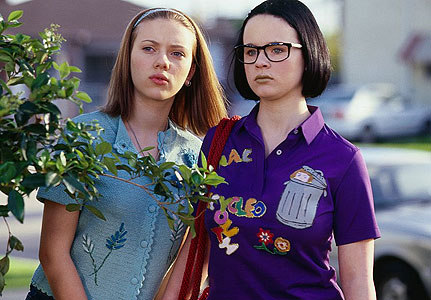
10. Ghost World - This film is the best kind of cross media adaptation. Most movies fail for not getting enough of the book, others, like the recent Watchmen film, failed for bringing nothing new to the table. Ghost World doesn’t try to replace the great comic book on which it’s based, it chooses instead to further flesh out the universe of the comic, and in the process functions perfectly as both a standalone film and as in tandem with the book.

And the film itself is one of the most probing explorations of the way that people in our irony driven culture struggle to express themselves and find meaning in a world where any sincere expression of feeling is considered uncool. Thora Birch seems to have vanished from films, but she was brilliant here, showing us the divide between Edith’s cold, cynical exterior and the lively, emotional person underneath. It’s one of the best depictions of the teenage experience in film, and even as loser heroes and a disdain for the mainstream became commonplace as the decade went on, few films managed to bring the insight and emotion this one did.


9. Waking Life - I’ve been happy to see this film pop up on a few other best of the decade lists, since I sensed a kind of backlash against it in recent years. I love it as a dreamlike meditation on a wide variety of interesting concepts and philosophical issues. I love works that force you think about the way you view the world, and give you new ideas and concepts to ponder. I first saw this movie shortly after reading The Invisibles for the first time, and it was a great followup, bringing me more philosophy and ideas to ponder.

And, despite its non-narrative nature, there is an interesting build and emotional engagement in the film. When Wiley floats away at the end of the film, there’s a sense of transcendence, of surrendering to the dream that may be our entire reality. All this is even without commenting on the film’s strikingly varied visual approach. As one of the speakers says, the most transcendent experience is discussion between two people, to share a part of ourselves with others, and become something more.


8. Donnie Darko - Another film that’s gone through a wave of critical praise and cultural backlash, I watched the film again a few months ago, and while it was clumsier in some ways than I remembered, with a lot of awkward dialogue and some odd plotting choices, it’s still a phenomenal work, an exquisite fusion of the Tibetan book of the dead with a twisted John Hughes universe. It’s a film that elevates the everyday into a transcendent struggle and features a myriad of visual elements that have already become iconic.

On top of the endlessly debatable philosophical elements, the film has a great soundtrack, including fantastic moments set to The Church’s “Under the Milky Way,” and Joy Division’s “Love Will Tear Us Apart.” Kelly hasn’t quite fulfilled the promise of this film, but as it is, it’s one of the strongest debut features of all time.


7. Inglorious Basterds - I haven’t loved a movie the way I loved Inglorious Basterds in a long time. The film snuck up one, I love Tarantino’s previous work, but weak Cannes buzz and a premise that didn’t thrill me meant I went in with mixed expectations. But, I left with total love for the film. Tarantino’s rambling, episodic narrative style has never been used to better effect, with each chapter building on the next, and altering tones and subject matter while maintaining an intense mastery of suspense.

It’s the final chapter where the film ascends to the level of the sublime, drawing together the film’s many disparate threads into a perfectly staged action climax. The high point for me, and one of the most haunting and beautiful images in cinema was Shoshanna’s post mortem message to the Germans who killed her and her family. The cinema screen igniting as she laughs is an image loaded with endless metaphors, but most importantly is pure emotion in the moment. People talk about the 90s as the decade of Tarantino, but for me, his 00s output is vastly superior.


6. The New World - Terence Malick was hailed as a master after only two films, and it’s amazing that in his twenty year absence from filmmaking, very few people even attempted to make the kind of dreamlike, beautiful films that he specializes in. And, with The New World, he made his masterpiece, an articulate distillation of the themes that consumed his previous films. First off, The New World is as beautiful as any film you’ll see. The way the sun cuts through trees, or reflects off water is astonishing, he manages to so thoroughly immerse you in the edenic world of pre-colonization America that when we finally get to the British civilization at the end of the film, it feels like an utterly alien culture.

But, it’s not just the visuals yet. The romance between John Smith and Pocohontas becomes an allegory for the European romance with the idea of America itself, and in the passage of men like Smith from the world, we see the way that America changed from a blank slate world that could be anything, to an extension of the European society that Smith fled. Smith is someone who crosses between worlds, and through his eyes, we become part of a society that seems initially alien, but is quickly welcoming and beguiling. Colin Farrell is fantastic in the film, but the real star is Q’Orianka Kilcher, who gives one of the decade’s best performances and embodies the spirit of the world Malick created. This film is practically a religious experience, a communion with a world far removed from our own, a dream that echoes down across time and calls us back to an eden long gone.


5. Before Sunset - The second Linklater film on the list has the most of the strengths I discussed earlier with Waking Life, the interesting philosophical concepts and fascinating discussion, but it adds an intense emotional element to the proceedings, so that you’re fully engaged on both an intellectual and emotional level. Sequels have such a bad track record, and particularly with a film as time capsule perfect as Before Sunrise, it seems like there’d be nowhere to go but down. But, in exploring the impact of Jesse and Celine’s meeting in a very real way, the film itself functions as almost a meta comment on our fear that the sequel will ruin what came before. They want to preserve that moment in amber, and let it stand as was, even as they’re drawn back together again. And, so are we, and thankfully, the film eclipses even its stellar predecessor with its probing examination of the way that a great experience has become a haunting emblem of what could be for these characters.

For a film that’s literally just two people talking, it’s extremely intense, winding its way from surface pleasantries and general discussion of themes and issues to an intense examination of what their relationship could be and whether it’s worth the risk for them to try to be together. And, the film’s final moments are a perfect ambiguous coda for these characters, at least until a few more years pass and we hopefully check in with them again.


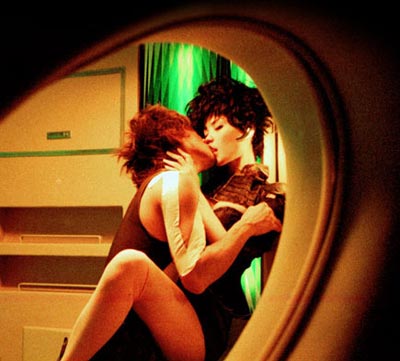
4. 2046 - Another sequel to an arty film about a man haunted by a brief, but potent love 2046 takes a less direct approach than Before Sunset, but is similarly powerful in its examination of the ghosts that haunt us all. Most people are hailing In the Mood for Love as Wong Kar-Wai’s best film of the decade, and I love that movie too, but for me, In the Mood for Love misses out on a lot of the things that make WKW’s movies so great. It’s much more controlled and unified than his work typically is, a far cry from 2046’s jumbled chronology and mix of allegorical future segments with its period setting.

The whole film is gorgeous, but the future segments in particular are just unbelievable. Faye Wong walking through the train her shoes lighting up as she goes is one of my favorite images from the decade in film. Ultimately, the film is a perfect distillation of WKW’s aesthetic, drawing in elements from all his previous films. It’s such a perfect summation of his talent, he had basically no choice but to do something different after, this is his greatest hits tour, and it’s one of his most enduring and brilliant films.


3. Irreversible - There are some films that are talked about more as endurance tests than as enjoyable experiences, and films like Requiem for a Dream or Fat Girl pushed the boundaries of what an audience can tolerate. But, even those films can’t match the reputation of Irreversible, a film infamous for its ten minute real time rape scene and gruesome fire extinguisher assault. And yes, those are brutal sequences, but just focusing on those scenes ignores the film’s greatest strengths.

Those scenes are brutal on a spectacle level, but they become even more heartbreaking, and powerful, after you see the relationship that Alex and Marcus shared before her assault. Thanks to the backwards narrative structure we watch them going through their daily lives, oblivious to the terrible events awaiting them. Every choice they make puts them closer to the spiral that will destroy their lives, and as you watch, you can’t help but ask what if just one thing had changed. I don’t think that Noe is interested in punishing the audience, so much as upending our typical approach to a revenge movie. Seen in chronological order, the film would be a nihilistic, but emotionally satisfying film. But, seeing it in reverse makes clear how hollow revenge is. Marcus and Pierre’s quest for revenge dooms them and does nothing to heal Alex.

But, in the final moments of the film, you also get some of the most tender and emotionally authentic moments between a couple in any film. Real life couple Vincent Cassel and Monica Bellucci are fearless throughout and make the film so much more with their performances.

And, I also have to comment on the technical virtuosity of the film. The one take sequences are like nothing ever seen in cinema to date, with virtually every shot in the film featuring some kind of impossible camera move that enhances your experience of the narrative. Noe pushes boundaries, but primarily with the goal of making you feel the story, not just watch it He immerses you in character subjectivity so strongly that it makes people uncomfortable, but it’s also what makes the film a masterpiece.


2. Mulholland Dr. - As I discussed with Wong Kar-Wai and 2046, Mulholland Dr. functions as a career summation for everything Lynch has done to date, incorporating the 50s style and naïve heroines of the Blue Velvet era and blending it with the experiments in narrative subjectivity from Lost Highway to create a perfect Lynch greatest hits film. That’s not to say that it’s redundant though, it’s a refined version of what he’s done before, and comes across as his most well realized film to date.

The ingenious narrative structure has been widely dissected, but it’s notable that even as he plunges through layers of subjective reality, he keeps a coherent emotional throughline so that you can have no idea what happened, but you can understand exactly how it felt. The rambling narrative structure allows for some great vignettes along the way, and the post box sequence manages to cohere them all into a really satisfying single narrative. I love analyzing the film, but ultimately what I love most is Lynch at his best, crafting classic scenes like Betty’s audition or Club Silencio, the scene of the decade. INLAND EMPIRE is brilliant in its own way, but if Lynch never made another film after Mulholland Dr. this would be a perfect coda for his career.


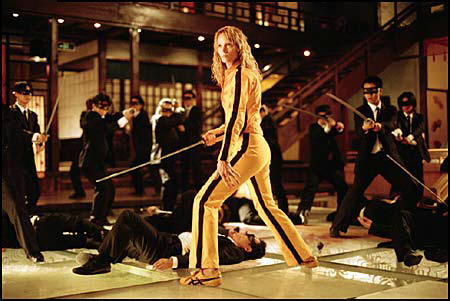
1. Kill Bill Vol. 1 - All this talk of narrative structures and themes is great, but ultimately what we go to the movies for is the experience of singular moments, and no movie was more of a rush or featured as many perfect cinematic moments as Kill Bill Vol. 1. Yes, it’s not as ‘substantial’ as Tarantino’s other films, but it’s such an amazing in the moment experience that you don’t care about substance, you care about the perfect song choices for every scene, or the astonishing action sequences that are so much more satisfying than the typical bunch of cartoon characters fighting sequences we saw in many of this decade’s films.

Kill Bill for me hits that same place that Star Wars does, it’s mythic and archetypal, and a distillation of everyting that you want from a genre film. Most kung-fu movies disappoint you, they’re better in idea than conception. Kill Bill is the greatest kung-fu movie you can imagine and more, mashing up elements of countless other films into a thrilling new whole. I’ve seen the film seven or eight times at this point, and it’s still thrilling every time, best of the decade material for sure.

Saturday, August 22, 2009

Inglorious Basterds

When history looks back on the history of film in the 2000s, the defining narrative is going to be the ascension of TV as the primary visual artistic medium, and mainstream film’s increasing polarization between micro-budget indies and creative dead end rehashed blockbusters. But, even as TV has become a better medium for conveying narrative, cinema maintains its unparalleled ability to create singular moments and cast a spell on the viewer that lasts as long as the movie rolls. Quentin Tarantino, for all his annoyingness in interviews, knows that cinema is about moments, and packs his film full of the sublime collisions of visual, audio and narrative content that make movies so special. Basterds is full of transcendent, singular moments that so perfectly use the medium, he makes everyone else look like they’re not even trying to make movies that resonate and matter.

One of the interesting things about Tarantino movies is that in many ways, they’re written as a collision of theater and cinema. The film features a couple of lengthy setpiece conversations that are literally just people sitting at a table talking, but through the editing and performance, they build incredible tension. The opening scene of the film is a perfect example of that. You start off with the inherent tension in Landa, a Nazi officer, coming to visit this family. His total confidence contrasted LaPadite nerves. Throughout the film, until the very end, Landa is always in a position of total control, there’s a surface calm, but also the potential to explode into violence at any minute.

By revealing to us the family beneath the floor boards, the whole scene takes on a new tension. We know that LaPedite is trying to trick Landa, and the question becomes, can he do so? So, the tension mounts until the fantastic section in which Landa decides to keep up the charade until the last minute, and the quiet conversation of the film’s opening is broken up by an onslaught of weapon fire, and a bursting haze of dust bits floating in the air.

One of the interesting things about Tarantino’s approach is that he focuses almost exclusively on character in constructing his films. The overall narrative, the ostensible quest by the Basterds and Shosanna to kill the Nazis, develops in a very leisurely way, and the vast majority of the film is these things that would be considered digressions in other movies. The typical screenwriting approach is to just give the audience enough to get the information they need then move on, anything not essential to the story should be cut. What is the ostensible ‘point’ of the first scene? It’s to establish Landa as a menacing force. That can be done much quicker, and still get you the same narrative information. But, the extra time spent is both enjoyable on its own terms, and gives you an even better sense of the character.

And, by keeping the scene so slow and conversational, the mounting tension at the end is even more powerful. As the film’s first music cue rises up on the soundtrack, Landa’s true intent becomes apparent, and leads to the act that sets up the film’s primarily emotional motivation, Shosanna’s revenge.

The film’s chapter structure, as well as its fonts and credits, recall the format of Kill Bill. I like the chapter structure because I think it gives you an implicit explanation of why certain characters are absent from the narrative for so long. You’re not wondering where Aldo is, or where Shosanna is during the sections they’re off screen, you know they’ll likely be back in the next chapter.

So, chapter two picks up the ostensible primary story of the film, that of the Nazi-hunting basterds. This is easily the film’s weakest chapter, Pitt as Aldo Raine is a lot of fun, but lacks the more nuanced character of the other, European characters, and the other Basterds, apart from Stiglitz don’t make too much of an impression. As the film wound down to its climax, I didn’t want to see any of these guys succeed in taking out the German high command, I wanted that to be Shosanna’s victory. There’s a level of sadism in what they do that’s a bit unpleasant, even if it is being done to Nazis. The clever punishment given to survivors is more satisfying to watch than simply seeing someone’s head beaten with a bat.

And, if the film has one misstep, it’s in the casting of the Basterds, particularly giving Eli Roth such a prominent role. Where a great actor could make even a small role like that really come alive, Roth doesn’t do much more than say the words. He doesn’t do anything glaringly wrong, but I feel like the role could have been much more. Similarly, I’m not sure if BJ Novak and Samm Levine were cast deliberately for their non-menacing qualities, but they generally came off as doofier, comic relief, particularly during the funny “Little Man” conversation at the end of the film.

But, looking at the film as a whole, all the American characters do seem designed primarily as comic relief. I was thinking that the film might be stronger if it just focused on Shosanna and Landa, with no stuff about the Basterds, but without the humorous counterpoint of the Basterds, the stuff with Shosanna could wind up feeling a bit self serious and the film as a whole would be less unique. Pitt isn’t the lead of the film, he’s the comic relief, conspicuously off camera for most of the film’s real emotional moments, like the sequence in the basement tavern, or the climactic shootout.

Shosanna was easily my favorite character in the film, and her emotional arc was the most fully realized. Considering the episodic nature of the script, I’d hesitate to call it “her film,” but it’s her story that I kept wanting to see more of. The sequence set in occupied France once again brings in that element of casual menace. Shosanna is continually forced to play nice with the people who killed her family, for fear that any sign of resistance would prompt an investigation and the discovery of her true identity.

Much of the chapter’s significance lies in what Shosanna tells Zoller in the projection booth, that he’s gotten so used to being hailed as a hero, he doesn’t know when someone means no anymore. The Nazis, thanks to their military power, are so used to getting everything they want that they see people simply as objects in their path to be conquered. Zoller has mixed feelings about this, he claims to not like being hailed as a war hero, and has issue watching his own “exploits” dramatized on screen. He ostensibly wants Shosanna to like him not for what he did in the war, but for the person underneath.

The problem is, he isn’t going to take no for an answer, she’s going to like him no matter what. And, the more prickly she is to him, the more he wants her. He’s being hailed by people in this café, but he only wants her to like him. So, he arranges the premiere at her cinema as a way getting even closer to her, which puts her closer and closer to both her worst nightmare and her ultimate goal, the chance to get revenge against the people who killed her family, to show them who they really are on screen.

The sequence in the café is another masterpiece of subtle tension, as Landa draws out the eating of the Strudel, leaving us uncertain whether he knows who she is, or is just messing with her because she can. It’s also interesting to see the juxtaposition of Shosanna’s concealed hatred for these people with her struggle to put up a public face that won’t offend them. She’s bound to them now and has to play along until she gets the chance to get back at them.

So, she hatches the idea of using her aunt’s old films as a bomb, to burn down the theater and destroy them all in the process. More on that shortly, but I’ll note how effective the transition from her request for filmmaking equipment is in jumping us over to Operation Kino. We know that she’s doing her own Operation Kino while the Basterds and their new British ally are working on the official Op Kino in France.

The Mike Myers sequence is another one that would be much shorter in most films. The goal is just to establish this guy is an expert on cinema, and will be going undercover to blow up the premiere. You can do that in a voiceover, a letter, whatever, but the scene as it plays works because Myers is fun to watch, and it starts laying in the key themes about the way that the German national cinema, and by extension, the German national mind, was co-opted by Nazi themes at the expense of the more ambitious 1920s impressionist cinema.

Hollywood of the 1930s and 40s shaped the American national image, and during World War II, its propadanda films were key to creating the narrative of the war. Goebbels was trying to do the same thing with his films, and in the process, he tried to rewrite history, eliminating the moral ambiguity of post Weimar work and replacing it with the overt heroes and villains of the Nazi propaganda cinema, specifically “Nation’s Pride.” On the one hand, this scene, like the exploration of nitrous film earlier, is an insidery film reference that could be seen as self indulgent. But, it also works without any outside knowledge of history, setting up the thematic significance of Shosanna using the old films as a means of destroying the German elite.

That leads into the basement tavern scene, another great work of mounting tension. Tarantino establishes multiple areas of drama, including Hickox’s questionable German skills, Stiglitz’s mounting rage and the uncertain motivations of the German officer, who may or may not know about Hammersmark’s deception. Again, the way the scene is played out lets this tension build to a huge crescendo before exploding suddenly in the seemingly inevitable result of a Mexican standoff, a room filled with gunfire, leaving nearly everyone dead.

It’s difficult to comment on morality in a film like this, where we’re seemingly led to support the cartoonish scalping of Nazis, but at the same time confronted with a much more real vision of the war on the European side. It could be a comment on perceptions of the war in America vs. Europe. In America, it’s a fun excursion, where the inherent evil of the Nazis makes it easy to indulge in an over the top us vs. them exercise killing German soldiers who’ve sold their souls. But, for Shosanna, the violence is real, and simply killing individual soldiers isn’t enough, it’s the ideology that has to be destroyed.

That’s what the end of the film, the most audacious chapter, is all about. The German high command has created an ideology of hate, one that is symbolized by the films that Goebbels creates. As they all gather around the screen to watch a film that seems to consist solely of Zoller mowing down American soldiers, she has the chance to explode that ideology in their face and confront them with the real cost of that violence.

In Kill Bill, the cinematic high point of the film was the preparing for the battle sequence in Volume I. Scored to the now iconic “Battle Without Honor or Humanity,” the tension is built to a huge level as we watch all the pieces moves into place in the most visual, cinematic way conceivable.

The instantly iconic “Cat People” sequence in the film does the same thing, as we watch Shosanna arm herself for the battle to come. I love films that don’t adhere to the expectations we have for period drama. In that sense, Basterds has much in common with Marie Antoinette or Public Enemies, both films that deliberately played with our expectations for a costume drama or a gangster movie. “Cat People” works perfectly in the moment, no matter what time period it comes from. And, I love the way that we get the badass hero suits up montage for a woman putting on makeup and a dress, not the soldiers getting their guns. The sequence is full of memorable images, like the way that the rouge on her cheeks is spread to evoke Indian war paint, or the slow dissolves, rather than a push in, that go from wide shot to closeup as she stands at the window and looks out.

She emerges from her personal space to the theater and we witness the premiere already in full swing. She stares down at them, her face behind a veil that evokes Fassbinder’s Maria Braun. The whole sequence builds such incredible momentum, I wasn’t sure that the film would be able to sustain it for the climax, and Tarantino’s choices frequently seem anathema to keeping that tension going. After we build this crescendo of Shosanna’s rage, we jump over to a lengthy comic scene with Aldo and crew trying to present convincing Italian accents for Landa.

It’s a testament to Tarantino’s skill that he consistently stops the film when it should be rushing forward to do that sort of comedy stuff, but is able to recapture the momentum whenever needed. The lobby scene, or the later scene with Landa and Raine negotiating about ending the war both are entertaining on their own merits, but feel decidedly besides the point next to the action in the theater.

But, he can easily jump from the goofiness of the Italian name stuff to the incredibly tense scene with Bridget Von Hammersmark in Shosanna’s office. That scene is great on its own merits, riffing again on Tarantino’s love of feet, but also ties in to the overall narrative, through staging it into Shosanna’s office. Landa has taken her family, he’s taken her theater and he’s even taken over his office and is using it to kill people. But, she has a plan to get back at him.

At this point in the film, I was annoyed that Landa hadn’t captured Omar and Donny, since I didn’t want to see these two not particularly developed characters succeed in their plan and not give Shosanna the satisfaction of her vengeance. So, there was great tension during the Landa and Raine scene, as we’re left in uncertainty about what was going to happen in the theater.

But, we eventually get back there, where every action is juxtaposed against the much celebrated action on the screen, Zoller’s wholesale massacre of other soldiers. This is the German mythos, the German ideology played large on the big screen, and it brings great delight to everyone in the audience. Hitler and Goebbels see this film as something that can inspire the people and keep the war alive, even as the Americans crash onto French shores. They understand that war is ultimately about ideas, it’s whose mythos is stronger, who wants it more. Zoller becomes an aspirational figure, someone who could inspire the people to fight harder, even as things become more of a lost cause. If he can singlehandedly defeat three hundred soldiers, then no obstacle is insurmountable.

The film lulls the German audience into an easy connection with the death on screen, it casts a spell on them that subtly influences their morality. Shosanna intercuts her own message in to the film, one that subverts the moral intention of everything that the Germans are doing. Instead of one hero and a hundred faceless victims, it’s the victim speaking to them, the murdered extra becomes the star and destroys the illusion that Goebbels worked so hard to create. Zoller isn’t a hero, he’s only perpetuated the conflict.

The projection booth is Shosanna’s inner sanctuary, the beating heart of the theater that is her weapon. She sets it in motion, and when the reels shift, the deed is done, she has sealed her own fate, and will go down with the blaze. But, before that, there’s Zoller threatening to upend the plan. As I said before, Zoller’s approach to her in the projection booth is a moment that sums up the entire German ethos, this belief that they can take whatever they want because they are entitled to it. He will have her by any means because he’s the hero on that screen, he’s the person they’re all there to see, and she will love him for that.

But, Shosanna gets to do what those three hundred faceless soldiers couldn’t, she guns Zoller down. It ties in to both a meta cinema comment and a very real idea. Three hundred deaths is a statistic, it loses meaning or perspective. As we see more and more people gunned down on the screen, the audience laughs, but it becomes increasingly meaningless, a spectacle. They are the extras, but Shosanna is the star. A random soldier can’t kill Zoller, but Shosanna’s story has led her here and given her the spotlight to take him down. One death is a tragedy, three hundred deaths is a statistic.

That’s also why Shosanna’s quest means more than the Basterds’. She has real motivation, and her desire for vengeance exists on an emotional, real world level, not a spectacle level. It’s a tricky thing to weld the two narratives together, because the joy we get from watching Nazis get scalped earlier in the film would seem to be the same joy that Hitler gets from watching Zoller on screen. Is Tarantino equating us to Hitler? I think he’s more pointing out the inherent joy of watching violence portrayed on screen. I just read an interview where he mentioned that a woman getting bashed into a table out of nowhere in a romantic drama would be horrifying, but Steven Seagal killing seven people is fun. Movie violence exists in a different reality than real world violence, the Basterds’ quest takes place in movie reality while Shosanna’s takes place in a more reality based context.

So, the death of Shosanna is a shocking, tragic moment. As she’s shot up, the screen explodes with a flurry of colors and dust in the air, in death, she transcends reality and becomes pure cinema. It’s a moment that would be shocking simply for its content, but the music choice and slo-motion cinematography turns it into so much more. Shosanna is dead, but like a ghost, we see her rise up on screen and taunt the German people with what they’ve been complicit in.

The goal of “Pride of a Nation” is to refine the perception of the German nation by ignoring the past and focusing only on the heroism of one soldier. They want to erase all other narratives and preserve only that one. That’s why it’s so significant that Shosanna and Marcel should use the old films that her aunt held on to as the fuel for the fire that will consume the Nazis. This is literally her family history, the prized possession of her aunt and uncle, but it’s also the symbolic stand in for everything the Nazis want to destroy. In the scene with General Fenech, we hear that Goebbels seeks to supercede the Jewish cinema of 1920s Germany, and the Jewish controlled cinema of Hollywood. The history of film is a Jewish history, and that history is what interrupts the new history Goebbels seeks to write, then literally burns it down.

The most powerful image in the film, and its most effective summation, is unquestionably the screen catching fire as Shosanna laughs, turning her into an angel of vengeance, descending into hell to cast her wrath down on the German high command. That moment is chilling, and it builds as Donny and Omar break into the opera boxes and gun down Hitler, and the other Nazi personnel. Those scenes, shot like Scarface, see the Germans becoming victims of the very cinematic violence they were just enjoying.

The theater burns and with it, the symbols of Nazi iconography. Over the flames we hear Shosanna laugh, and in the smoke, we can see glimpses of her face, hanging in the air like a ghost. And then the whole thing blows up, the dynamite a satisfying cap to the climax.

The film ends with Landa negotiating the terms of his deal. It strains credibility a bit to think that Landa would abandon the Nazis, but in the context of the film, they’re already on a downward slope, and he’s just looking out for himself. Why does he kill von Hammersmark when he himself will soon be a traitor? Perhaps he’s taking out his rage at his own betrayal on a surrogate version of himself, or maybe he’s just sadistic, it’s hard to say.

Raine ends the film with a satisfying callback to the earlier chapter, as we see that Landa may be able to make a deal, but he can never escape the legacy of what he’s done. Raine claims it just might be his masterpiece, which is of course, a meta comment by Tarantino on the film we’ve just watched.

Is it Tarantino’s masterpiece? I’d have to see it again to say for sure, but I don’t know that anything can match the raw energy and excitement, the experience that is Kill Bill Volume I. But, I think this is definitely a stronger film than Pulp Fiction, Reservoir Dogs or Pulp Fiction, and it’s in many ways Tarantino’s most ambitious film. Shosanna is one of his most compelling characters, and there’s a confidence to the film’s construction that few can match.

Most of all, it’s a cinematic experience, full of memorable visuals and enduring moments, all designed to build tension and create a deep immersion in the world of the film. Calling a film “cinematic” is usually just a short hand for having good visuals, but there’s a huge difference between simply shooting pretty pictures and making a compelling film experience. This is an experience at every level, a masterclass in how to use music in films, and how to build tension through subtle means. It’s about suspense, about the buildup to the action, not just the action itself, and it’s just incredibly fun. You get caught up in the world and the characters, and the stylistic flourishes just immerse that. So, it may not be his best film, but it’s certainly a masterpiece, and likely to find a spot on my best of the decade list at the end of the year.

Friday, May 29, 2009

Cannes News

I’ve been following a bunch of news out of Cannes, and despite both films’ mixed receptions, I’m still very excited to see Tarantino’s Inglorious Basterds, and particularly Gaspar Noe’s Enter the Void.

Because he took so long between Jackie Brown and Kill Bill, I think people had time to iconicize his first films, and build them up to such a level that no new movie could match them. I think Kill Bill is such a joyous rush of a film, and even a lesser work like Death Proof is full of great moments. He creates unique worlds with his movies, and is one of the few filmmakers where I feel like he’s focused on appreciating every moment of the movie, rather than just telling the story.

Because TV has become such a better means of delivering a longform narrative, cinema has to redefine its place, and do something that even the best TV shows can’t, and that’s make every single moment of the film something interesting. Does Basterds do that? I’ve got no idea, but I’m excited to find out.

But, I’m more excited for Noe’s Enter the Void. I think Noe is one of the two most significant filmmakers since the French New Wave. The other is Terence Malick, who took the de-centralized narrative of 50s art cinema and amplified the emotional engagement through incredibly sensual cinematography and voiceover. Malick’s style was elaborated on by Wong Kar-Wai, and though their films feel similar to each other, they’re totally unlike anyone else’s out there.

Noe certainly draws influences from previous filmmakers, Kubrick in particular, but his films are more radical than pretty much anything in Kubrick’s filmography, the ending of 2001 excepted. Kubrick was obviously a brilliant filmmaker, but Noe, in Irreversible, and it sounds like in Enter the Void, pushes the medium in more radical directions. The thing I love about Irreversible is the way that everything in the film is designed to make you feel the emotions that the characters experience. The spiraling camera and incessant score are all there to put you in a state of mind. The film itself is a drug trip, designed to alter your state of consciousness.

I read reviews where people criticize the narrative or call the film self indulgent, and those are perhaps valid criticisms, but I think they miss the point that, for me at least, a film that is as radical as something like Irreversible is always going to be preferable to a “solid” film that doesn’t try that hard. It’s not easy to innovate like Noe did in that film, but if you’re going to invest the time and money needed to make a movie, at least have something new in mind stylistically.

I want an experience from a movie. I want to be challenged and think in a different way. And, not enough films try to do that. So, even if Enter the Void is a failure, I commend Noe for creating a film where even just reading about it is more exciting than a lot of movies you see. I hope it plays here sometime soon, the New York Film Festival in October is probably the best hope.

Monday, December 22, 2008

2009 Film Preview

2008 hasn’t been the best year for film, but it’s still got a few days to impress me with something great. But, looking ahead to 2009, we’ve got some potentially fantastic films on the horizon.

11. The Box - I’m one of the few defenders out there for Richard Kelly’s madly ambitious previous film, Southland Tales. It’s an undeniable disaster, a beautiful one in a lot of ways, but it’s not the kind of film that’s going to make it easy to find funding for your next one. So, he’s scaling it down for a film that’s described as a feature length Twilight Zone episode. I’m hoping that this film doesn’t sacrifice the idiosyncratic voice of his previous films in attempting to atone for the wackiness of Southland Tales. The premise has potential, and the Arcade Fire scoring the film is a great sign. We’ll see how it goes.

10. Thirst - The new Chanwook Park film has been getting some crazy buzz over in Korea, notable largely for the apparently extreme nudity required for the lead actress. I enjoyed Park’s recent “I’m a Cyborg,” but he hasn’t come close to the heights of the Vengeance Trilogy in either of his two recent projects. Is he getting back in the game here? Oldboy is one of the most ecstatic pop films of the decade, and if he could recapture some of that energy, we could have another classic on our hands. And, vampires are hotter than ever, so he should at least have an audience for the film.

9. Cleo - I don’t know if this one will actually make it out in 2009, but if it does, I’ll be right there to see it. Soderbergh is one of the toughest filmmakers to love because his films have very little throughline. He jumps from genre to genre, and just keeps making new and different stuff. I really like some of his films, and the notion of him making a musical based on Cleopatra’s life came out of left field. But, I really like musicals, particularly wackier ones, and this one sounds pretty out there. I’m sure it will divide audiences, but I’m excited to see what Soderbergh comes up with.

8. Public Enemies - Much like The Box, Public Enemies will have the onus of having to atone for a previous “failure,” in this case, Michael Mann’s masterful Miami Vice. Vice got a pretty poor reception when it came out, but thankfully got some year end love, and I think history will see it as a minor masterpiece. I don’t think a better film has been released since Vice came out, and I also think that the film represented a huge step for Mann, moving away from a narrative based cinema towards a more impressionist emotional film construction. Will Public Enemies follow? It’s hard to say right now since no footage has leaked. Certainly the subject matter doesn’t seem like something that demanded another film telling, but Vice seemed utterly redundant and turned out to be so real and emotionally vital. The cast on this one is fantastic, and I’m confident Mann will make the movie work.

7. Avatar - James Cameron’s been out of the narrative filmmaking game for a long time, but Avatar sounds like a worthy return. He’s created some of the most enjoyable and filmically satisfying popular cinema of all time. Both Aliens and Terminator 2 are pretty much flawless blockbuster films, managing to combine real emotion and interesting themes with all the action. Avatar is wrapped up in the 3-D element, but I just hope that he keeps the story and emotion present. He’s been away from filmmaking for too long, hopefully he’ll come back strong.

6. Where the Wild Things Are - Spike Jonze’s previous two films were both fantastic, evidencing an emotional depth that wasn’t present in his music videos. I wasn’t thrilled hearing that he was adapting Wild Things for his next film, but reading that lengthy interview with him at Aint-it-Cool, and seeing the initial photos, I’m much more excited. The images look so soulful and emotionally resonant, if the film can match that, it’s going to be quite an experience. And hopefully it won’t take Spike seven years to get his next film done.

5. Watchmen - I have really mixed feelings on this film. On the one hand, it is really cool to see the slavish attention given to realizing Alan Moore’s world on screen, and I’m sure there’s going to be myriad cool moments in the film. But, at the same time, the book is so perfect, and so intrinsically tied to the comic book medium, it’s hard to see what the film adaptation could add. Even if it’s like the Sin City movie and functions as a perfect recreation of the book, what purpose does it serve? Perhaps its purpose is just to entertain us, no more, no less. And, I’m sure I’ll get plenty of entertainment from the film. But, as you enjoy it, just remember, the snake god Glycon frowns on you. I wish everyone who saw Watchmen would check out Promethea, or the documentary “The Mindscape of Alan Moore” to get a better idea of what Alan Moore is really interested in.

4. Inglorious Basterds - I’ve loved every film Tarantino has made so far, and this one sounds like a hugely ambitious, really fun take on the war film. The script reviews make it sound great, and the cast is fantastic, particularly the presence of Maggie Cheung, back on the screen after a lengthy absence. I loved Kill Bill, and really enjoyed Death Proof, but I do hope this film captures some of the narrow emotional focus of Jackie Brown. All of Tarantino’s films have more emotional investment than most people give him credit for, Kill Bill is a lot more than just b-movie homages, the violence is also about revealing Beatrix to us. But, nothing in his oeuvre can match the simple emotional pleasure of watching Pam Grier and Robert Forster circling around each other. How wil Basterds wind up? I guess we’ll find out soon.

3. Rebuild of Evangelion 2.0: You Can(Not) Advance - The first Rebuild of Eva was a great movie, a variation on the series that clarified and focused the narrative into a more cohesive finished product. Rewatching the film, I saw a lot of interesting stuff, but my first reaction was slight disappointment, that the film stuck so closely to the original series. Judging from the info and trailer for 2.0, there’s going to be some big changes here, and I’m eager to see how Anno and co. evolve the narrative and make it work in a new form. I’m also curious to see if the idea of the new films as a kind of sequel/cyclical narrative with the original series is developed further. Plus, we’ll get the entrance of my favorite character from the series, Asuka. Will Anno take things to that tripped out place End of Eva dwelled in? The first Rebuild gives us an idea of what the project will be, but this is the one that blazes a whole new trail. I just wish I could see the film in a theater, not on a bootleg download.

2. The Tree of Life - A new Terence Malick film only four years after his last? That’s unprecedented. The actual story of Tree of Life remains kind of unclear. It’s either about three men in the 1950s, or about a minotaur at the dawn of time. Hopefully, it’s both. Either way, Malick is such a singular voice, I’m sure he’ll manage to make any subject matter into something magical and beautiful. The New World is one of the best films of the decade, and he makes films in a different language than virtually everyone else out there. He understands film as a medium, and the unique things that film can do more than any other director, he constructs moments of astounding beauty and emotion that linger long after the film is over. People may have had trouble with The New World, but history will vindicate it as a masterpiece. Hopefully this new one will match it.

1. Enter the Void - I’ve been waiting for this film for four years, ever since I first saw Irreversible. Irreversible is one of the most intense cinematic experiences you’ll ever have. The subject matter may have gotten the attention, but for me, it was the amazing craft that really made the film. The one take shots are unprecedented, and the film’s use of subtle CG is a perfect example of the new possibilities of effects. Enter the Void was described as an entire film in the style of the last 20 minutes of 2001, a feature length acid trip, and if there’s any filmmaker who can make you physically experience things with a film, it’s Noe. This will not be watching an acid trip, it will be tripping on acid. It’s a hugely ambitious movie, and I’m confident Noe will pull it off.

Tuesday, January 01, 2008

Best of 2007: Top 10 Films

10. Shoot ‘Em Up - This is one of the most underrated films of the year, primarily because its schlock genre appeal isn’t the kind of thing that most film critics respond to. The thing I love about the movie is the sheer excess of the piece, taking these gun battles to ridiculous extremes turns common action movie tropes into grand comedy. It’s a movie where you’re laughing not so much because it’s a joke, more because the movie is just so excessive, you’ve got to react in some way. I prefer a movie like this to a more grounded ‘realistic’ action movie because it embraces the pop craziness of genre and continuously goes for broke. This is the kind of movie the Quentin Tarantinos of tomorrow will be reviving.


9. Knocked Up - A movie that’s become the first victim of the Judd Apatow backlash, Knocked Up is actually a near flawless mainstream comedy that is both funny and heartfelt. I occasionally get into debates with people about how most people just want to watch movies to be entertained, that’s why an Adam Sandler movie has value. I don’t have any problem with wanting to be entertained by movies, every movie I watch I hope to be entertained by, but most of these movies that are supposedly entertaining are just awful and repulsive both cinematically and intellectually. Why is entertaining synonymous with shut your brain off? That’s why I like Apatow’s stuff, he’s able to make movies that are accessible, but still have a unique, off kilter sensibility. You can watch this movie without wondering why the filmmakers think the viewer is mentally deficient.

I do have some issues with the same Peter Pan narrative cropping up in countless works this year, but Knocked Up makes it work. You believe in the characters, and the actors just nail the film. Beyond the obvious comedy stuff, I love the bizarre digressions, like the acid trip scene, or the wonderfully executed women go to the club scene. It’s a shame that shit like Alvin and the Chimpunks and Transformers keeps making so much money, but at least Knocked Up shows that originality and being good isn’t going to turn the audience away.


8. I’m a Cyborg, but That’s OK - Park Chanwook’s new film doesn’t match the grandeur of his past two movies, but that’s ok. This is still a fun, inventive movie that has some really fantastic moments. I love how he just runs with the bizarre premise, not commenting on the girl’s psychosis, instead letting you get drawn into her world. Scenes like the speech with the vending machine recall the slightly goofy, but still incredibly touching stuff with Tony Leung and the towel in Chungking Express. I don’t think the film ever fully congeals, but as a palette cleanser after the Vengenace Trilogy, it’s a success.


7. Across the Universe - This is another movie that’s flawed on a lot of levels, but has so many dazzling images and moments, it ends up a wonderful experience. The major issue with this film is that it’s another spin on the classic 60s narrative, suburban kids become hippies, get radicalized, get violent, go to Vietnam and come out the other side radically altered. It’s by no means an original story, but a story need not be original to work. The purpose of narrative in cinema is to produce an emotional reaction in the viewer. That reaction can range from laughter to tears to simply trying to wow you with action and effects.

So, even though the film was surely less original, and a less engaging story than something like No Country For Old Men, the movie had me more emotionally engaged. That’s primarily due to the image based storytelling, which produced some truly astonishing moments. I love the avant garde trippy interludes scattered throughout the film, and I really admire the way that, with only a few exceptions, music was used to advance the story, not just exist as spectacle on its own. There’s certainly some goofy stuff in here, but there’s also some of the most beautiful images of the year. People usually judge films on which have the least bad, when they should be looking at which are the most good. No Country is an essentially flawless film, the only flaw was it just didn’t hit me emotionally. This film did, and despite its flaws, it’s still a fantastic work.


6. Sweeney Todd - Todd is a thankful return to quality for one of my favorite directors. Probably his darkest film, it’s a wonderfully sealed experience. He creates a world, and the very simple narrative allows us to dwell in the deluded minds of these characters for the time they’re on screen. Depp is great as always, but the star of the film for me was Helena Bonham Carter, who played the whole film is a bizarre, immoral haze. She stole the film, and her exit was the movie’s most shocking moment. I’d love to see Tim tackle another musical since he clearly has a lot of aptitude for the genre, and making films that are simultaneously visually grand and emotionally focused.


5. Southland Tales - Another movie that’s far from perfect. There are sections of the movie that are just baffling in their meandering pointlessness, but there’s also sections that are so perfectly on, so beautiful and singularly odd that the movie demands attention. By no means does the film match the emotional preciseness of Donnie Darko, however its incredible ambition demands attention, as does its sheer bizarreness. The Justin Timberlake sings The Killers musical interlude is but one of countless scenes that just sort of happen as the film goes along. It’s a film that feels like a whole bunch of ideas, not a finished script, but many of those ideas are so fascinating, it’s not a problem.

What got the film this high on the list was the astonishing finale. The last 45 minutes or so of the film all work, and it goes out on a high note. The strange dance between The Rock, Sarah Michelle Gellar and Mandy Moore is probably my favorite scene in any film this year, and the score by Moby throughout the film is fantastic. It probably could have used another pass at both the script and edit stage, but I think it’s encouraging that a film this bizarre made it out into theaters. The only sad thing is that it was so thoroughly rejected by both critics and audiences.


4. Planet Terror - Robert Rodriguez has made a lot of films that were really close to great, but just couldn’t quite make it. But, this one is outright brilliant, an incredibly fun pop movie that puts on a free clinic for horror filmmakers bogged down in torture porn and self importance. There’s a lot of things working here, but one of the most important is the characters. Freddy Rodriguez is a lot of fun to watch as El Wray, putting Six Feet Under’s Rico out of my mind. Jeff Fahey as J.T. also nails it, with the fun barbecue sauce subplot. But, the person who owns the film is Rose McGowan, who finally gets a role to match her wonderful work in Gregg Araki’s The Doom Generation. It’s like those seven years on Charmed never happened. The machine gun leg was a concept so genius, it really doesn’t need to be expanded on. Most importantly, the film wasn’t just about cool concepts, I really bought these characters as real people and cared about what happened to them.

Along with that caring was the fantastic camera work and score from Rodriguez. From the opening frames, you knew this would be a good movie. I can see why Rodriguez left his wife for Rose McGowan, the opening go go dance is as close as you can come to fucking someone with a camera, and equally great is when he has her literally burn up the film during her sex scene with El Wray. Throughout, Rodriguez used slightly over the top, but effective zoom ins and tight framing to raise the tension. The Grindhouse premise gave him the freedom to do these over the top things without being criticized for it, and to be honest, I’d love to see him do this in every movie. I loved the craziness of the movie, Rodriguez used the genre and style to enhance our experience of the characters. Probably the best compliment I would have been happy to just hang out with these people for 90 minutes, even if there were no zombies.


3. Death Proof - Tarantino just barely tops his Grindhouse counterpart with a totally unique, and extremely fun movie. I think this is a really misunderstood piece. People talk about how Tarantino is retreating more and more into genre and away from realism when this movie is arguably his most real. What can you relate to more, six thieves whose heist has gone bad, or six girls who drive around going to bars and hanging out with people? Yes, the car chase stuff is a genre thing, and some of the style is a pastiche of 70s films, but the first half of the film feels totally true to me. I’ve been at bars like that, and Tarantino creates such fully realized people that it’s a joy to hang out with them for the time they’re on screen.

As with Rodriguez’s movie, the Grindhouse brand gives him the freedom to do some over the top emotional stuff we wouldn’t see in a ‘regular movie,’ most notably the scene where Julia gets a text message and the bar’s music is drowned out by this incredibly melodramatic piece of score. Yes, it’s a bit over the top, but it also tells you exactly how she feels using the language of movies. Despite consisting almost entirely of people talking, Tarantino makes the film visually dynamic and full of momentum. Again, I don’t even need the car chase stuff, I would have been cool if the film just spent the whole movie at the bar with the first set of girls. But, the car chase is admittedly pretty damn cool, and I absolutely love the absurdity of the film’s final moments. It’s a joyous pop confection from start to finish.


2. Daft Punk’s Electroma - Daft Punk show that they’re as skilled at cinema as they are at music, crafting an entire odd world in their debut feature. The movie is very simple, but shot with such gorgeous precision it lulls you into another mental zone. The images they present are as dazzling as anything you’ll see in cinema, from the stark white transformation zone to the gritty, nasty public bathroom scene. It’s abstract art, less about telling you something than about giving you ideas and concepts you can bring your own meaning to. But, that doesn’t mean it’s not emotionally potent. The apocalyptic finale is devastating and powerful. What Daft Punk do here is revive the midnight movie tradition of filmmakers like Jodorowsky. It’s never going to cross over to the mainstream, but for a certain audience, it’s a truly powerful, challenging film.


1. I’m Not There - Todd Haynes confirms his standing as one of the best filmmakers working today with this kaleidoscopic, innovative feature. Not so much a movie about Bob Dylan as a film about the formation of identity and process of reinvention that we all go through, it’s the most metaphysically significant work of the year. Haynes reminds me a bit of Grant Morrison in the way he uses existing pop culture icons as a way to explore the issues that are significant to him and humanity in general. Is making a film about Bob Dylan to explore the nature of identity any different than using Superman as a way to explore mortality? Both are pre-existing icons who serve to enhance the thematic points behind the project.

This film has a dizzying mix of styles and narrative approaches. While Cate Blanchett has been justifiably lauded, no one section jumps out over the others. I loved the Heath Ledger/Charlotte Gainsbourg stuff and the Richard Gere town of Riddle section just as much as Blanchett’s. It’s a really heartfelt, emotional film and one that’s quite substantial. It’s a film about the very nature of human existence, the way we live and how we evolve our concept of self to deal with the world. That makes it by far the best film of the year.

Sunday, December 09, 2007

Film in 2007: A Medium in Flux

The past few years, I’ve made a bunch of posts about the changing relationship between cinema and television, and with each passing year, the visual works that have really amazed me have been more and more on TV. This year is being called a great year for movies, but I haven’t seen one movie that I really loved, a movie that I could wholeheartedly recommend to people as a great cinematic experience. We’re approaching the end of the year, and I haven’t seen one truly great movie, and only a few really good ones.

Last week, I saw No Country for Old Men, a movie that’s being called the best film of the year by a wide range of critics. Personally, I liked the film better the first time the Coens made it when it was a pop, scrappy B movie called Blood Simple. No Country isn’t a bad movie, but it never gave me a charge. The plot wasn’t predictable, but the film style was. Once I figured out there was no music, and they were shooting from a restrained, objective style, I just sort of settled in, and was never really wowed again. Was I surprised by developments late in the film? Yes, but the problem is, as a two hour film, it’s hard to make me engage with the characters in a way that makes me really care about that surprise.

It’s a loose connection, drugs mainly, but watching the film, none of the characters had half the pizzazz of even minor players on The Wire. The thing that long form TV shows can do that features can’t is let the characters just exist. In screenwriting, tightness is admired. If you put a gun on the wall in the first act, it’s got to go off in the third act. The mother in this film has to factor in later because she’s talked about early on. At this point, it takes a truly fucking amazing story to make me care about the characters in a film.

The thing that changed that was watching long form TV series. The best TV shows create fully realized world. In The Wire, a character can just be there, not serving a narrative purpose, rather existing until he’s needed again. Someone like Bodie doesn’t need to be in the show after the first season, but he’s an interesting character, and it’s nice to spend time with him. The gun on the wall doesn’t have to fire in the third act, maybe it just looks nice on the wall.

I think Bodie, to choose a random example, is a more interesting character than Welyn because Welyn is always subject to the needs of the narrative. Because the film is only two hours, shortcuts are used to show us who he is. We see the truck, we see his home life, we know the guy. But, we don’t really. We’re dropped in at a point in his life when something interesting happens. The longform nature of The Wire means that we can really become a part of the characters’ lives, and understand their entire world. There’s story that happens, but the real point of the work is to create a world.

Those shows have been so successful that they’ve turned narrative cinema as we knew it in the past into a second rate medium. It baffles me that a film like No Country could get so much enthusiasm, is a competently executed film enough to make people go nuts, to be ranked the sixteenth greatest film ever made on IMDB?! The filmmaking is solid, but solid isn’t exciting. I don’t get a charge out of watching a “well made” film because I can watch a well made epic in The Wire. On TV, there’s less of a need for showy craft because they can create truly interesting and fully developed characters and worlds. In a movie, just telling a story in well done way doesn’t do it anymore.

Don’t get me wrong, I still love movies, I just think they have to operate in a different way. TV has taken over stories, that’s gone as we knew it. What movies can do is tell stories in a way that TV can’t. That’s where style comes in. Wong Kar-Wai is the template for me, his films are not narrative based, instead they are about using film style to represent character emotion and create a really visual filmic experience. His movies could not be done on TV because they are about perfectly executed dazzling setpieces that immerse you deeply in platonic concepts of emotion. Looking at 2046, there is a narrative in there, but the specifics are stripped back to instead leave you with this overwhelming emotional force. It’s a perfect use of what only cinema can do.

Miami Vice is another great example of this, a film that also falls in the territory of The Wire. However, unlike The Wire, it chooses to dwell in an emotional place. The camerawork draws you into the characters’ lives and provides a constant string of visual spectacle. The visuals and music are entertaining, without any narrative attached to them, but the real purpose is to use these enveloping visuals to make us feel the relationship between Isabella and Sonny.

Looking at this year, the best movie so far has been Death Proof. What Death Proof did was decentralize the narrative and instead let us just hang out with the girls in the first half. The specifics conflict is not really spelled out, instead we just get the emotion of moments like Julia texting her boyfriend. And, throughout Tarantino is wowing us with the spectacle of his dialogue and the pitch perfect cinematography and musical choices. He is showing us a place and letting us hang out there. Narrative occasionally enters the film, but the real focus is the hanging out.

Planet Terror, its grindhouse counterpart, is another fantastic film. This was a movie that went so far over the top, the joy is in watching Rodriguez push his film to comical, grotesque heights. In both Terror and Death Proof, there’s so much joy in the filmmaking itself, such a love of the material, it’s infectious. It’s this pop fantasia that separates those films from most horror films.

Other than that, there’s not much to speak about for this year. I saw There Will Be Blood the other day, which I can’t fully review for a couple of weeks thanks to a press blackout, but I’ll just say that it lacks the pop dynamism of Anderson’s other films, and is marred by an awfully hammy Daniel Day Lewis performance. Rather than use film technique to let us feel character emotion, as in Magnolia, Anderson just lets Lewis go nuts, to the point that he completely loses touch with reality. I never at one point got the sense that this was not a performance, that it was a real person. It baffles me that he’s in consideration for a best actor award, the guy should get some cheese to go with that ham.

It disappointed me because there were some great moments in there, but again, critics are hailing Anderson for the film’s “maturity,” which is a code word for boring, unobtrusive filmmaking. When you can do much with the medium, just sitting back and letting things happen is pointless. I don’t want minimalism, I want filmmaking that creates stirring emotional moments, the sort of filmic crescendos you can only get in movies. Look at a moment like Pocohontas’s arrival in England in The New World, that is a just awe inspiring moment because of the full combination of screenwriting, shot choice, music choice and performance. You couldn’t get that awe if you used a more minimalist style.

To use Anderson’s own work, what makes Magnolia so special is the way cinematic technique is used to make us emotionally engage with these characters. Look at the audacious “Wise Up” sequence, that sequence gets to me so much, and just those elegant, silent push in shots of the characters do so much. Blood lacks that grandeur, it’s like Anderson saw his sets and decided he didn’t have to do anything more, just sit back and film it. Coming off the formal experimentation and virtuosity of his past three films, it’s distressing to watch him retreat to a more hands off style.

It’s not mature to make movies like that, it’s that adolescent notion that ‘realism’ is somehow more valid than fantasy. Wong Kar-Wai movies may not look like the real world, but they feel like my subjective experience of reality. There are moments in Miami Vice that feel like what I’ve done in my own life, and that’s what cinema can do, that TV cannot, capture our internal feelings. But, it can only be done through the use of film technique that can be considered “showy” or “intrusive.” But, believe me, the unreality of the “Wise Up” sequence pales in comparison to the unreality of Lewis’s film closing histrionics. It’s particularly disappointing coming off the lighter, but still magical Punch Drunk Love, a decidedly underrated film.

So, if this is a great movie year, what are the great movies? What do I need to see that I missed? People who’ve read the blog know my taste, so perhaps they could recommend this year’s Domino, the kind of crazy, but great film that can slip through the cracks.

Sunday, September 23, 2007

Death Proof

One of my biggest filmgoing regrets of the year is the fact that I never got to see Grindhouse. I was still in school when the film came out, and it wasn’t playing at the theater near Wesleyan. Time passed, and when I return to New York, it was only playing at one theater. I kept meaning to go down and see it, but soon it had vanished, and with it my chance to experience the full theatrical spectacle intended by its creators. I’m assuming the film will turn up on DVD at some point, but for now, I’ll have to make do with the DVD of Tarantino’s Death Proof, the extended cut.

It’s odd to read so much about the reaction to a film before getting to see it, and my expectations for Death Proof were definitely colored by what I’d read. While someone going into Grindhouse probably would have been expecting pure action spectacle, I was aware that it was a talky film, centering on two separate groups of women. Going in with those expectations, I loved the film, parts of it more than others, but I do think it’s a worthy addition to Tarantino’s oeuvre.

Unlike a lot of people, I think Tarantino really came into his own with his past two films, Jackie Brown and Kill Bill. While I love Pulp Fiction and Reservoir Dogs, they’re not as accomplished and cinematic as the latter two. Jackie Brown in particular is one of the most underrated films of all time, almost always left out of discussions of his work when it is in fact his most emotional and mature piece of filmmaking. On the DVD, he describes that film as a hangout movie, one where you’re watching it to spend time with the characters rather than following the story, Death Proof is much the same.

My favorite part of Death Proof is the opening hour, following the first bunch of girls during their night on the town in Austin. Tarantino can write dialogue like no one else, and it’s a joy to just watch these people talk and be together. You’re given access to their social world, and during the sequence in the bar, it feels like you’re sitting at the bar, watching the happenings. My best compliment to those scenes is that they made me really want to go hang out in Austin. I wanted to be a part of that place for real because it was so vividly depicted here.

Throughout the film, there’s perfectly chosen music cues, provided by the fetishistically adored jukebox. My favorite music moment was cutting from T. Rex to melodramatic music to show our character’s emotional state, then back out to the T. Rex. You don’t need to know the background of that drama, it’s all conveyed in the moment. It doesn’t even matter that the story goes nowhere beyond them getting killed, it’s all about enjoying the moment.

I won’t lie, a large part of the enjoyment of that segment came from spending time with Vanessa Ferlito, who’s absolutely gorgeous. The lapdance sequence was fantastically sexy without ever really showing anything. I would have been happy to just stay with those characters up at the lake and not even have any violence happen. This was a Russ Meyer feel to the sequence, Faster Pussycat in particular.

But, a happy weekend at the lake was not in the cards for our heroines. The death sequences, first Rose McGowan’s and then the fourpeat of car destruction were intensely nasty. Tarantino called the film a slasher film where the car is the killer, but those sequences go beyond the slasher film by making this something utterly real. You could be driving along and ripped apart like that. The reality of the car chase later in the film made it feel more dangerous than any CGI perils. I particularly like the poking fun at CGI when Stuntman Mike is talking about how they do car chases in movies.

The second half of the film drags a bit because it’s largely more of the same, and those characters don’t feel as realized as the first half’s crew does. I also didn’t like the move from grainy 70s style to the clean look of today. I really preferred the quirky cuts and scratches of that opening segment. It’s not that the second half is bad, it’s just you’re going to be less forgiving of a seven minute dialogue sequence halfway into a film than you are near the start.

When we do get to the action, that also drags a bit. The car chase is exhilarating at times, but needed about a minute cut out to maximize the thrills. That said, there were a whole bunch of fantastic moments throughout, and I loved the way the movie ended, so sudden and abrupt. That had a real exploitation flavor, you do the violence, then you end the movie.

On the whole, I loved the movie. The first half is straight up brilliant, the second only drags in comparison to the superior first half. But, I think it got a bit of a bum rap, and will hopefully be more appreciated on its own. I’m going to have to give it a couple more watches to see just how good it is, but right now, I’d say it’s the best film of the year.

Wednesday, January 10, 2007

Winter 2007 Movie Preview

January through April are usually the most barren months of the film calendar. I've still got a bunch of leftover '06 stuff to get through, specifically Pan's Labyrinth, Curse of the Golden Flower and Perfume, but other than that, it could be a slow time. Let's see what the studios have for us...

January 26
The Host - It was last year's top grossing film in Korea, and it's also been getting great internet buzz. I'm not usually a fan of monster horror films, and all I can picture for the film is Flukeman from The X-Files' episode of the same name. But, if it's got such good buzz, there's probably something worthwhile here. I'll probably end up seeing this on DVD at some point.

February 9
The Lives of Others - I don't know much about this one except that it got a bunch of awards over in Germany, and I've read a bunch of good things online. This is another one I'll probably see on DVD eventually.

February 23
Black Snake Moan - I loved Brewer's Hustle and Flow, and this follow up looks like it'll tap into that same Southern exploitation flavor. I love the posters and the cast is great. The plot, Samuel L. Jackson chains Christina Ricci to a radiator in her house to cure her of her wickedness, is thoroughly odd, and I'd imagine this'll be a really fun, crazy movie.

March 2
Zodiac
- Other than Fight Club, I'm not a big Fincher fan, but this film will benefit from its March release date. Put this out in December, amidst a whole bunch of quality films and it's a low priority viewing, put out in March, when I'm looking for anything that at least tries to be good, and it's a must see. Plus, I'm eager to see his digital photography in action. Plus, the cast has a ridiculous amount of hipster cred, with Jake Gyllenhaal, Chloe Sevigny, Robert Downey Jr. and Mark Ruffalo.

March 9
300
- I'm not a big fan of the book, but the trailer for this is just nasty good. Of course, I'm guessing it will turn out like Sin City, where the trailer is an absolute masterpiece, and the film itself is just good. I'm just not that into Miller's view of the world, and since this one appears to be pretty faithful to the original book, it'll be bound by his themes. Still, I'm sure it'll be great fun to watch.

March 16
Sunshine
- Danny Boyle's made two really great films, and as he showed in 28 Days Later, he can bring a lot of humanity to genre filmmaking. This one's got a great cast and a cool premise that I'm confident Boyle can pull off. Should be cool.

March 23
Angel-A
- This was on my 2006 film preview a year ago, and it's good to see it finally getting released. Besson seems to have sailed off into kiddie film purgatory, and this could wind up being his final live action directorial statement. The man can capture great images like few others, and I loved his last live action project, the unjustly maligned The Messenger: The Story of Joan of Arc. Stop making sequels to The Transporter and start making more of your own films, Luc.

April 6
Grindhouse
- By far my most anticipated film of the season, this project looks to be thoroughly entertaining. Sure, it's not a particular challenge for either director, but perhaps the dual film format will push them to try and top each other. New Tarantino is always worth getting excited about.

April 13
Hot Fuzz
- Spaced is genius, and Shaun of the Dead was a lot of fun, so I'm eager to see whatever Pegg and Wright put out. Throw in Martin Freeman, Steve Coogan and Bill Nighy and you've got pretty much every interesting comic in Britain. It should be a great time.

April 20
The Kingdom
- The plot doesn't really jump out, but the backstage talent does. On story, there's Michael Mann, coming off of 2006's best film. Directing is Peter Berg, coming off the brilliant pilot for Friday Night Lights. In the film we've got Chris Cooper, Jamie Foxx, Jason Bateman, Richard Jenkins and Jennifer Garner. The trailer's a bit generic, but there should be something worthwhile in here.

Friday, January 05, 2007

2007 Movie Preview

2006 was a pretty good year for cinema, a lot of my favorite directors had projects coming out, and most of them turned out quite good. And next year looks like it should have an equally exciting plethora of new films to delight and enthrall.

10. Electroma - This is Daft Punk's film about a robot's quest to be human. It's supposedly very experimental, and seems like the kind of thing that could be either great or tedious depending on your mood. But, I love the trailer and I'm very curious to see what they do as film directors. I'm not sure what the status of this is, it showed at Cannes back in May, but I havent' seen much since. Hopefully it will re-emerge and get a 2007 release.

9. Smiley Face - This year, Gregg Arkai became one of my favorite directors, and I'm eager to see some new work from him. that said, this one sounds like a much more straight ahead mainstream comedy than he's done in the past. There's nothing necessarily wrong with that, as long as he maintains his own voice in there. The plot, surrounding a woman who eats some pot brownies and has a crazy day offers the potential for some Doom Generation or Nowhere style craziness. After the intense drama of Mysterious Skin, he's earned a lighter film.

8. Be Kind Rewind - Another director's lightening up for a more accessible mainstream comedy. However, with Gondry at the helm, it's sure to be idiosyncratic and full of weird, wonderful images. The premise, that a guy who work sat a video store gets zapped with a magnet, erases all the tapes, and has to remake them himself, is absolutely ridiculous, but full of comic potential. Jack Black is great in the right role, and this sounds like it has the potential to harness that School of Rock go getterness. The combination of him and Gondry should be brilliant.

7. Grindhouse - Tarantino has never made a film that's less than great, and he's only gotten better as time passed. So, I'm going to check out anything he does. That said, I feel like this film will allow him to indulge all his worst instincts, and the premise, a slasher film with a car as the killer, is pretty inane. Without considering the director, the Robert Rodriguez side of the project looks a lot more interesting, Rose McGowan with the machine gun leg is genius and we've even got Freddy Rodriguez, Six Feet Under's Rico, in the film. Ultimately, I think this will be a joycore film, full of so much love from the creators, you can't help but get caught up in it.

6. Sweeney Todd - Burton made a virtually unmatched run of quality films from 1988-1994, but since then he's been a bit underwhelming. After the good, but not great Charlie and the Chocolate Factory, I said that he should do a musical, so I was excited to hear he'll be adapting Sweeney Todd. I haven't seen the show, but the subject matter fits perfectly into his visual world. Rarely do you see a musical that fully uses the possibilities of cinema, I'm really excited to see what Tim brings to it. On top of that, there's a fantastic cast, Johnny Depp, Alan Rickman, Sacha Baron Cohen and even Anthony Head. This has the potential to be Burton's best film in a long time.

5. I'm Not There - Normally, I would be disgruntled that we're seeing yet another musician biopic. These films are usually boring reenactments of culturally iconic moments that give no real insight into the person they're interrogating. The only two musician biopics that really worked were Superstar: The Karen Carpenter Story and Velvet Goldmine, both directed by Todd Haynes, and what do you know, he's directing this film as well. Haynes is a conniseur of pop culture, using cultural trends to examine the direction of society as a whole. Superstar and Velvet Goldmine are more about a time and place than specific people and I'd imagine this film will be the same. The fact that there's seven actors playing Dylan could potentially be gimmicky, but it makes me think this'll be a crazy, surreal film and that's a good sign. He's never made a bad film and I doubt he'll go wrong here. Plus, the cast is just fantastic: Julianne Moore, Cate Blanchett, Christian Bale, Charlotte Gainsbourg and Heath Ledger to name just a few.

4. There Will Be Blood - Finally we're getting a new Paul Thomas Anderson film. Magnolia is the best film of the past twenty-five years, PTA the rare person who's equally adept at writing and directing. Paul himself said he didn't think he'd ever top Magnolia, and I'd agree, but I'm still eager to see new work. There's not too many details out on the project, but I've got to say, a period piece of this nature is not what I'd really want to see from him. Still, all his films are amazing in their own way, and someone with his talent is going to make films that are full of compelling details even if the whole doesn't work. I'm eager to see some stills or a trailer because right now I really have no idea that this movie will be like. It's just PTA's name that earned it this place on the list.

3. I'm a Cyborg (But That's OK) - After wrapping up the Vengeance Trilogy in spectacular fashion, Park Chanwook moves on to a lighter, but still odd, comedy. The premise of this one is great and I think it has the potential to be that rare kind of movie that is simultaneously very funny and very touching. It's difficult territory, but the hard edged sensibility of Park means we won't drift too far into melodrama. And, as the trailer shows, virtually no one working today can make images as striking as Park's.

2. Southland Tales - Many of my favorite films have been described as self-indulgent messes, so I wasn't too wary when Southland Tales got savaged at Cannes. I'm increasingly less concerned with narrative coherence, instead interested in seeing moments of cinematic transcendence, and even the bad reviews concede this film offers those. Kelly's Donnie Darko is one of the best films ever, even though every re-edit and comment he makes about the film makes it sound like he has no idea why it worked in the first place. But, I still believe in him, this one sounds so over the top weird, I can't wait to see it. If Inland Empire showed us anything, it's that a three hour, barely narrative piece of directorial self indulgence can be utterly satisfying. Of course, Kelly isn't Lynch, so this one could really just be bad, but there's only one way to find out.

1. My Blueberry Nights - Wong Kar-Wai is the best film director of all time, he has redefined the way the medium can be used, inventing a totally different, more emotional, language for cinema. No one works like he does, and no one makes films like his. So, a new Wong Kar-Wai movie is an event. 2046 was a great closer to one part of his career, and My Blueberry Nights offers a lot of changes. The major one is that he's shooting in America, in English, with an American cast. I love the Hong Kong cityscapes his characters usually inhabit, but Happy Together worked well in Argentina, pushing WKW to even more visual experimentation. Perhaps shooting in America will do the same. An article I read about the shooting made it sound like this will have plenty of classic Wong Kar-Wai moments, though they're taking place in a Midwestern diner instead of a Hong Kong fastfood stand. He's got a fantastic cast, and the way he works, he seems to push people to their best work. And, it'll be great to have my first viewing of this movie in a theater instead of on an import DVD.

In addition to films, there's a few other things I'm eagerly awaiting.

True Blood - Alan Ball's work on Six Feet Under is some of the best writing ever, and I was thrilled to hear he's doing another HBO series. This one involves vampires. A supernatural conceit like this should allow him to mix things up a bit from Six Feet Under. Rarely do you see a TV auteur like Ball do a second series, primarily because a series uses up so much story, how much can one man have left? Clearly, SFU was very personal, and I'll be curious to see how the way he reimagines his trademark themes to fit in this new genre context. I'm not sure if the show will actually premiere this year, but whenever it starts up, I'll be there.

The Sopranos - More HBO, we're going to finally see the end of The Sopranos in April. There are a select group of TV shows that I consider to be in the pantheon, the absolute best series, and The Sopranos is the only one is still on the air. I'm really curious to see what happens in the final season, will Chase continue the lethargic, introspective style of the second half of the sixth season or will things rev up and end in fire? I'd guess it'll be more of a fade away than a burn out, but we'll see. Even when it's frustrating, there's no current show that can match it.

New Babylon 5 - I've still got a lot of material to go through, but I'm happy that JMS is doing some new stuff in the Babylon 5 universe. The direct to DVD format has been much discussed as an option for continuing cult shows with a small, but devoted fanbase. I would love to see the movies become wildly successful, and possibly open the door for the Buffyverse direct to DVD movies Joss wanted to do. He claimed it came down to a budget issue, so maybe some success here would inspire Fox to do an about face and fund those movies. Maybe it's been too long, but if Babylon 5 can return after eight years, why can't Buffy after only three?

Buffy Season Eight Comics - Speaking of Buffy, if we can't get DVD movies, at least there's something coming in. I'll be picking up a monthly comic again for the first time in a while. It's been too long since I spent time with these characters and I'm eager to see what they're up to. The preview pages indicate we're still in a season seven millieu, which doesn't thrill me, but I'm sure there'll be some great stuff in there as well. I don't know that a project like this has ever been attempted, a canon continuation of a series in comic book form by the original creators. I'm excited to see how it works.

Morrison/JH Williams Vertigo series - This one is the most hypothetical. In a recent interview, Grant said he was working on an original series for Vertigo with JH Williams on art. The two of them did amazing work on the two Seven Soldiers bookends, in the first creating an entire universe of believable characters and then destroying it in only thirty pages. The second was a hypercompressed pop speed pill, one of the most dizzying, awe inspiring single issues I've ever read. Morrison's projects are frequently riddled with artist problems, the few times all has gone well on art, as with Flex Mentallo, We3 or Kill Your Boyfriend, he's made masterpieces. The thought of JH on a long term project with Morrison is almost too much to handle, I just hope that it happens.

Saturday, February 26, 2005

Jackie Brown

I'm almost done with Promethea. The series is at direct injection level right now, I really want to read the rest of it right now, but I'm trying to give what's happened so far a little more time to sink in. The thing that strikes me is how similar this is to The Invisibles. I have the feeling if I hadn't read The Invisibles, I'd be reeling and in awe right now, like I was after the first reading of Volume III. I still love what Moore is doing, it's just I'm more into the characters than the concepts, because I've already read the concepts in The Invisibles.

Anyway, yesterday I watched Jackie Brown, Quentin Tarantino's third film, and his second best, behind only Kill Bill I. Jackie Brown is a really unique film, even though it's referencing 70s blaxploitation movies, it's not in the same way that Kill Bill references Kung Fu movies. It's really in the soundtrack and star that we see the blaxploitation influence, not so much the content of the film.


What makes the film unique is something difficult to articulate. It's a combination of pacing and style. On the DVD, Quentin calls it a 'hangout' film and I think that's really accurate. You're not so much engaged in the story as you're sitting around, kicking it with the characters. Other than the opening title sequence, we don't even see Jackie Brown until a half hour into the film. The film has a leisurely introduction to its world and characters, so that by the time we run into Jackie Brown, we know the stakes of what she's involved in.

But, even once the main plot starts up, we still get the feeling that we're just capturing the everyday travails of these people. Most movies focus on the most extraordinary moments of people's lives, and while what happens in the movie does have a huge impact on the characters, there's never the sense that it's so out of the ordinary, until the end. Sometimes, I feel like the ultimate goal for filmmakers is to make a movie in which nothing happens, yet is still very interesting. This movie is a step in that direction, we just drift through their lives, observing. The thing is, Quentin makes the characters so interesting that their very existence is fun to watch. It's a tribute to his filmmaking skill that he can make someone listening to music in their car as they drive a riveting scene.

The core of the movie is the relationship between Jackie and Max Cherry. Robert Forster as Max Cherry is the most human character in a Quentin Tarantino, and the most interesting to watch. You really understand him, and the joy that Jackie brings to his ordinary routine. The chemistry between them is huge, and I love their final scene together.


The use of music in the film is amazing. Quentin is always able to find brilliant obscure 70s tracks and bring them to the surface, and that talent is never better put to use than here. The most notable is the way he integrates The Delfonics' 'Didn't I Blow Your Mind this Time' into the narrative. Tarantino associates the song with Jackie, so just the scene of Max buying the tape can tell you everything you need to know about how he's feeling. Plus, it's an awesome song. Other great tracks include 'Across 110th Street' over the titles, Brothers Johnson 'Strawberry Letter 23' and The Grassroots' 'Midnight Confessions.'

I could see why some people would find the film too long, it's by no means a tight film. You could easily cut this down to an hour and a half, but that's completely missing the point of the film. It's all about inhabiting this world with the characters, not the money switch business. I can't think of a single scene that stands out as boring or should have been cut.

This film is much less flashy and overtly innovative than Tarantino's other films, but it's also much more real. Reservoir Dogs and Pulp Fiction are in many ways more about the telling of the story than the story itself, and Kill Bill Volume 1 is all about using a bare bones story as an excuse to do a bunch of sketches and set pieces. This isn't bad, I love to see messing around with the nature of storytelling, but Jackie Brown has such compelling characters, you get more wrapped up in their story than you can in the tale of Butch or Vincent Vega. Quentin is a big fan of Wong Kar-Wai, and while Pulp Fiction seems on the surface more similar to his work, this film actually reminds me a lot of his, in the way it dwells on the lives of people, rather than a really complex plot. This film has a lot of similarities with Kill Bill II, and the relationship between the Bride and Bill is the only thing that even touches Jackie and Max in Tarantino's oevure.

I love the film, and I think it's sad that a lot of people who enjoyed his other work never sought out Jackie Brown. It may not have changed cinema in the way that Pulp Fiction did, but in retrospect, it's a much more unique and layered film, and is just a joy to watch. Watching Jackie play all sides against each other in the brilliantly executed money switch sequence is also watching a brilliantly executed piece of cinema.