Showing posts with label The Sopranos. Show all posts

Thursday, December 24, 2009

Best of the Decade: TV

Here’s the ten best TV shows of the decade. This was by far the best decade for TV in the medium’s history, and this list is pretty close to my best series all time list. There's a lot of great shows that didn't make it, these are the elite.

10. Angel
Best Season: Five
Best Episode: ‘A Hole in the World’

The most uneven show on the list, Angel veered from the boring standalones of season one and the endless, at times nonsensical season four arc to the morally ambiguous challenging heights of the Darla arc in season two, Wesley’s arc in season three and in particular the entire final season were fantastic enough for it to merit a spot on the list. What makes the show shine above its inconsistencies were the fantastic character development work done on Angel, Cordelia and Wesley. All three of those characters were fantastic, and anchored the show in a very real way. It’s a shame the show was cancelled at the height of its powers, but at least we got one of the all time best series finales.


9. Freaks and Geeks
Best Season: One
Best Episode: ‘Discos and Dragons’

Like its ‘cancelled too soon’ brethren Arrested Development and Firefly, Freaks and Geeks has become a legend of TV, and the massive success of virtually all its actors and creative team only enhanced the legend. But, despite the team’s massive success, nobody involved has topped their work here. The performances were fantastic, and the show did a great job of world building as it went on, and letting you watch the people grow and change in subtle ways. It’s the best depiction of high school life ever captured on film, and, as with Angel, even though it was cancelled too soon, it went out on a fantastic high note.


8. Doctor Who
Best Season: Four
Best Episode: ‘Parting of the Ways’

Far from the most consistent show, Who had probably more weak episodes than any other show on the list, but at its best, it hit me emotionally like nothing else out there. The thing I love so much about Who is the core of optimism about humanity’s potential and our place in the world. The Doctor sees excitement and joy everywhere he goes, and even when the show got dark, as it often did to great effect, it’s about him struggling to make things better and having to deal with the fact that he can’t. I particularly like the show’s reinterpretation of the hero’s journey, as we see that just being chosen and taken to a world of adventure doesn’t make all your problems go away. The show is spectacle on a scale never before attempted on TV, and when it succeeds, it blows your mind and breaks your heart at the same time. I’m excited to see the story resolve itself in the two part finale over the course of the next week.


7. Mad Men
Best Season: Two
Best Episode: ‘The Jet Set’

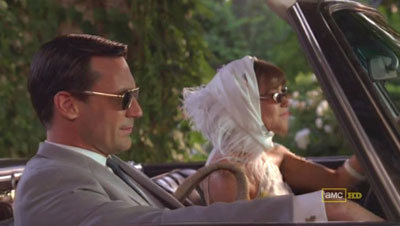
Mad Men is probably the best example of the new kind of shows that became possible thanks to shifts in the perception and consumption of the TV medium. The Sopranos pushed the boundaries of art in TV, but even as it plunged into subjective artiness and de-dramatized character stories in its later years, it still was based around action stories and had violence as the dramatic hook for viewers. Mad Men has no violence or action, but it’s still riveting in its precise exploration of a set of characters trying to survive or thrive in the 1960s. Visually, the show is unparalleled in its gorgeous production design and costuming, capturing all the glamour and narrative ambiguity of 60s European art cinema. It’s great to watch something on TV that feels like Fellini or Bergman, that uses our familiarity with the characters to explore complex issues and new storytelling methods. I’d be shocked if this show isn’t here when I do the best of the decade list ten years from now.


6. The Office (UK)
Best Season: Two
Best Episode: Season 2, Episode 6

The Office is the only comedy on the list, largely because it’s so much more than just funny, it’s got a core of sadness that is shockingly overturned by the show’s joyous Christmas finale. It’s also the most influential comedy on the list, pioneering the comedy of awkwardness that was widely adopted later in the decade, and influencing the documentary aesthetic of shows like Arrested Development, as well as obvious descendents like the American Office and Parks and Recreation. But, thanks to its short running time, the series makes no compromises, and is true to its characters and world. Thanks to the overall sense of hopelessness, the final scene between Tim and Dawn is one of the most romantic and beautiful in all of film. And, on top of all that, it’s the funniest show of all time.


5. John From Cincinnati
Best Season: One
Best Episode: ‘His Visit, Day Five’

I’ve seen John mentioned in a lot of decade writeups, usually in the context of the erroneous idea that Milch allowed Deadwood to be cancelled in favor of doing this show. One, that’s not at all true. Two, JFC was in many ways the continuation of Deadwood that they wanted, but for me, it refined all the things that worked about Deadwood and brought the dormant themes to the fore for a fascinating exploration of the way that communities form and what spirituality and the extraordinary mean in a contemporary context. The series blend of mysticism and verite was hard for people to take, but I loved it, few series had the religious awe this one carried, and moments like John’s sermon in the parking lot or the descent from the clouds that opened the final episode are among the most profound ever captured on film. I don’t consider this a qualified success, it’s outright one of the best series of all time.


4. The Wire
Best Season: Three
Best Episode: ‘Final Grades’

One of the most important and ambitious series of all time, The Wire has been praised extensively, and virtually no compliment about the series is hyperbole. It really is as good as people claim, both in terms of social relevance and in simple story construction. The show built an elaborate world and by the end of the series had nearly 50 regular characters floating through at any given time. And, it’s the characters who linger for me, particularly moments like the apocalyptic fourth season finale, or the operatic Avon and Stringer stuff at the end of season three. People will watch and analyze this series for years to come, it’s one of the most important documents of the aspects of our society that no one else is talking about. You need look no further than the fact that Crash won a best picture Oscar the same year as The Wire aired on TV to see where the real cultural dialogue was taking place this decade.


3. Six Feet Under
Best Season: Five
Best Episode: ‘I’m Sorry, I’m Lost’

Six Feet Under is a show that on the surface lacks the ambition of something like The Sopranos or The Wire, but it’s so brilliant in its character work, and its exploration of the search for meaning in everyday middle class life in the 2000s. All the characters were looking for definition, for a way to give their lives purpose and to find love and fulfillment in a world that often makes it hard to believe in anything. In a decade of irony and distance, this show forced its characters to confront their true selves, and the performances and writing crafted some of the most well rounded characters in literary history, Nate and Brenda in particular. By the end of the series, the accumulated experiences of all the characters led to a devastating series of events, and ultimately transcendence in the final montage that took us outside time to show that everything ends, but we all have to live first.


2. Buffy the Vampire Slayer
Best Season: Six
Best Episode: ‘Restless’

The 00s featured the series’ best episodes, the two season arc that spanned seasons five and six, as well as my personal favorite season of any show all time, season six. But, it also featured some shakier stuff in season four and season seven. Still, take everything I said about Six Feet Under above and add it an epic hero’s journey and you’ve got what makes Buffy so special. The character work was phenomenal, and I’ve never been as completely addicted to a series as I was watching the later seasons of the show. New characters like Tara and Anya, as well as Spike’s rise to prominence kept the series fresh, and Whedon’s auteurial experiments pushed the show to new heights of visual greatness, particularly in ‘Restless’ and the dazzling ‘Once More With Feeling,’ which managed to simultaneously be a great original musical, and forward the overall season plot. I still love the show so much.


1. The Sopranos
Best Season: Five
Best Episode: ‘Long Term Parking’

The show that redefined what a TV series can be, The Sopranos is the greatest sustained examination of a single character in cinema history, and is also a fascinating look at the priorities and concerns of everyday people in a post WWII, post 9/11 world. While the show drew attention for its mob storylines, what jumped out to me was how much the characters’ world reminded me of my life, and how the relatability of what was happening. It was an intellectually riveting series, full of internal patterns and long reaching character arcs and symbol tracks, but it was also intensely addictive. Watching the last couple of seasons, I was desperate to see the next episodes, and upon rewatch, the series reveals more and more layers. If The Wire functions as a portrait of the poor and downtrodden in society, The Sopranos explores the troubles of people struggling to maintain their hold on the middle class, to continue living their lives in a world where the country slips into financial ruin and loses its status in the world. Tony Soprano is America, and his dream is ours. The instantly iconic finale only adds to the series status as fascinating, endlessly debatable entertainment.

Thursday, May 14, 2009

How to Watch TV

Over the past ten years or so there’s been a seismic change in the way we consume serialized comic books and TV. Thanks to the rise of trade paperback collections and season DVDs, a lot of viewers are forgoing the initial release and choosing to ‘binge’ on a series after it’s been going for a long time. This can cause issues when a series doesn’t have the support to carry it along during its initial run, but it also leads to a dynamically different experience of the work in question. Some of my favorite TV shows were watched on DVD, and the switch from DVD to weekly release can be pretty jarring.

Side note, it really annoys me when people continually say things like “I don’t understand how they could cancel Arrested Development,” when of course they didn’t watch the show until several years after it aired. Maybe that’s why it was cancelled, since no one actually watched it when it was on. The same is true for Freaks and Geeks, Firefly and countless other shows. These are all great shows, but the reason they were cancelled is because people didn’t watch them.

Anyway, I watched all of How I Met Your Mother’s first four seasons over the past couple of months, and caught up to the point that I could watch the last few episodes live as they aired. When I started the show, there seemed to be a vast world of episodes out there for me, almost four full seasons to go through. I’d read online commentary where people complained about certain episodes, and I was like, chill, it was a decent episode, largely because when you watch a couple episodes at a time, the weaker ones are quickly forgotten and it’s the good moments that linger.

It’s a totally different experience watching a show on a weekly basis. With Battlestar Galactica, I watched the first two seasons in one go, and it wasn’t until I neared the end of season two that I realized there was a good long run of clunkers in there. Because I was just watching the episodes, the individual quality didn’t stand out as much. You see things more in big picture terms. When I watch the show on a week by week basis, each episode was a much bigger deal, and had to not only succeed on its own terms, but also move the overall narrative forward in some kind of meaningful way.

Watching How I Met Your Mother in short succession, I think I got more into the show than I would have watching it week by week. When I watch an episode now, what stands out is how slight the 22 minutes feel. I watch it, but it’s not quite enough time to draw me into the world. I still enjoy the show, but I don’t feel that same connection to it that I did watching a whole bunch in a row.

I think the shows that benefit most from viewing in rapid succession are weaker shows because they become more of a habit. I watched three seasons of Rescue Me in a row on DVD, but quit watching after watching the season four premiere live. Not having the next episode directly available made me realize, I just don’t really care about this show, and I have no particular reason to watch the next one.

I think that in many ways great shows benefit from having a week between episodes. Watching The Sopranos on DVD, it’s almost too much, you don’t realize the full impact of what the show’s doing because you’re racing to get to the next thing. Watching it weekly, you can savor each episode, and really examine what’s going on. The show is rich enough to support that kind of reading. I watched seasons five and six live, and was still really connected to the show, always anxiously awaiting the next episode. But, at the same time, I found the first part of season six much more satisfying on a DVD rewatch. ‘Kaisha,’ the season finale was incredibly frustrating when faced with the prospect of a year without a new episode. On a rewatch, I could appreciate the episode for what it was, and I now see it as a series standout.

Ultimately, I think you get the most out of a TV series when it becomes a hugely important piece of your life. When The Sopranos or Six Feet Under or final season Angel or The Wire were on, a new episode was always a high point of the week, and would leave me eagerly awaiting the next one. But, a lesser show isn’t going to have that kind of commitment and is more just sort of there when watched on a weekly basis.

What is the conclusion? I think watching episodes in rapid succession dulls out the extremes of a series. Your perception is of the whole rather than of the specific pieces, whereas watching a show on a weekly basis, you fixate more on individual elements. And, I think there’s a component of speculation that you don’t get when watching a show all in one go. I pondered and read countless Battlestar theories watching it air live, and someone watching on DVD won’t have the experience.

That said, ultimately a great show is a great show. And, when you watch seven seasons of Buffy is a few months, that can become your life in a way that watching the show weekly never could. I loved watching Buffy all in one go, but at the same time, I would have loved to have seen it live, and I’ll never have that chance.

Thursday, March 06, 2008

What is the Greatest TV Show of All Time?

With The Wire about to end, for the second time in a year, we’ve got people mourning the “greatest TV series of all time.” But, does The Wire truly match its HBO brother The Sopranos, how do you measure the ‘greatness’ of a long form work like a TV series? The gang over at The House Next Door have a podcast about Milch vs. Chase vs. Simon, and the question of the greatest TV drama ever. For me, it’s a bit more complicated than just the three shows they’re mentioning because the question of greatest and favorite blur into a kind of messy uncertainty.

It’s always tough to objectively assess art. If I had to talk about the TV show that gripped me the most, the one that had me thinking about it nonstop for the months I was watching it, and cast a shadow over everything else I watched for a long time, it’d have to be Buffy. I’ve never connected to the characters in a show the way I did to those people, I never had so much wrapped up in the character arcs, or such a need to see the next episode. There’s a specific kind of engagement that comes with a long form narrative like that series, and I’ve never been so involved in a series as I was with Buffy while watching its fifth and sixth seasons.

But, as much as I love the series, I’ll admit that it’s nowhere near the level of filmic art that either of the HBO ‘holy trinity.’ The show, with a couple of exceptions, is shot in a fairly straight ahead TV style, with traditional TV score and production values. The acting is beyond traditional TV expectations as is the writing, but in general, the filmmaking isn’t anything special. Whedon may talk about not wanting to do “radio with faces,” but only occasionally is the show not that.

The Sopranos is the most well made show in TV history. The cinematography is gorgeous, and the filmmaking is working in service of the story. It truly is a filmic experience, everything is contributing to the overall thematic push of the work. Chase did a phenomenal job of selecting directors that fit within the show’s style, but still managed to stand out as quality filmmaking. He raised the game for what’s possible with television.

For me, Deadwood isn’t close to The Sopranos or The Wire. I liked the show, but it never really grabbed me in the way the best shows do. There were pieces that I was engaged with, and I liked it all, but it just didn’t do it for me. The Milch show I really loved was John From Cincinnati, which picks up on what Twin Peaks was doing, another legitimate contender for greatest series of all time. What I love about John From Cincinnati is the way it built a universe over the course of the series. That was what Deadwood was about, but I responded more to the modern day angst and lack of purpose, broken by the appearance of this prophet from another place.

Part of what makes The Wire and The Sopranos such vital pieces of art is what they have to say about the world we live in. The Wire shows the state of the under class, which is struggling to survive in a world that’s increasingly devoid of legitimate ways to make a living. The Sopranos focuses on people who’ve “made it,” and explores what happens once you find out living the American dream isn’t enough for happiness.

For me, The Sopranos is more relatable. The mob elements were the hook, but the show is really about the contemporary middle to upper class, and the existential issues they face. I saw my world reflected on screen in Meadow’s struggle to get into college, AJ working at Blockbuster, the struggle to find purpose in a commoditized world. These characters were me or people I knew. Every genre work is about taking real world issues and spinning them into something more extraordinary through the genre’s lens. So, struggling to keep your job and lifestyle stable becomes struggling to keep your crew afloat in a mob war.

The Wire offers a different kind of life, one where people really are trying to survive, not pay off their vacation home. When I was first watching the show, I thought of The Wire’s gang story as kind of a prequel to The Sopranos, Avon and Stringer are like Tony’s father, the people who built “this thing of ours,” the people who the next generation can never live up to. In the later years, things change a bit. The gang life becomes less about accumulating luxury and ascending socially and more about surviving. Marlo has no interest in going legit, he wants to rule the streets, that’s it, no more.

But, which show is better? Which is TV’s greatest artistic achievement? John From Cincinnati, much as I love it, doesn’t quite match the emotional scope of The Wire or The Sopranos. But, I would place it in my all time top ten. Another HBO show that deserves consideration is Six Feet Under. The show is a bit overtly soapier than other HBO shows, but there’s moments in that show that touched me more than anything in The Wire or The Sopranos. Perhaps the saddest image I’ve ever seen in a TV show is Brenda sitting in the Quaker church while Nate is off with Maggie. It probably seems a bit petty to say that’s the saddest thing when you’ve got something like Dukie on the street walking to the Araber in the most recent Wire episode, but everyone’s life matter, and just because she won’t be shooting dope on the street doesn’t mean that being betrayed by Nate like that isn’t as absolutely devastating for Brenda.

I have a lot of affection for Six Feet Under, but I will admit that from a thematic and cinematic scope, it doesn’t quite match up to the other two. Still, much like Buffy, I have so much affection for the characters, I have to give the show high marks. I think there is a legitimate difference between calling something your favorite show versus calling something the greatest show. Buffy and Six Feet Under fall more in the favorite column, things I love more because of my emotional attachment to the characters than because of their inherent artistic quality. That’s not to knock them at all, creating characters so emotionally engaging is a major achievement in its own right.

So, the question remains, which is the greatest TV show of all time, The Wire or The Sopranos? For me, the emotional pull when watching the shows is totally different. In The Wire, the institutions work as a giant force, boxing the characters into awful situations. As the season goes on, we’re faced with increasingly awful scenarios, where characters we love come into irrevocable conflicts and suffer. I’m thinking most of season four’s final two episodes, where a season’s worth of random acts lead the total destruction of many lives. “Final Grades” is just a devastating episode, a legitimate contender for best TV episode of all time. The characters are pushed to the edge, to the point where they have to lash out, giving us those heartbreaking moments like Carver in the car, McNulty hearing about Bodie’s death, the death itself, and the sad fate of the kids.

The Wire is a show about people who lack control over their own lives, who try to do good things, but invariably wind up knocked down and destroyed by a system bent on preserving itself. I think it’s a hugely important show, and extremely relevant for many, many people in our world. But, I personally find The Sopranos more relatable. The Sopranos is about people who do have control over their lives, but invariably wind a way to mess things up, hurt others and do bad things all to help themselves.

The emotional pull with The Sopranos is between our attachment to the characters, our desire for them do the right thing and get out of the life versus the inevitable failure to actually save themselves. The quintessential episode for me is “Long Term Parking,” in which Christopher is offered the chance to run away and restart his life with Adrianna, however, upon seeing a white trash family at a gas station, he decides it’s not worth it. It’s a totally selfish bastard moment from him, one of the critical turning points of the series.

Now, it may be the fact that I’m from a world closer to The Sopranos than The Wire, but I find The Sopranos a more personally relatable show. Both shows have fantastic characters, but I think The Sopranos’ gang, Tony and Chris in particular, are a bit deeper and more complex than anyone in The Wire. Simon frequently talks about how story is paramount, which it might be for him, but its characters who hook me on a show. Ultimately, that’s what makes me give Sopranos the edge.

The Sopranos kept its quality remarkably consistent across the run. I know a lot of people say season one is the best, but for me, it’s either season five, or the final run of episodes that’s the high point. As the show went on, it became increasingly less reliant on story and became an extended look at the psychological troubles of all the characters. I loved that, even the much maligned season six part one plays brilliantly on DVD. “Kaisha,” which I called a disappointing finale when it first aired, was riveting on rewatch. Yes, season four is a bit off, but on the whole, I can think of only a handful of stories that didn’t work over the run of the series.

If The Wire was only seasons three and four, I’d give it the nod over The Sopranos. Those two seasons are about as perfect as any season in TV history, the other three seasons are more of a mixed bag. Season one is pretty great, but a bit simpler than The Sopranos or what follows on The Wire. I have a bunch of issues with season two, it’s still great, but the inevitable tragedy of Frank Sobotka just felt too one note next to the moral complexity of season one. Season five feels a bit hurried, and has the good, not great newspaper storyline hanging over much of it. It’s still absolutely amazing on the whole, but when you’re talking about the greatest show of all time, absolutely amazing with some flawed bits might not be enough.

And, from an artistic point of view, I think The Sopranos did more interesting things with film as a medium. The Wire is a wonderfully shot and acted show, it does exactly what it set out to do. But, I love the psychological craziness of an episode like “Fun House” or “Join the Club” and The Wire doesn’t have any equivalent. It wouldn’t fit in the universe they created because The Wire is all about showing the whole. It’s about showing the complex interactions of the city, but in many ways, a single human brain is more complex than this organism we call civilization. It’s an endless mystery, and I don’t think any show did a better job of exploring it than The Sopranos.

But, that’s not to diminish what The Wire does at all. The two shows are the definitive cinematic statements of the early twenty first century, a chronicle of a post 9/11 world. When people think about this era in film history, they won’t think about the movies, they’ll think about these two shows.

Tuesday, December 25, 2007

Best of 2007: Top 10 TV Series

10. 30 Rock
Best Episode – Greenzo

The second season was a bit uneven, but this show was still anarchic and hilarious in a way not seen since Arrested Development. It’s comedy was occasionally stupid, but always in a smart way, and the cast is consistently stellar. And, David Schwimmer’s guest appearance in “Greenzo” was better than the entire run of Friends.

9. The Office
Best Episode – The Deposition

Another show where the year started out uneven. The goofy race episode nearly killed it for me, but the abbreviated season ended very strong with the devastating “The Deposition.” This episode is the closest the American version has gotten to the original’s blend of dark, dark darkness and uncomfortably funny humor. For me, the darker the show gets, the funnier it is and the more emotionally affecting it is. So, go darker like that episode, not goofy.

8. Flight of the Conchords
Best Episode – The Third Conchord

The best new comedy of the year, Conchords never failed to entertain thanks to the fantastic songs in each episode. The songs were both goofy and funny, and genuinely good songs, surveying a variety of genres over the course of the series. Some felt awkwardly shoved into the episode, like “Frodo, Don’t Wear the Ring” and “Bowie’s in Space,” but generally they fit well. And, on top of that, the non-singing parts of the show were fun, if a bit repetitive. I’m not sure how well it will hold up in year two, but this year was a lot of fun.

7. Gilmore Girls
Best Episodes – Lorelai? Lorelai?

The show was far from what it was under the Palladinos, but Lauren Graham is such a strong presence, she, and the actors surrounding her, keep the show entertaining. Lorelai is the series, and even though I’m not a fan of the season on the whole, it was nice to see her get a happy ending. This wasn’t an X-Files level collapse, even slightly off Gilmore Girls is still strong.

6. Big Love
Best Episode – Take Me as I Am

The first season of Big Love had its moments, but didn’t ever really click for me. The second takes a big leap, going deeper into the characters’ lives and exploring the darker side of what it means to polygamist. The stuff at the compound is still hit or miss, but Barb’s arc, Rhonda’s arc and Ben’s arc all more than made up for it. The show grew a lot, and I’m eager to see where they go in season three.

5. Battlestar Galactica
Best Episode – Crossroads: Part II

This calendar year was not a particularly strong one for BSG. We got a bunch of weak filler episodes after the stellar opening run of year three. However, the two part season finale was amazing, primarily because of the final ten minutes, as bizarre and invigorating as anything I’ve seen on TV. The spiraling camera shots and surreal battle to “All Along the Watchtower” made up for what had come before, and even as I pondered the nonsensicalness of the cylon revelation, I was awed by its execution. But still, they’re going to have to do better next year. A great season opener and closer does not make up for phoning it in the rest of the year.

4. Friday Night Lights
Best Episode – Mud Bowl

If the show had not been picked up for a second season, it might be ranked even higher. The end of year one was fantastic, particularly the emotionally devastating “Mud Bowl” episode, as powerful as anything I’ve seen on television. However, the second year fumbled a lot of that opportunity with some really poor writing. The Landry murder plot is the most obvious target, but there was a lot of other lazy plotting along the way. The cinematography is still some of the best in TV history, and the acting’s stellar, but the writing is going to have to get better. Still, there are moments in the show that are almost unspeakably beautiful, the aforementioned mud bowl, the team’s trip to Dallas stadium in the season finale, and Lyla’s baptism in the season premiere. That baptism was at a Malick level of beauty. Why not tone back on the meth dealers, murders and underage relationships and get back to telling simple stories about a football team and the town it inspires.

3. Mad Men
Best Episode – The Wheel

The loss of The Sopranos left a big hole in the TV landscape, where would we find the adventures of a morally conflicted hero who cheats on his, gets drunk with his male coworkers and has many unresolved psychological issues? If HBO was smart, they would have put this show on after The Sopranos’ finale, not John From Cincinnati. The show picks up on much of what made The Sopranos great, the barely there stories which exist primarily to bring character tension to the surface, and the marvelously subtle characterization. There are so many fantastic performances here, Jon Hamm as the inscrutable Donald Draper, Christina Hendricks as the gorgeous manipulator Joan and my favorite, January Jones as the psychologically disturbed housewife Betty. The show really grew on me as the season went on, each episode adding more layers to the world and characters. The evocation of period look, and sensibility, is unlike anything attempted on television, and I’m eager to see the show move forward through the 60s and the change it will bring to our characters. There are certain shows you enjoy in spite of the fact that you know on some level it’s not good, this is not one of those, it’s challenging art all the way through.

2. John From Cincinnati
Best Episode – His Visit: Day 6

It’s been tough to watch this show pop up on countless worst TV of 2007 lists. While it might not be for everyone, JFC was a challenging work that showed how much wonder and joy can be found in everyday life. Milch continued the work he began on Deadwood, showing how social networks and community can be built, but added in the spiritual component, which took everything to a new level of philosophical interest. In future years, people will be analyzing JFC in universities, writing books about it and generally hailing it as a lost masterpiece. If you take the time to understand the series’ cosmology, it’s not that hard to understand, and along with this philosophical stuff, there’s some fantastic character development. Butchie’s transition from selfish junkie to caring man is inspiring, and the supporting cast went deep with great performances. I loved this show, I loved its message and I loved its execution. Give it a look when it comes out on DVD, it’s Milch’s masterwork.

1. The Sopranos
Best Episode – Walk Like a Man

It’s indisputably one of the best, and most influential TV shows of all time and this final nine episode run was probably its strongest season. Say what you will about the finale, the four episode run leading to it was the show’s strongest run. There was a crushing sense of doom hanging over the entire season, which delved deeper into Tony’s psyche than ever before. In the twin tales of his two ‘sons,’ Christopher and AJ, we recognize simultaneously how warped Tony is and how ordinary he is. The beauty of that last scene for me is that it takes Tony out of the mob world and puts him into the everyday world. Those people at the diner aren’t all potential killers, they’re people like you and me, he is part of everyday American life, and the blood it takes to uphold that dream is quickly forgotten if it’s spilled in the service of ‘family.’ My favorite arc of the year was Christopher’s dissolution, captured most wonderfully in “Walk Like a Man,” which sends him on such a spiral that his death in the next episode is a mercy killing. The season is a masterwork, and a perfect conclusion to one of the greatest TV shows of all time.

Sunday, September 16, 2007

My Emmy Nominations 2007

This summary is not available. Please click here to view the post.

Sunday, September 09, 2007

Top 20 TV Shows: Updated for 2007

In the midst of a golden age of television, it's time to update the list of my top 20 TV shows, made a year ago. There's been some changes, here's the new list:

1. Buffy the Vampire Slayer (Up 1)
2. Twin Peaks
3. Six Feet Under
4. The Sopranos
5. Cowboy Bebop
6. John From Cincinnati (New)
7. The Office (UK)
8. Angel
9. The X-Files
10. Freaks and Geeks
11. Arrested Development
12. Gilmore Girls
13. Battlestar Galactica
14. Babylon 5 (Up 2)
15. Friday Night Lights (New)
16. Seinfeld
17. Samurai Champloo
18. Deadwood (New)
19. 24
20. The Prisoner

Now, let me tell you why things have changed.

Bufy over Twin Peaks

I rewatched the whole of Twin Peaks after the second season DVD box set came out. It's still a brilliant show, with moments that are better than anything else to ever air on television. However, there were also some weak moments, and my overall impression of the series didn't match the feelings I had for Buffy. Buffy was the perfect blend of challenging intellectual content and just plain addictive storytelling. The best TV shows are like an addiction, you just need more, and never did I need more more than when I was watching Buffy seasons five and six. So, it ascends to position of best TV show of all time.

John From Cincinnati

Is it too soon to call it the sixth greatest show of all time? Perhaps, but right now, that's the way I feel. The show challenged me to think in new ways like no other show ever did before, and it also had wonderful character arcs. Great moments from the show, like John and Shaun's return from heaven in the last episode, were among the best TV moments of all time. I loved each episode so much, and watching it unfold was a joy.

Other New Shows

Friday Night Lights easily earned a spot, with a debut season that ranks among the best all time. It could easily go up another couple spots if the second seasons matches the first's quality. Already, I was debating putting it over B5, however, for now, B5 gets the edge. One of the tricky things about a list like this is choosing the criteria. Should I base the ranking on the show at its best, or an average of its whole run. Right now, I decided to go with my feeling about the show, which can be hurt by late season screwups. An average episode of Friday Night Lights is much better than an average B5, however, B5 has the scope of a five season story that FNL can't match just yet. The other new show is Deadwood, which is great, but not quite up there with the all time best shows.

So, that's the update for this year. Next year, I'll return and see what new shows are worthy of the list, and whether there's some shift among the old ones.

Friday, June 15, 2007

Why HBO Needs Preacher

While I thoroughly enjoyed the first episode of John From Cincinnati, I think it’s also pretty clear that this show isn’t going to become HBO’s next big smash. The channel has a reputation as the home of quality shows, and I think it consistently delivers stuff that you just could not see on a broadcast network. Regardless of the premise, I’m willing to give any HBO show a chance because I’ve had such good experiences with them in the past. But, it’s no secret that they’re at something of a crossroads following the cancellation of The Sopranos. But, there is one show they have in development that could provide everything they’d need for another breakthrough hit, and that is Preacher.

When I first heard that HBO was developing a Preacher series, I was happy, but a bit confused as well. It’s one of those dream projects I’d thrown around in my head, but never actually expected to see come to fruition. A few days ago, I saw a video interview with Garth Ennis where he said the project was moving forward, it just needed HBO’s approval to go to pilot. Hearing that, I realized that Preacher is exactly the show that HBO needs to make, and they’d be fools not to put this show into action. They wouldn’t be doing it for the comics community, they’d be doing it for themselves.

The Sopranos was a huge hit for a number of reasons, but what separated it from virtually every other HBO series was that it’s simultaneously elitist and fully accessible. Thinking of the show’s audience, the hyper intelligent urban elite can co-exist with working class guys who idolize Tony and his crew. This was one of the central issues Chase had to deal with, that a section of his audience pretty much wanted to be Tony, while he thought of the audience as Doctor Melfi and her social circle. Chase may have had issues with the whack ‘em all segment of the viewing public, but it’s precisely that group of people that made the show a hit far beyond the elite that is HBO’s normal target audience. And don’t think they’re not all about the elite, they proudly boast the tagline “It’s not TV, It’s HBO.”

A lot of what made The Sopranos a success was its controversial elements. The violence had people talking, and ultimately, that’s what makes a show a success. HBO’s business model pretty much relies on a show becoming watercooler fodder. Networks offer people shows for free and still struggle to get viewers. HBO doesn’t get the sampling that networks have, their shows have to be must see. The Sopranos was a cultural phenomenon, I didn’t even like to go on the internet until I’d seen the latest episode that aired, it was what people talked about, and consequently, helped to build the HBO brand.

While I like most of the shows they have, I think HBO made a bunch of mistakes in its recent programming choices. A show like Big Love is good, but isn’t as far beyond network TV as something like The Sopranos or Six Feet Under. The polygamy stuff attracted some initial press, but it’s not the kind of show where you’re going to be aghast upon hearing what happened on the latest Big Love. Now, a show doesn’t need to be that kind of show to work. Six Feet Under usually wasn’t, but SFU was also just so good that it became must see by virtue of our attachment to the characters.

The thing that a lot of recent HBO shows are lacking is that character attachment. Carnivale, Rome and Big Love just don’t allow for the same kind of engagement as a Six Feet Under or The Sopranos. I think a big part of this is the fact that they’re set in worlds that aren’t familiar to us. The Sopranos had elements of this, but also had ordinary suburbia to anchor the mob stories. On TV, it’s harder to pull off a long term story in a world that isn’t our own. TV is all about engagement with the characters, so unless it’s a massive singular narrative like Babylon 5, it’s tough to engage with the goings on. I respect them for making shows that are so ambitious and different, but it also makes it tough to become hooked on them. The best TV shows are addictive, you don’t want to respect a show, you want to need a show, and I never really needed to see the next Carnivale or Big Love.

The Sopranos and Six Feet Under are both very sophisticated character dramas, a genre that TV can do better than any other. They both have overarching narrative arcs, but also enjoyable in each moment along the way. I fear that shows like John From Cincinnati and Carnivale fail because they rely too much on mystery instead of character substance. I like mysteries, but a lot of viewers don’t have the patience for anything but certain fact. And, mystery should exist as the hook to get us into the characters’ world, not the substance of the entire show.

So, what HBO needs is a show that would be controversial, provoke discussion, and be different from network TV, but at the same time provide us with compelling character arcs in a relatable setting. Preacher would do all this, be the exact kind of show that they need right now. Reading Preacher, I was hooked by the over the top violence and grotesquerie, but what kept me coming back was the story of Jesse and Tulip, as well as the development of their relationship with Cassidy. The series has a strong character hook that will make viewers need to see the next episode once they get started. There are very few works that are just as compulsively readable as Preacher. I remember sitting down and reading entire trades in one sitting, it hits that perfect addictive place. When I started watching Buffy, the closest thing I could compare it to was reading Preacher.

The other thing Preacher has is a lot of controversial material. There’s going to be a lot of articles asking whether this show goes too far, in both the level of its violence and its not exactly reverential take on religion. There’s going to protests, there’s going to be debate, and all that is good for ratings. People will know this show is debuting and that’s half the battle. Plus, you’ve got the entire comic series fanbase who will be likely to tune in and give the show heavy internet support. Plus, the violence and sex would be something a network show couldn’t do.

The one potential issue I see with the show is its appeal to both women and the liberal elite audience that makes up a lot of the channel’s audience. The beauty of The Sopranos was that it offered really strong female stories, and the female hook to capture the female audience. Tulip is a strong female protagonist, and her relationship with Jesse would surely inspire some fanfic, but the stereotypical female viewer would likely be put off by both the ridiculous amount of violence and the macho posturing in the series. That essentially conservative attitude would also be troubling for much of the audience. But, I think it’s better to push people than just give them something that gets no reaction.

So, I think HBO needs to get Preacher in production stat. It’s the kind of show that will have people talking, and the built in comic book appeal will give it an immediate boost. If this show is a huge success, it could lead to more Vertigo based TV shows. I’d love to see a Sandman series, and in particular, an Invisibles series, preferably with me as the show runner on that one. Hopefully Alan Ball’s True Blood won’t preclude HBO from greenlighting another show with vampire content.

Monday, June 11, 2007

The Sopranos: 'Made in America' (6x21)

“Made in America” wasn’t exactly an epic conclusion, but, like a lot of series finales, it’s a perfect summation of the series’ message, and as such, we shouldn’t have expected anything else. It’s at times frustrating, but in the end, I was satisfied by the episode, particularly the haunting mix of safety and menace in the final moments. It wasn’t the best episode of the season, in fact, it was one of the weaker ones, but the series ended in a good place and I don’t feel like I need any more.

The central conceit of the series was the idea that Tony is just like you, a family man with a wife and kids living in suburbia, only he’s also in the mafia. An ordinary person plus something special is usually the best way to make a TV show work. You need that other element as a hook, to lend some life and death stakes to the drama, but at the same time, drifting too far into a different world strips the show of relatability. I find this show more true to my life than any other in TV history, it perfectly captures the world of suburban New York in the early twenty-first century, the rhythms of everyday life.

So, in this episode, we retreat from the epic sweep of the recent run of episodes back to a more subdued status quo that’s actually pretty nice for Tony. Looking at the series in light of this episode, it’s clear that the operatic violence of “The Blue Comet” was an anomaly, this kind of war isn’t standard for the mob today. Phil was one of the last remnants of a dying age, something he made explicit in his speech last episode. He is the one who instigates this war by refusing to compromise on the asbestos dumping, and he’s the one who instigates violence by attacking Tony’s crew.

Thematically, it makes sense for him to die because his worldview just isn’t viable anymore. Even his own crew recognizes that what they’re doing doesn’t make business sense, Tony was right in “Kaisha” when he tried to smooth things over with Phil. They have lost all the higher principles of “this thing of ours,” and are left with just another business. Phil endangers the lifestyles they’ve all created, turning them back into soldiers, but even then, Tony leaves the safehouse to check in on his family. Carmela wants to return to their house, not ready to live the fugitive lifestyle. It’s just a matter of removing the threat and getting back to normal.

I think one of the most important scenes of the series was Little Carmine’s speech in “Stage 5,” in which he talked about how he backed off being boss when his wife told him she didn’t want to be the richest widow in Jersey. With so many characters dying over something as trivial as an asbestos dumping, the absurd incongruity of what they’re doing falls into place. The organization has no meaning beyond money, so they’re not really dying for anything. Phil is so frustrated at his prison stay because he gave us twenty years of his life for something he believed in and when he got out, he found out that no one believed in it anymore. What they’re doing is just like any job, would you put your life at risk for a promotion? Here, Carmine seems eager to stay out of the fray, he knows that one wrong word could lead to his death, so he just stays in the back and hopes that things will work themselves out. He has more important things that this war.

Tracking back a little, the episode opens with a lot of foreboding, heavy music on the soundtrack, snow swirling around and Paulie and Tony drive out to meet with Agent Harris. Most people talk about Melfi as the viewers’ stand in, but over the course of the series, and in this episode in particular, Agent Harris serves the same role, infatuated with Tony and secretly helping despite knowing that he’s a bad man. I read one review of the finale that said Harris was in a relationship with a Brooklyn cop, and that brought a lot of things together. The whole arc makes a lot more sense if that woman is the one Phil set up to be beaten and raped, and Harris is now using Tony to get revenge for his girlfriend. I’m not sure where in the series we saw she was a Brooklyn cop, but it works for me, and is a nice counterpoint to Melfi’s rape storyline. There, we saw her refuse to go outside the law to get what was quite justifiable justice. However, the actual law officers feel free to use the mob when it’s to their advantage.

Even without that connection, the arc works. Harris gets vicarious thrills from being in Tony’s world, and after spending so much time observing him, he pays Tony back for the intelligence about the Arabs. On a thematic level, the arc is indicative of the declining power of the mafia. They aren’t a real threat to national security, they’ve been replaced by something much larger. So, the government doesn’t have a big problem working with Tony to help stop the chaos.

From the time the series began, the world has gone through a lot of changes. 9/11 caused a seismic shift in the country’s political landscape, and few shows have engaged with post 9/11 life in the way that this season did. The mob isn’t as much of a threat anymore, and, as a quintessentially American entity, they’ve gained the tacit acceptance of the government. Last episode, Harris told Tony how the mob protected the Brooklyn Navy Yard during World War II. Now, Tony is serving the same role, they’re a part of the defense strategy, and are tolerated for that reason.

I would argue that the episode’s central theme is engagement with the American dream, and this is contained most notably in the resolution of AJ’s arc. At Bobby’s funeral, AJ talks about the fact that people still come to America with hope, in search of a better life, but, according to him, you can’t find it here anymore. Disillusioned by his experience with how the other half lives, he has stopped believing in the myth of America and is obsessed with the hypocrisies of the war in Iraq and the way that the American people just go about like sheep when so much is wrong with the world. He says it’s ridiculous to talk about the Oscars when people are dying in Iraq, ignoring the fact that you need some lies to live with the world. Part of coping with problems is just accepting that there’s going to be some bad stuff in the world we can’t deal with, and just letting it go.

AJ felt an inability to change anything in the world, and that’s what drove him to his suicide attempt. However, his growing relationship with Rhiannon, who he would love to love, helps set him on the right path. The car explosion helps jar him out of his funk and make him realize that he does want to live. Ultimately, what happens to him is that he learns to accept the lie again. He seeks to enlist in the army as a way to make a difference in the world, if he did that, then he could feel good about his place in the world. However, soon enough, he doesn’t even need that, moving away from his moment of pain, he buys back fully into the lie. AJ gets a BMW, that has good gas mileage, and takes an entry level job with Carmine because he doesn’t need to change the world anymore, just helping himself is enough.

I think it’s notable that AJ takes over for Christopher as Carmine’s partner. Tony has replaced one surrogate son with the other, ironically the thing he viewed as a distraction for Christopher becomes a salvation for AJ. Christopher does linger in the episode, with the cat, who incarnates all the people they’ve killed over the years. They’re still there, and even after Paulie drowns the cat, he returns. The conscience doesn’t clean that easy. But, it’s possible to live with the guilt, it’s there, but not actively bothering the characters.

I know people are going to talk about all the loose ends left open by the episode, but I think everything was resolved to a satisfactory level, as much as is possible without being contrived. Very few lives reach a real end point, things just go on, you could do a Six Feet Under style hop through time, but other than that, there’s really no ending you can give a TV show other than we’ve reached a momentary stasis point and things will go in the future. In that respect, this reminds me of the end of Buffy, some characters die, others go on to do new stuff, it’s not an ending so much as a stopping point.

To that end, almost all the long running characters get a nice farewell. We see Janice becoming her mother, something that’s made literal in the great scene where Junior calls Janice Livia and her daughter, Janice. Janice already resents Bobby’s children and will likely be so overprotective of her own daughter that Nica will rebel in the same way that Janice did as a child.

Junior is left in a haze, remembering only vaguely the days when he and Johnny Boy were part of “this thing of ours.” The final scene with Tony is the closest you’ll get to a glimpse of Tony’s future, he could one day end up a prisoner of the federal government, out of his mind, staring at some birds on a windowsill. It’s tough to see a character we’ve known for so long, who was once so fierce and lively turned into a vegetable, but that’s what the passage of time does.

The reason TV is such a powerful storytelling medium is that we have watched these people get older in a natural way. Movies usually feel constructed, a story designed to make a specific point, whereas great TV shows are more like just dropping into a world and checking in with the characters every year to see what they’re up to. While the delays between seasons were frustrating, they allowed the cast to age and grow in unexpected ways. If the show had ended in 2005, there’s no way we would have gotten the great stuff with AJ that we did this year. This show is a testament to what TV can do, and while it’s not my favorite show of all time, I think it is the best made.

Paulie ends pretty much where he began, sitting outside Satriale’s, looking back on some old times and getting ready to move to the future. The final scene with him and Tony is great, they’re the last two members of the old guard, the only ones with memories of Sil and Ralphie and Pussy. Tony’s generation is dying off, replaced by the Jasons and the random members of the crew. The faces change, but things are still basically the same.

Meadow, like her brother, buys into the lies necessary to believe in their family’s version of the American dream. One of the notable things about both kids is the way that they’ve each just accepted what their father does without any questioning or real moral trouble. AJ couldn’t stand the violence in Iraq, but never questioned the fact that everything he has comes from violence. Breaking down that lie would destroy his entire world and that’s why both he and Meadow ultimately choose to embrace their existence rather than run from it. While Tony succeeded in keeping them both out of the “Family” proper, they’re both involved in peripheral ways. AJ is working with Carmine, and if he was to have a club, he would certainly be involved with some of the criminal element.

Meadow’s arc is somewhat implicit. Over the course of the show we see her interrogate her father about his work, in the legendary “College,” move away from the family while dating Noah, then move back towards them when she was with Jackie Jr. At the end of season three, she has an outburst and disrupts the family order, and over the next couple of seasons, moves gradually away from her family. However, starting with last season, she and Finn become divided over her family’s criminal involvement, and ultimately she sides with her family rather than Finn. She could have stayed in California, but instead she moves back to Jersey.

Now, Meadow is a smart girl, she went to Columbia, she knows what her father does, but still, she expresses outrage at the way her father is treated by the government. She has bought into the myth, that they’re being persecuted because they’re Italian Americans, not because they’re criminals. This is absurd, but when you listen to her at the sushi restaurant, she fully believes it, and when Patrick is talking about his case, he says he’s defending a judge involved in some kind of corruption scandal, which Tony seems to be a part of.

By the time we reach the end of the episode, all the chaos of the past few episodes has essentially resolved itself and we’re back to as close to normal as we can get. I think one of the key things to understanding Chase’s work in the later seasons of the series, 6A in particular, is that he works based on the rules of real life, not of TV. So, exciting stuff isn’t always going to be happening to the characters, he’s not going to invent a lot of artificial drama that can resolve itself in a single hour, or give characters simple, easy to resolve arcs. Instead, in the style of real life, people will slip into patterns of trouble that repeat, most notably AJ and Christopher across the course of this two part season.

Christopher’s constant relapses and recoveries from addiction make no sense from a dramatic point of view, shouldn’t his arc lead him somewhere? It does, but in a less obvious way. All that slipping and reversals are critical to bringing him to the place he is in “Walk Like a Man,” where he nearly turns on Tony and the crew. Similarly, AJ’s depression works so well because we saw the seeds of it in 6A then it got fully paid off in 6B. Most TV characters don’t really grow, but face a constantly rotating set of problems. The characters on The Sopranos change, but always have the same core issues, and I think that’s true of real people. I can’t relate to constantly being caught up in love triangles, but I can relate to AJ’s issues with the world or Christopher’s troubles with Tony. The beauty of the show is that the characters aren’t likable in traditional ways, but are always completely relatable.

Anyway, what I’m getting at is that the last few episodes were something of an anomaly. Everybody’s life got thrown into chaos, as it appropriate at the climax of the story, but Chase chose to include this episode to show that this isn’t the status quo. Our lives don’t build to a big ending then stop, big stuff happens and people go on. Bobby dies, Janice moves on. The events echo, but they will gradually fade, and by the end of the episode, everything seems to be back to normal.

This brings us to the simultaneously brilliant and frustrating final scene. When the episode stopped, I, like many viewers, thought the cable had gone out and was incredibly frustrated. But, I realized it was past 10, so we had probably reached the end of things. It was tough to take in that moment, but I think the jarring nature of the cut out was a great choice, and a really bold one.

The scene directly follows Tony leaving Satriale’s, where he always gathered with the mob family. It used to be a bustling place, now it’s just Paulie left. Tony has lost a lot of friends, but ultimately, he never cared about the mob family as much as he did about his real family. He always claimed that everything he did, he did for them, and sitting there at the table, everything seems to have worked out pretty well for him.

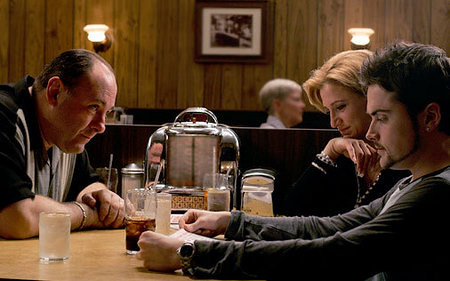
There’s a number of critical things to look at in this scene. Let me start with the setting. This is a restaurant that’s not the cutting edge, sleek place where Tony and Meadow ate sushi, it’s an old style, classic family restaurant. Looking around him, we see a boy scout troop, a couple of teenagers and a guy with a USA hat on. These are ordinary people who seem more Midwest than Jersey, all American people, out enjoying a meal with their families. Putting the Sopranos in this setting reinforces what I’d argue is the central point of the episode, that they are just one more piece of the lie that is America. As AJ makes clear, there’s all this awful stuff happening in the world, and even right next door, but does it matter?

That’s where the music comes in. Again, Chase doesn’t go for what’s cool, instead it’s a track that just says guy sitting in a pickup truck with a mullet, Journey’s “Don’t Stop Believin.’” Music is always carefully chosen on the show and this track sums up the core theme of the episode. America is a dream we all have, it’s built on blood and hate, but if we’re happy, does that matter? In this moment, Tony watches his family come together, AJ’s happy, Carmela is happy, things are good.

But, simmering under the surface are a myriad of threats. He may be indicted for the gun charge, Carlo has flipped and there could still be gunmen out there. He’ll never be completely safe, but they can’t dwell on that. What AJ’s arc is telling us is that it’s not possible to fully engage with our world, there’s too much awful stuff. We just have to accept the lie, and we can’t stop believing in it. I absolutely love the way that song works in the scene, the cheesy, but great build as Carmela sits down. This is the kind of song she’d love, the kind of song they’d have played when they were younger together. They have a dream that they can hold on as long as they believe in it.

Watching the scene, I realized that Tony was going to get a happy ending, everything he really cares about is still there and he’s gotten pretty much everything he wants. Yet, hanging over all this was an inescapable sense of menace. A mysterious guy hovers at the bar, and Meadow struggles to parallel park. Tension is building under the serenity, a device that lets us understand how Tony views the world. Particularly after the hits on Bobby and Sil, everything around him is a potential threat. This is how he’ll always live, trying to believe in the lie, but fearing what’s around him.

The final moment of the show is extremely jarring, and I think that’s the point. Most of the seasons end with some kind of family tableau, and we seemed to be building to that, but just as Meadow is walking in, we cut in what’s probably the most jarring end of a series since the final moment of Twin Peaks. I read this ending as basically saying life goes on. The real world has no fade outs and music over the credits, things just happen and eventually we die. The show died in that moment, but the world carries on.

Will Meadow get to the table? Was the guy in the bathroom a killer? Will Tony be arrested? I think the answer is yes only to one of these questions. People are already talking about the way that Chase screwed them on the ending, but seriously, what do we need to know? Tony might be killed or might be arrested at any moment in the show, we don’t any sort of definitive closure at the ending. It would have been easier to end on Meadow sitting at the table, but he wanted to go out on a moment of tension, and that’s what we got, in a spectacular fashion. The lack of music over the credits was particularly jarring, just silence, no more from these characters. I don’t think we’ll ever see a movie, and I don’t think we need one, I am fully satisfied with how all the characters’ stories were resolved.

The series has always been about lies, the ones Tony tells himself to justify his actions, and the ones Carmela tells herself to justify her marriage. The characters who couldn’t accept the lie anymore, like Christopher, all ended up dead. You can’t challenge the world and you can’t leave the world. Instead, you simply need to believe in the myth that what they’re doing is meaningful and worthwhile, that it’s more than simple extortion and violence.

What this episode brings home is the way that Tony Soprano is no different than you or I. We all buy into this myth of America, the shared past and the uncertain future. We all think that the new generation’s going downhill, but really, things just go on. The generations cycle and people change, that is life in America. Tony has been a success because he’s found his place and he hasn’t challenged the status quo. He may be living in denial about all the bad things he’d one, but it doesn’t matter because all of us are. Sitting in that diner, he’s no different from you or I. We’re all a product of a culture that pushes the bad things below the surface so we can live in the dream. Watching his kids grow and surpass him, he’s living the American dream, going from criminal to lawyer in one generation. And, if you believe this series, there’s no real difference, it’s all a part of this one huge mosaic of lies and dreams that is America.
Thursday, June 07, 2007

The Sopranos: Top Ten Episodes

By way of summarizing the series, I’m going to go through my top ten Sopranos episodes. It’s a lot tougher to do that with this show than with a lot of others, say Buffy or even Six Feet Under, since every episode is at such a consistently high level, and the show doesn’t usually use the build to a big mythology/finale episode structure of a lot of series. Every episode is so good that it’s only the weaker ones that stand out. But, there’s still better and worse episodes, and I shall delve into them.

Notably, there are no season one episodes. A lot of people will tell you season one is the show’s best season, and it is fantastic, but I don’t think it’s as layered and complex as the later years. Looking at that season now, none of the characters are as developed as they are in the later years. Adrianna is just a pretty girl, Chase didn’t know at this point what she’d become, and the same is true of Paulie and Pussy. From a plot level, it’s probably the tightest season, but it’s also the most “TV” in the sense that it’s got more obvious standalone stories and a clear arc throughout the season.

While the later seasons are messier, they feel more real and more character centered. It’s the character hooks that make the series so wonderful, and that’s the reason that season five is my favorite season of the entire series. There, they used less serial plotting than in the previous seasons, instead focusing in depth on one or two characters each episode. This meant that each episode gave us a ton of development and much to ponder and discuss.

Also, I watched the first four seasons on DVD, then watched the fifth and sixth as they aired. So, it’s harder for me to separate those early seasons into individual episodes, they all sort of bleed together, while the latter are separated in my mind. I’d stand by these picks regardless, but it’s possible if I’d watched those earlier seasons separately, they’d be more distinguished.

Anyway, on to the top ten, in chronological order…

D-Girl (2x07) – This episode is the culmination of Christopher’s first flirtation with the film business, putting him and Pussy at a crossroads between serving Tony and pursing their own best interest. I loved Christopher’s interest in film because it was a dream, a way out of the world. In him and Adrianna, I always saw hope, the chance to escape this world and not become like Tony. This episode plays that conflict, for a moment it seems that he can be successful and move on to something better, but, as with the Vito storyline, he finds out that it’s tough to play by civilian rules, to actually have to work for what you want, not just get it. It’s a prescient episode because it contains all the central themes of season six, the way that these people will give up what they really want for the easy life of the mafia.

We not only get this, we also get some of the most emotional scenes in the series, as Pussy is forced to restore AJ’s faith in his father even as he’s betraying him to the FBI. The best scene is Pussy upstairs in the bathroom, crying, aware that he will either have to leave this world or eventually die. On top of this, we get some really funny stuff with Jon Favreau, one of the few celebrity playing themselves cameos that doesn’t feel self indulgent or too inside.


Funhouse (2x13) – There’s a lot of good stuff in season two, the fantastic Robert Patrick arc, Christopher’s acting class, but this episode’s surreal journey to inevitability is the moment when the series established its rich dream mythology that would infuriate some fans and enrapture others, like myself. I love that they spend so much time with the weird dreams as a device to get Tony to face what he already knows, that Pussy is working for the feds. It’s crazy, exciting stuff with some of the series best visual moments.

And then we get the sad resolution of Pussy’s story as he’s gunned down and dumped in the ocean. This is a major turning point for Tony, and the series as a whole. We’d seen Tony kill before, but to kill a friend? It’s cast a shadow over the entire series, echoed in this season’s “Remember When.”


Pine Barrens (3x11) – If this episode wasn’t so good, I’d be mad it even existed because it’s led to five years of people asking when the Russian’s coming back. To that, I can only say you’re an idiot. People who consider the Russian a loose end completely miss the point, it’s like saying Pulp Fiction sucked because we never found out what was in the briefcase. The entire point of the character was the uncertainty of whether he was dead or alive, a menace out in the forest. To resolve that would strip the episode of a lot of its power, and particularly three seasons later, it’s not going to happen. Reading some online postings, you’d think it was satire, but people apparently really are furious he hasn’t come back and even spinning elaborate theories that involve the Russian coming back for the final episodes. Let it go.

Anyway, that aside, this is a brilliant episode. It’s the show’s funniest, as we witness Chris and Paulie go through all kinds of indignities in the woods, eating ketchup packets and making shoes out of rubber. Visually, it’s one of the show’s best, with the gorgeous snowscapes and seemingly endless woods. If nothing else, this episode is testament to the fact that the show can be incredibly funny when it wants to be.


Amour Fou (3x12) – The resolution of the Gloria Trillo arc is fantastic stuff, tying the season back to Tony’s now absent mother. While I’m obviously not happy that Nancy Marchand died, losing the character when they did worked in the show’s favor. They had pretty much exhausted Livia herself by the end of the second season and she becomes more interesting as a specter hanging over everyone. In this episode, Tony finally realizes the similarities between Gloria and Livia and, in an incredible, intense scene, leaves her. Earlier in the episode, we also get the great scene where Gloria drives Carmela home from the car dealership. The show can do tension like no other, and this episode was full of it. While I like the mob stuff, it’s really the personal drama that interests me, and where normally we’d get the season’s death in the penultimate episode, here we get the death of a relationship.


Whitecaps (4x13) – The long simmering drama surrounding Tony and Carmela’s marriage comes to a head here, as she finally rejects him and his philandering. The episode is full of incredible scenes between the two of them, moments that were building for four years and finally come spilling out here. Falco and Gandolfini have never been better. The episode is the series’ longest, at 75 minutes, and that extra time helps give things an epic scope as they march towards the separation, taking the family’s broken dreams in their wake, and setting up the brilliance of season five.


Irregular Around the Margins (5x05) – A brilliant episode at the time, and in retrospect, the critical turning point in Tony and Christopher’s relationship. This is what inspires Cleaver and starts the rift that will eventually lead to Christopher’s death. That accident is a replication of what happens here. Adrianna’s arc over the last couple of seasons was some of the best stuff the show ever did and this episode takes it to emotional, excruciating places. One thing you won’t see on another show, probably ever, is a character getting IBS, but they went there and it provided the impetus for Tony and Adrianna’s flirtation. There’s so much tension here, so much pettiness among the crew. I love the way their pettiness threatens to spill over into violence.


Long Term Parking (5x12) – Adrianna’s murder was something the series could never come back from. Writing abut the first part of season six, I said that the show had lost something when she died, the hope that maybe someone could get out and live a better life. When she died, that possibility disappeared. But, that was the whole point. As we see in season six, her death has forced everyone to either commit to the life or die. Those are the only options.

What happens here destroys Tony and Christopher’s relationship, largely because of Christopher’s own weakness. In a devastating scene, he is all set to run away with Adrianna, or at least I think he is, until he sees a white trash family at a gas station. Faced with the possibility of living a normal life, he decides to turn Adrianna over to Tony and Silvio, who kill her in the woods. The tension of this episode comes from the juxtaposition of the inevitable ending and the glimmer of hope we cling on to. Even when she’s in the car, I’m hoping that maybe they weren’t lying, that she’s off to a new life somewhere. But, she’s not and by episode’s end, she’s dead


Join the Club (6x02) – I love the series’ forays into metaphysical weirdness, and few were more satisfying than this trip to a parallel universe where Tony becomes Kevin Finnerty, businessman. The basic conceit of this episode, a man who switches briefcases and becomes someone else, is fascinating and could be a feature right there, but wrapped up in what we know about Tony, it becomes an exciting way to view the man he could have been. Few episode endings are as haunting as Tony sitting alone in his hotel room, looking out at the revolving lighthouse as Moby plays.

On top of that, we get the phenomenal hospital scenes, a showcase for Edie Falco. And, the episode’s importance to the series as a whole was confirmed during Tony’s peyote trip, at which point he realizes that there are other world than just this one. Did he remember the Kevin Finnerty experience in that moment? I think he did. The intensity and power of this episode wasn’t matched until the next episode on the top ten list.


Walk Like a Man (6x17) – Before this episode, we’d been in something of a holding pattern for eight or nine episodes. There were great moments, but there wasn’t any sense of urgency. I was thinking that the show would end in a leisurely manner, maybe some people would die, but things would go on as they always had. Then this episode happened and everything changed. As you’ve probably gathered, I’m a big Christopher fan and this is the episode that essentially seals his fate. He has struggled to be what Tony wants him to be, but he just can’t do it. If he’s with them and drinking, then he’s a disgrace, if he’s not, he’s also letting Tony down. It’s a conundrum and there really is no answer. There’s so many brilliant scenes with him here, including the shocking death of JT. Chris is going off the rails and it’s pretty clear he doesn’t have long to live by the end.

At the same time, we get the first major focus on AJ, who will come to dominate the rest of the season. He’s drawn into the world of the mob and for a moment it seems like he will follow his path. The happy family tableau at the end of the episode is all the more striking for the fact that after this, they can never be together in the same way again.


Kennedy and Heidi (6x18) – Any episode of this final run could easily be on this list, but I went with “Kennedy” for the ambition and sheer audacity of making an entire episode about Tony trying to make other people feel that Christopher’s death was a good thing. The pageantry of mourning seems so hollow to him, and we’re placed right there, disregarding common human decency, sadness at Chris’s death, to instead share Tony’s detached view. There’s not much emotion at Christopher’s death, that came in the previous episode, this is all about Tony and his struggle.

The peyote trip is the capper, as Tony tries to relive his Kevin Finnerty existence and winds up stumbling dazed through a casino, a virtual zombie. I love the way they depicted the trip, a strange emotional capper to a really surprising journey. It’s a fantastic hour that shows the series is much more than just a mob story.


Again, “The Second Coming” and “The Blue Comet” could both easily have made it on the list, but I wanted to give some variety. Perhaps I’m just enchanted by the new, but those episodes seemed as good as anything the show has ever done. Either way, hopefully the series finale will find a place on the list and be as strong as the past few episodes have been.

The Sopranos - 'The Blue Comet' (6x20)

“The Blue Comet” is an interesting episode because it’s simultaneously exactly what you’d expect and totally unexpected. After Tony was shot I concluded that the show was not likely to go out with a bang, more likely we’d see Tony fade away, life go on. After the slow fade of last season’s finale, and even through the first couple of episodes of this season, I was still feeling that way, but starting with “Walk Like a Man,” everything changed and since that episode, we’ve been on a march to this point, with everything falling apart, to the point that this episode leaves Tony alone in a safehouse, all his close friends dead, separated from his family. It’s an apocalyptic episode and another masterpiece from Chase and his team.

The show has teased a New York/New Jersey war for a long time, from Tony’s betrayal of Johnny Sack in “Whitecaps” to the near war in last season’s “Kaisha,” and after the buildup last week, I was hoping that he wouldn’t stop things before they started again. This entire season has had a feeling of dread, and this episode took it to almost unbearable levels. The opening scene, with Silvio murdering Burt Gervasi set up that this was going to be a big episode, though I was a bit unclear who he was murdering.

Being near the end of a series makes every threat a bit more real. Last season, you’d never have thought that Phil really might take out the top guys in Tony’s crew, now, it’s a real possibility, and as Bobby walked into that train store, he was already dead, it was just about waiting for it to happen. Things were so bad after Silvio died that I legitimately thought Tony might go.

On a thematic level, the episode integrates a lot of things that have been going on under the surface for a while. Phil says that he needs to take out Tony Soprano’s “glorified crew” because they don’t really believe in the mythology of the mafia. It is the ritual that makes them more than gangsters, the ritual is the reason Phil spent time in prison, and if that’s meaningless, then so is his time in prison. That’s also why Tony isn’t a “real” gangster, Phil mentions his lack of jail time here and shut Tony down with it last episode with his already classic speech about compromising.

The entire show has been about Tony’s inability to live up to his father and cinema’s image of what a mobster should be. Now, Phil cracks on his team, marveling at the fact that Bobby is one of the top three guys. After the death of Sil and Bobby, Paulie is Tony’s only ally, and he’s constantly shown himself to be selfish, oblivious to the needs of others. Tony is left with basically no one, sitting alone in a room, holding a machine gun.

It’s almost surreal to have these murders actually happening. While I think Chase needed to pay off all this buildup, I do think it’s a bit of a resignation to go down this road. I had come to terms with the fact that the show wasn’t going to have a big ending, and it’s a surprise to see this happen. I would have liked to see Chase screw with people one final time and throw out a big dream sequence or something like that at the close, but this payoff is certainly better than something like “Kaisha.”

The dissolution of Tony’s crew fits with one of the central themes of the series, the decline of the mafia. Even if Tony survives and either kills Phil or negotiates a peace settlement, he’s got no one left. All his successors are dead. It’s just a bunch of random thugs left, no one to carry the legacy. Can Tony run things like this, how will it work? The only person I could see stepping up to follow him would be Meadow, but I don’t think protocol would allow that.

On a familial level, we see Tony pushing away from him. He’s too much of a target, and now the only way to protect his family is to leave them. It felt final when they left the house, like they’ll never be back there. I do like the implications of him abandoning his suburban mansion to go back to an old neighborhood style house.

This episode also sees AJ fail another test. I’m perhaps most curious to see how his story resolves. He seems completely incapable of dealing with the world, will this latest outburst from Tony get him back on track or push him completely away? His arc this season has been phenomenal, here we see Tony finally treating AJ like his parents treated him, harsh, stripping him of his autonomy. He clearly blames Carmela for what happened to him and he’s trying to reverse some of that now.

This comes up in the fantastic Melfi scene, where she finishes his sentences as he goes through a rote list of complaints. She’s so cold there, I was fearing for her. Tony respects her too much to hurt her, but he is hurt by her abandonment of him at such a low point. It is questionable of her to dump him so suddenly, but that study clearly pointed out what was always apparent, that her work was helping him be a better criminal. Does someone like Tony deserve to be helped? Wouldn’t ‘progress’ only make him worse? Melfi never seemed to think that she could save him, and she must have known that much of what she said led to violence. I always thought she was complicit in that, maybe she didn’t realize how much she was until Elliot told her.

I’m guessing that’s the last time we’ll see Melfi, barring some kind of closing montage with all the characters, and it’s a great way to go out. She realizes that her work isn’t going anywhere, and that by treating him, she is in some ways complicit in what he’s doing. She tried to help him, but he wound up saying the same things and not facing up to the basic morality of his life. Unable to do that, she has a right to let him go.

The scene with Janice and Bobby’s kids was heartbreaking because Janice wasn’t reacting how we’d expect her to. It was just quiet sadness, driving home that for all the over the top cool of his murder, what’s left is three kids who will be raised by someone who will resent them and hurt them. Bobby’s kids in particular will be scarred by these next few years. We’ve already seen Janice turning into her mother in “Soprano Home Movies,” this will only make things worse.

While that scene really got to me, the deaths themselves were curiously lacking in emotion. I think it’s because we were so aware of the impending death, it was almost a relief when it happened. Particularly in Bobby’s scene, the minute he walked into train shop, I knew he was gone, and it was excruciating sitting there, wondering when it would come. Christopher’s death was like that as well, he was on such a downward spiral, the death felt like an inevitability, not a surprise. There were moments of sadness surrounding all the deaths, but never in the traditional sappy way most TV shows do it.

Perhaps the best thing I can say about this episode is that it feels like a second to last episode. There’s a lot still up in the air, but this was the 84th piece of an 85 piece story. Ever since “Walk Like a Man,” the show has been as good as anything to ever air on TV or in the movies. It’s incredibly tense and perfectly focused on what matters. It’s hard to believe, but AJ has become one of the best characters on the show and Tony remains intensely fascinating. I really can’t wait to see what Chase does with the final chapter.

Monday, May 28, 2007

The Sopranos: 'The Second Coming' (6x19)

I’m running a bit behind with this review, but that’s in no way a comment on the episode’s quality. This was another amazing episode, each week I feel privileged to have work of this quality. I don’t think there’s been a run this good since Six Feet Under post Nate’s death. In each case, the death of a major character has forced the others to reevaluate their attitudes towards life. This week was just an incredible hour, as the series narrows its thematic focus for this final run.

I take issue with people who have nothing but bad things to say about the show’s last season. There were some issues with the first half of season six, but the Kevin Finnerty episodes were among the most imaginative and challenging things the show has done. After that, there was a somewhat meandering narrative, but once you’re aware of what Chase is trying to do on a thematic level, it makes a lot more sense. The entire season is about addiction, not so much to drugs, though that does figure in, rather to the lifestyle that has all these people hooked on an easy life outside the bounds of traditional work.

It’s difficult to watch the show sometimes because the characters constantly make inexplicable choices, the first time through the Vito arc, I was so frustrated when he abandoned his life up in New Hampshire to go back to Jersey. On some level, he knew he was going to be killed, but he’d rather take that fate than actually do a day’s labor. The sequence where he tries to work and gives up by 10:30 AM is both funny and deeply sad, the best demonstration of what failures these people are at working within the rules. They cannot escape this life, even if they want to, largely because everyone around them are enablers. That’s what we saw made literal in Christopher’s arc, he was unable to break out of the addiction cycle because the world he lived in required the use of substance. Yes, it’s something of a narrative dead end to show a character try to quit then relapse again and again, but it’s also realistic.

This last season has been all about puncturing the fantasies that the show unconsciously perpetuated during the earlier seasons. Much could be written about the relationship between Chase and his audience, a relationship in which each side frequently seems to hate the other, but they’re still caught up in a cycle of dependence. There’s so many attacks on the fanbase, or at least one segment of it, within the show, and Chase’s comments in the media add more. The show began as kind of a fantasy for middle aged men, that you could have a loving wife and great kids, yet still be able to sleep with anyone you want, hurt people who disagree with you and work out of a strip club. I think Chase began to recognize that people were identifying too strongly with the characters, looking at them as role models, and put a series of increasingly violent incidents in to try to break the fantasy. A notable example of this is Ralphie killing Tracee in “University.” Paulie killing Min Matrone in season four is another example, but nothing he did could break the fact that people still admired these characters.

So, he spent the first half of the season trying to show the ways their world is losing the allure it once had, as boredom sets in around Tony. This year, he’s been bringing to the fore Tony’s total lack of morality, creating a really interesting juxtaposition between our lingering affection for the character and the fact that he’s doing really awful stuff. For the first time, people really seem to be recognizing just how much of a bastard he is.

Yet, the brilliance of the show is that we always understand why he does what he does, and are still able to remain sympathetic. I generally prefer characters who are fascinating to ones who are likable in traditional ways, characters like Spike or Magneto, and Tony is one of the greatest antiheroes ever created, a mess of contradictions and lax morality.

Anyway, this episode sees Tony struggling with the aftermath of his peyote trip, and his son’s suicide trip. The first four episodes of this season were strong, but starting with “Walk Like a Man,” there’s been an intense focus on very specific themes, and it’s produced one of the best runs of the entire series. The focus has been on Tony and his two sons, AJ, his real son, and Christopher, the man he’s treated as a son and who was groomed to be his successor. Last week saw the end of Christopher’s journey, as Tony killed him. Tony remained completely unrepentant about what he did this week, enraptured more with what was going on back at home.

I love the scene where Tony talks about taking peyote with his crew. He’s always had more intelligence and intellectual curiosity than any of them. They joke about it, but don’t understand how deeply meaningful the experience was for him.

But, the core of the episode’s first half was the final steps in AJ’s descent into depression. AJ has deep issues with the world he comes from, unable to deal with all his privilege after being made aware of just how poor other people are. A lot of this ties in to what happened with Blanca, but it’s also symptomatic of the expansion of his worldview. He doesn’t fit in anywhere, making his suicide feel inevitable.

Yet, it’s still surprising. If you’d told me that Tony would kill Christopher one week and AJ would try to kill himself the next, I wouldn’t have believed you because it sounds like the kind of over the top melodramatic storytelling Chase usually avoids. However, he does it in such a way that it feels totally organic to the universe. AJ’s suicide is played cold, you observe it and can do nothing. His inability to actually do the deed is both a relief and darkly funny. Tony rescues him in a gutwrenching scene that lets us see Tony totally unguarded for perhaps the first time in the series. In this moment, he just wants AJ to live and it almost feels like we shouldn’t be watching this, it’s too intimate a moment.

The cut from the pool to AJ in the wheelchair, looking completely braindead, is one of the most powerful in the entire series. That jump tells us everything we need to know. Robert Iler has kicked up his game this season, having become essentially the second lead of the series. While the lengthy hiatuses between seasons may have hurt the series in some respects, it did give us the opportunity to see AJ go through this, he’s been brought to an age when he can have a legitimate crossroads in his life, and that’s riveting to watch.

There is no escape from the family, and AJ is the only character who seems to have faced up to the morality of what they’re doing. Meadow always seemed to be the smarter one, but in this episode we see her slipping back, dating Patrick Parisi, who may be a lawyer, but is still part of the world she belongs to. We haven’t seen much of her this season, but this development was a great way of subtly drawing her back in. We’ve always seen that she has a deep love for her family and places that above any objective moral judgments of what they do.

AJ’s suicide attempt brings up a lot of bad feelings. Tony, on some level, hates his son and feels that Carmela is the one who messed him up, made him soft. We see that come out in the Melfi scene, which also features Tony’s revelation about what he realized on the peyote, that our mothers are the bus drivers and we spend all our lives trying to get back on the bus. This is an interesting tie in to what Janice said back in “Soprano Home Movies,” that their mother was unable to accept the fact that her children were growing up and away from her. It’s a mess of trouble that is a perfect conundrum for Tony. He simultaneously hated what his mother was and hates Carmela for not being like her with AJ. And, with all his repeating of “poor you,” he’s becoming Livia.

This episode was really intense, and emotionally wrenching. The show is so tightly focused, pondering Tony’s legacy as he ends his reign. Things seem to be going to hell all around, Phil is out to get him, AJ is not doing well and Tony himself continues to burn his bridges. Two episodes out, I still have no idea how it’s going to end. Will AJ be Tony’s salvation, or just another failure? Will they actually war with New York or will it be averted yet again? Only one more week to get some answers.