Friday, July 18, 2008

My Emmy Nominations 2008

So, the Emmy nominations were announced today. I wasn't hugely thrilled with them, it was great to see Mad Men get a lot of respect, but almost all my other favorite shows were pretty much shut out. How would I have done it? Read on...

Actor (Comedy):
Alec Baldwin – Jack on “30 Rock”
Jemaine Clement – Jemaine on “Flight of the Conchords”
Ricky Gervais – Andy on “Extras”
Stephen Merchant – Darren on “Extras”
Tracy Morgan – Tracy on “30 Rock”


I combined supporting and lead actors for comedy, since I don’t watch enough comedy shows to fill both categories. So, we’ve got a dense bunch of talent here. Gervais’s work in the last episode of Extras wasn’t the funniest performance, but it was the best. Unlike other people in the “awkward” comedy movement, he always remembers the humanity underneath, and that makes it both funnier, and more emotional.

Actress (Comedy):
Tina Fey - Liz Lemon on “30 Rock”
Jenna Fischer – Pam on “The Office”
Melora Hardin – Jan on “The Office”
Ashley Jensen – Maggie on “Extras”
Angela Kinsey – Angela on “The Office”


People may point the American Office’s Pam as the soul of the show, but she’s just an echo of what Gervais can do with his characters, and Ashley Jensen was brilliant on her tragic path through the last episode of the series. I think some elements of the episode were overplayed, but she was great.

Supporting Actor (Drama):
James Callis – Baltar on “Battlestar Galactica”
Austin Nichols – John on “John From Cincinnati”
Ed O’Neil - Bill on “John From Cincinnati”
Andre Royo – Bubbles on “The Wire”
Michael K. Williams – Omar on “The Wire”


Perhaps the richest category this year, there’s another five or ten people you could easily fit here from John From Cincinnati or The Wire alone. However, my favorite supporting performance was Ed O’Neil as Bill. Shifting between a prickly surface persona and the emotionally wounded person underneath, he was consistently the more entertaining character on screen, be it delivering lengthy soliloquies to his bird, or shouting “Jesus Christ! Jesus Christ!” No One was more fun to watch this year.

Supporting Actress (Drama):
Ginnifer Goodwin – Margene on “Big Love”
Christine Hendricks – Joan on “Mad Men”
Keala Kennelly – Kai on “John From Cincinnati”
Emily Rose – Cass on “John From Cincinnati”
Katee Sackhoff – Kara on “Battlestar Galactica”


Katee Sackhoff was brilliant this season, fusing the religious destiny Starbuck with the hardass military Starbuck into a really compelling new evolution of the character. It’s a testament to her performance that I find it hard to imagine her in another role. She just is Starbuck.

Lead Actor:
Kyle Chandler – Eric Taylor on “Friday Night Lights”
Jon Hamm – Don Draper on “Mad Men”
Edward James Olmos - Adama on “Battlestar Galactica”
David Tennant – The Doctor on “Doctor Who”
Brian Van Holt – Butchie on “John From Cincinnati”


Jon Hamm looks like he stepped right out of a 50s movie, and it’s his very guarded performance that makes the series work. With another actor, the mystery surrounding Don’s backstory could have felt contrived or teasing, here it just plays out. Don never gives anything away, and it’s not until the final scene of the season that we get a real open, emotional moment with him. But, the genius of Hamm is that we know what he’s feeling the whole time, even when the character himself won’t face it.

Lead Actress:
Connie Britton – Tami on “Friday Night Lights”
January Jones – Betty on “Mad Men”
Mary McDonnell – Laura Roslin on “Battlestar Galactica”
Catherine Tate – Donna on “Doctor Who”
Jeanne Tripplehorn – Barb on “Big Love”


In her first appearance on the show, she was rather annoying, and not someone I wanted to spend a whole season with. However, over the course of Doctor Who’s fourth season, Catherine Tate’s Donna became the best companion on the show to date, matching Tennant’s swerves between ecstasy and tragedy. I have some issues with how it happened, but her acting in the final episode, as we watched the person she’d become get torn away made the moment one of the most excruciating character fates I’ve ever seen.

Guest Actor
Julian Bleach – Davros on “Doctor Who” (Journey’s End)
Bernard Cribbins – Wilf on “Doctor Who” (Journey’s End)
Callum Keith Rennie – Leoben on “Battlestar Galactica” (The Road Less Traveled)
David Schwimmer – Greenzo on “30 Rock” (Greenzo)
Paul Schulze – Hobo on “Mad Men” (The Hobo Code)


I was talking about the show with someone, and she said that Bernard Cribbins’ Wilf was exactly like her grandfather. I felt the same way, I feel like Wilf tapped into this archetypal grandfather role, such that you were instantly emotionally attached to him. In “Journey’s End,” it’s him telling the Doctor “But she was better with you” that breaks open the emotional floodgates, and his final speech to the Doctor is a beautiful capper for the season.

Guest Actress
Ellen Burstyn – Nancy Dutton on “Big Love” (Take Me as I Am)
Camille Choudri – Jackie Tyler on “Doctor Who” (Journey’s End)
Edie Falco – CC on “30 Rock” (Goodbye Toby)
Alex Kingston – River Song on “Doctor Who” (Forest of the Dead)
Lucy Lawless – D’Anna on “Battlestar Galactica (Revelations)


Lucy Lawless walked onto the show in its second to last episode and immediately took control of everything. Her glee at knowing something that no one else does was wonderfully played, and she had a lot of fun with the role. It was great to have her back on the show, and hopefully she’ll be there for the whole season next time.

Best Writing:
“The Wheel”: Mad Men by Matthew Weiner and Robin Veitch
“His Visit, Day 5”: John From Cincinnati by Alix Lambert
“Forest of the Dead”: Doctor Who by Steven Moffat
“Late Editions”: The Wire by George Pelecanos
“Series Finale”: Extras by Ricky Gervais and Stephen Merchant


These are all absolutely brilliant episodes, each emotionally devastating in its own way, but I’ve got to give the respect to “Forest of the Dead.” The others are more about paying off year long arcs, “Forest” builds several worlds in the hour and brings them all to a smashing close in an emotionally wrenching, mind blowing hour. It’s one of the best episodes of new Who, and definitely the most well written. It’s basically everything I want from a piece of fiction.

Best Direction:
“The Wheel”: Mad Men by Matthew Weiner
“His Visit, Day 9”: John From Cincinnati by Daniel Minahan
“The Stolen Earth”: Doctor Who by Graeme Harper
“Late Editions”: The Wire by Joe Chapelle
“The Hub”: BSG by Paul Edwards


The other episodes are all downers, that push their characters through awful, awful things. But, can’t there be some joy in the world? “His Visit: Day 9,” the series finale of John From Cincinnati is pure joy from the opening frame on. The opening sequence of this episode is one of my favorite film moments ever, the soaring descent from the heavens to John and Shaun surfing to shore. It’s an unparalleled rush, the payoff of the entire series. The rest of the episode keeps the strong energy, particularly during the manic party sequence that closes the episode. The show went out on a high note.

Best Series (Comedy):
30 Rock
Extras
Flight of the Conchords
Pushing Daisies
The Office


Extras closed out its run with an emotional odyssey of a TV movie that was at once bitingly funny and really emotional. Gervais approaches comedy differently from anyone else. He stresses character and narrative arcs as much as laughs, and that means that we’re much more engaged with the material. It’s a great story on its own, the laughs are a bonus. I do think some of the musings on fame got a bit self indulgent, but there were enough great moments to keep it strong on the whole.


Best Series (Drama):
Battlestar Galactica
Doctor Who
John From Cincinnati
Mad Men
The Wire


These are all exceptional series. Doctor Who and Battlestar each had their strongest seasons yet, Mad Men had one of the greatest debut seasons of all time, and The Wire was up to the brilliant standard of its previous years. But, one show captivated me like no other, the much maligned, but brilliant John From Cincinnati. JFC was interesting on a narrative level, and featured some of the most fun characters on any series, but what made it so great was the spiritual nature of the series. It wasn’t like a normal show, it was a religious experience in the guise of an ensemble drama, and a window into one man’s view of the world. At its best, it worked like our minds do, dealing in symbols and dreams and archetypes as a way of understanding the world. It will be remembered as one of the most underappreciated series of all time, it’s just taking the world a while to catch up.

Total Nominations/Wins

The Wire - 5
John From Cincinnati – 8 (3)
Big Love - 3
Battlestar Galactica – 8 (2)
Mad Men – 7 (1)
Doctor Who – 9 (3)
Friday Night Lights - 2

Pushing Daisies - 1
Flight of the Conchords - 2
30 Rock - 6
The Office - 4
Extras – 5 (3)

Tuesday, July 15, 2008

Generation Kill: 'Get Some' (1x01)

Like pretty much everyone else who watched the show, I loved The Wire, and have been eagerly anticipating the start of David Simon’s followup, Generation Kill. Generally, I don’t like war stories, I think the basic elements are all so similar, it’s become virtually impossible to do a war story that isn’t clichéd. Outside of Apocalypse Now, I’ve never really liked the genre. What made Apocalypse Now so amazing was the way it abandoned any pretense of objectivity and delved entirely into a psychological haze, an acid trip journey through the dark side of the human spirit that’s as much surreal mythological odyssey as it is the story of a war.

But, that’s not David Simon’s M.O. He’s all about objectivity and realism, presenting events without comment or context, just letting you get into the world. It worked wonderfully in The Wire, but I’m not sure the same approach will be as successful here. For one, there’s only seven episodes. After seven episodes, The Wire was a really good series, but I think the moments that most people remember are from the second half of the show, the longer it went on, the more complex and emotionally engaging it became. And, it’s going to be tough to give any of these characters real depth in only seven episodes.

Now, it’s not necessary for the characters to be really developed to tell a good story. It’s just I don’t feel like I’m really seeing anything new here. It probably doesn’t help that I watched Brian DePalma’s Redacted last week, a film that covers similar territory as the series. I didn’t feel like I was getting any real new insights into this world in the way that I did when watching The Wire.

I think part of the problem with the series is it has a much more traditional structure than The Wire did. The Wire used multiple perspectives to construct an entire world, and play our emotional attachments to the various characters against each other. We wanted the detail to catch Avon, but at the same time, we didn’t want Avon to be caught. Here, we don’t have that other perspective, so it’s only the viewer’s innate respect for human life that brings ambiguity. The Iraqis in the series, at least so far, are just conceptual, not people.

That’s not to say the show is bad, I think there are some interesting insights into Iraq, and the everyday, not combat-centered approach, is welcome. But, the show just didn’t jump out to me in the way that even the very first episode of The Wire did. The Wire made every cop show cliché feel fresh and real in a way I’d never seen. And, notably, it did so without the usual visual signifiers of realism. It was all in the performance and writing. Here, we’ve got a lot more shaky cam, close-ups and the like, but it feels less fresh, more what you’d expect from a show about Iraq.

Still, a lot of my issues with it stem from a personal bias against war stories. I’m hoping that the more unique elements come to the fore later on. I loved the scene where Person and the crew rip apart the letters from school children, and the drive into Iraq was amazing on a visual level. I’m hoping that it’ll just take some time to get past the expected elements and into something more emotionally engaging.

Saturday, July 12, 2008

Comic Book Movies: The Oncoming Darkness

In my review of All Star Batman and Robin, I touched briefly on the way that the Hollywood comic book film zeitgeist is about 20 years behind what’s happening in comics themselves. This is coming to the fore with the upcoming releases of The Dark Knight and Watchmen, the film successors to the two legendary comic book works that changed the medium, and may change the general public’s perception of superhero stories. But, the big names in comics are heading in a totally disparate direction. What does this disconnect mean for each medium, and where will comic book movies go in the future? Let us ponder.

I’ve discussed similar issues before, in the context of 300, a film I considered a failure. There are two kinds of comic book movies, ones that use the book as a jumping off point for the creator’s own interests, such as V For Vendetta or Batman Returns. Then, there’s the ultra-faithful slavish adaptation, like Sin City or the upcoming Watchmen. In the case of ultra faithful adaptations, I usually find the trailer more interesting than the film itself. In the case of Sin City, I was totally in love with the trailer, watched it many times and was eagerly awaiting the film. Then, the film itself was kind of a letdown. It wasn’t bad, but it didn’t give me anything that the book didn’t. It was just a straight adaptation, nothing was changed to make it specific to film. So, having already seen the film’s ‘gimmick’ in the trailer, the actual movie had nothing new to offer.

I think this gets to a deeper issue in both comics and films, which is the fact that writers/directors don’t make use of what the medium can do. So many comics today are clearly written as screenplay pitches, using the visual language of film, and doing nothing that’s unique to the comics medium. The very best comics usually do things that only can be done in comics, be it the complex juxtaposition of words and images in Watchmen and Flex Mentallo, or the philosophical/narrative interweaving in The Invisibles and Promethea. Even on a pure art level, a work like We3 is so alive and kinetic in a way only comics can do, using the panel layouts to construct atmosphere and make us feel things in a specific way. I want a work that really challenges me and makes me take my time reading the story.

Film is the same way, very few directors really use what the medium can offer to tell a story. I want a work that doesn’t feel like an adaptation, I want a work that you can’t imagine as anything but a movie. Think of a film like Irreversible or Terence Malick’s work, the use of camera movement and music creates a hypnotic atmosphere. An Irreversible novel would be pointless, but as a movie, it’s startling and powerful.

So, if a work is done well in its own medium, why do you want to adapt it any way? That’s how I feel about Watchmen, I don’t see anything that can be added, it’s like going to see a Beatles cover band, it might be cool for a bit, but it’s ultimately a hollow, non-artistic endeavor. I think characters like Batman and Superman are better suited to adaptation because they don’t have specific narratives. They are archetypal characters who can, and have been reimagined thousands of different ways. The 60s Batman and the Batman Begins Batman and equally valid visions of the character. My favorite superhero movie, and one of my favorite movies of all time, is Batman Returns, which exists at the intersection of classic Batman thematic interests and Tim Burton’s own thematic obsessions, producing a film that’s simultaneously distinctly Batman and distinctly Burton.

But, most comic book movies today require the director to have, or at least tell the media about his love of the source material. I’m sure we’ll hear countless interviews from Chris Nolan talking about how much he loves Frank Miller’s work. And yet, his film is totally out of synch with the kind of stories Miller is telling at the moment. That’s because superhero movies are still in the ‘dark age,’ while current comics have moved into an era that’s perhaps best known as the ‘prismatic age.’ We’ve still got a lot of that old angsty stuff out there, but even Frank is doing a more fun, over the top Batman. It’s the integration of everything that’s come before into a simultaneously dark and light storytelling, keeping the emotional weight of the dark age stories without sacrificing the fun of classic Silver Age stuff.

And, it’s that fun that I fear will be missing from superhero movies for a while. One of my major issues with Batman Begins was its relentless joylessness, from the gloomy brown cinematography to the angsty Christian Bale performance. I know Bale is beloved by all, but outside of his work in Velvet Goldmine, I’m not that big a fan. I can respect his craft, but I just don’t enjoy watching him on screen. He doesn’t love being the goddamn Batman, I can’t imagine Bale’s Batman doing the sort of crazy joyous stuff that even Dark Knight Returns Batman does, certainly not what we see from the Dark Knight Strikes Again or Goddamn Batman.

But, who am I to say that the Bale Batman isn’t a valid take on the character? Clearly it resonated with audiences. Why is it that people who decide to see a movie about a guy who dresses up in a bat suit and decides to fight crime also want it to be deadly self serious. I can understand wanting to engage with the fictional universe, but something in a movie should be fun, and I got no joy from watching Batman Begins.

So, you may say, you want your superheroes to be goofy and fun, why do you enjoy works like Miracleman and Watchmen? The short and snappy answer would be those works are just better. But, I think the real point is that those works are about something. The problem with so much of the dark, angsty superhero genre is that it’s not really about anything. The Dark Knight Returns is a meditation of the conservative movement and a deteriorating urban environment in the 80s. While the hardcore Batman action is the hook, it’s the political elements that give it substance. The same is true with Watchmen and Miracleman, they are incredible superhero stories, but also contain fascinating truths about the human condition. Miracleman is a philosophical parable wrapped up in a superhero story, and the last issue is one of the most exciting explorations of a fictional world I’ve ever experienced.

So, if we’re headed into the dark time of superhero movies, will we ever get out and see the light? Will audiences only accept the heavy intensity of The Dark Knight and Watchmen, or would they also be interested in some Silver Age style craziness? I think the general public is less inclined to like the sort of wacky stories that Alan Moore and Grant Morrison have come to embrace. People who don’t come from a comics background are going to find it easier to embrace a Batman who’s right out of a crime thriller rather than a Batman who goes into his sci-fi closet so he can insert the Ultramarines into an infant universe.

And, to be honest, I was the same way for a long time. That’s what Flex Mentallo is all about, the way that as adolescents, we only embrace the darkest stories and claim that’s what’s ‘real.’ But, I’ve come to embrace wackier stories now, be it Silver Age Superman or the Goddamn Batman. They’re out there, and a heavier Batman movie or Watchmen movie won’t take them off the shelves. And, considering how badly Hollywood messed up ‘fun’ Batman, perhaps it’s for the best that this current series of films are as heavy as they are.

Sunday, July 06, 2008

Doctor Who: 'Journey's End' (4x13)

This season has easily been my favorite Who season so far, it’s been the most consistently great, never more so than in the last run of episodes. This episode, much like its predecessor “The Stolen Earth,” is a huge, messy over the top action spectacle. I have a bunch of issues with the way the episode was executed, but I think in general, the good outweighs the bad.

I think the episode was designed to take you on a journey through intense darkness, the whole reality bomb thing, up to the heights of the Earth being towed back by the Doctor’s “Children of Time,” then back down to the tempered happiness of Rose and the alternate Doctor, and ultimately down to deep sadness as we watch the Donna we know die. But, it’s frustrating to end the season on such a down note. At the end of ‘Doomsday,’ it was tragic to watch the Doctor and Rose ripped apart, but at least she had the memory of what she’d been through. Donna doesn’t even get that, she loses the person she’d become, the person who believed in herself in a way she never had before, and she’ll never even know who she was.

It’s an awful fate, and a lot of my mixed feelings on the finale come from the fact that I feel really frustrated, and I know I’m supposed to feel that frustration, but it’s still tough to face. I think it would have been a better fate for her to die, to burn out saving the universe. Now, she may be a hero elsewhere in the universe, but on Earth, she’ll never know what she’s capable of. The notion that if she remembers what she had done, it will burn up her mind is particularly tragic because there’s no hope, and Wilf and her mother have to live with her knowing what she was and unable to tell her.

It’s a testament to how good this season was that Rose feels so much like an afterthought. I remember before this season started, I was so excited when I heard that Rose was coming back. That was the story I wanted to see concluded, even after her year long absence, she hung over the show. But, Donna took control of the show this year, she proved herself an even better partner for the Doctor than Rose was, and by this point, even the somewhat happy ending for Rose is overwhelmed by the tragedy of what happened to Donna.

But, let me track back a bit. After an intense week of speculation about what the hell the Doctor would regenerate into, the whole tension was dissolved with a wave of his hand. It was a basically untenable cliffhanger, there was no way they were going to ditch Tennant at this point in the series, so it was probably best to just get it out of the way and move on. Still, I couldn’t help but feel a bit disappointed when everything was resolved so quickly.

From there, we move all the pieces into place for the big showdown. It was good to see Mickey and Jackie back, I was pondering where they were last week. Even though neither of them really gets much to do in the episode, it was nice to see them there. You could certainly make the argument that a lot of the cameos in the episode were pointless. There’s no intrinsic narrative reason that the Torchwood crew, Luke and Mr. Smith, Mickey and Jackie, or even Martha show up in the episode. But, I think there are two important reasons for them all to be here.

One is to raise the stakes of the conflict. I love that this is something so huge the Doctor calls in everyone. It never made sense to me why the characters on Buffy wouldn’t call Angel and his crew when things were going really bad. From a logistics point of view, it would become distracting for the viewer. The crossover itself would become the event rather than the story that each individual show had been building to. That’s why I don’t really mind the fact that most of the characters don’t end up doing too much. Sarah Jane gets her big moment, and even without having seen the episode with her and Davros, you can tell how affected she was by meeting him previously. Similarly, it’s good to just see Mickey again and get a bit of closure on his arc through this episode.

Davros was one of the better villains the show has had. In the first seasons, it’s the sheer numbers that make the Daleks or Cybermen such a threat. Last year, it was The Master’s insane personality, this year, we get a mix of both. Davros reminded me a lot of Star Wars’ The Emperor. The whole episode in general reminded me a lot of Star Wars. I write a lot about Morrison and Moore as influences on the way I view fiction, but before all that, it was Star Wars that first really got me into film and sci-fi. Those films still lurk in my subconsciousness, and a work like this hits something deep inside. Watching Davros rant about detonating the reality bomb hit me on every level. It’s appropriate to watch this on July 4th weekend, since it’s the best summer blockbuster you’re going to see this year.

But, unlike the vast majority of blockbusters, the show never stops being about the characters. All the spectacle is there to illuminate character points. We watch the Doctor standing helpless, watching what he has done to the people he’s met. Davros is willing to detonate the reality bomb to destroy all of existence, and the Doctor’s companions appear to be willing to do the same to destroy the Daleks. At that moment, how different are they, each the creator of an army bent on total destruction. I like that the Doctor reaches out to Davros at the end of the episode and tries to save him. If he could save Davros, it would be the ultimate vindication of his nonviolent approach to problem solving. But, Davros is unwilling to give the Doctor that satisfaction, and chooses apparent death instead.

Elsewhere, we see Donna create the new hybrid DoctorDonna. The whole second Doctor felt a little contrived. I think it would have been fine to have Donna touch the hand and then get the time lord powers on her own. We already know she’s connected to the original Doctor, and don’t need a second one around. Of course, he’s in there primarily to provide a happy resolution for the Rose storyline. It would have been too heavy to have the Doctor leave Rose, and then mindwipe Donna.

For whatever reason, the entire finale seems designed to move the Doctor back to where he was at the start of the series, struggling with guilt about destroying the Daleks. When I first watched the show, I didn’t know that this Time War was a new thing. I thought that it had always been part of the mythology, so even though I could tell the Eccleston Doctor was troubled by stuff, I didn’t think of it as directly related to his choice to kill all the Daleks. So, Rose gets the chance to rehibilitate the Doctor again, only this time the Doctor remembers everything they’ve been through. It’s kind of a dizzying mess of identity, the Tennant Doctor with the problems of the Eccleston Doctor, but actually human duplicate of each of them.

Anyway, with the reality bomb about to detonate, Donna rushes back and saves the day. This was a moment that I wanted to be a bit bigger, to hit the heights of Rose channeling the timestream back in ‘Parting of the Ways.’ I suppose Donna would be more self deprecating than that, it’s certainly cool to watch her operating that machine and taking them all out, but if this is the climax of such an epic story, at least throw in a burst of mysterious light or an explosion or something to cap it all off. Of course, her joy at saving the universe only looks sadder in retrospect, knowing what’s coming for her.

My favorite part of the episode, one of my favorite moments in the whole series, was the triumphant return of the Earth sequence. Now, we see the “Children of Time” working together to pilot the Tardis as it should be piloted. It’s ironic that though it’s built for six, we’ve rarely seen more than two people aboard. Why can’t all these people stay with the Doctor? Why can’t things always be like this? It seems like everyone has moved on from the Doctor. They may look back with fondness on traveling with him, but it’s a stage, not a destination. Even Rose doesn’t seem to make much of an effort to stay with him this time. Locking the other Doctor in the parallel world is the ostensible reason, but in reality, it seems that at least he has moved on, enough that he decides not to stay with her when he has the chance.

The episode leaves us in a really uncertain place about the efficacy of what the Doctor’s been doing. On the one hand, he has saved the universe, everyone soars back through spacetime hauling the Earth and it’s a glorious moment. I love the score there, I love the intercut scenes of people on Earth celebrating, it’s a really epic moment, and a fitting capper for the two parter.

The farewell in a park sequence feels like a graduation. Everyone moves on to do something else. It looks like Mickey and Martha will be joining up with Torchwood, Sarah Jane will continue doing her own thing over on her spinoff show. Rose and Jackie go back home, and the Doctor is left with only Donna, the companion who’s pledged to travel with him forever. This episode went by so quickly, I was expect there to be another act of some kind, a foe to fight after they return the Earth to its proper place.

But, it turned out to be a more personal tragedy. The moment Donna started repeating herself, I knew things were going to be bad, and from there it was a short fall to the mindwipe. The first time I watched it, I felt like I needed another scene with Donna, where she says good bye to the Doctor. It was too quick the first time. Flipping through the episode again, I came to that scene, and watching it, it’s partially how fast everything happens that makes it so tragic. She doesn’t get a chance to even say that good bye, it’s just a frenzied “No! No,” then her mind is gone. The Doctor must have known this would happen from the moment she got those powers. She saved the universe, but it wound up destroying her.

I don’t know if RTD came up with the mindwipe thing as a way to avoid the pain of killing her. If that was the intent, I think he failed miserably since those last scenes are absolutely excruciating. It’s one of the most sadistic character fates I’ve seen in a series. Really, the only comprable thing for me is Adrianna’s fate in The Sopranos, we know something bad is going to happen, he knows something bad is going to happen to her, but for a moment, she doesn’t believe it. She thinks everything’s going to be okay, better than okay, and then the gunshot comes down, the illusion breaks and reality comes rushing in.

In just a few scenes this season, Bernard Cribbins’ Wilf has become the emotional anchor of the series, the everyman who loves aliens and spaceships. It’s so sad to watch him have to come to terms with the person that Donna has become getting wiped away. They will sing songs of her on alien worlds, but on ours, she will be nothing.

And, that leads to the really difficult scene in which the Doctor sees the old Donna back, totally oblivious to the person she was, the person she could be. Instead, she’ll just go about her life and never realize her potential. I think this ties back to what I consider one of the touchstone scenes for the series, the scene at the restaurant from “Parting of the Ways.” Here, Rose talks to her mother and Mickey and says she won’t go back to her old life, she can’t go back. She’d rather die up in space by the Doctor’s side than go back and live an ordinary life. I think one of the things the Doctor doesn’t understand is that even though his companions may go through bad stuff, they’re all happier to have seen it, and wouldn’t trade it for anything. I’d almost have preferred to see The Doctor just shove Donna out the doors of the Tardis into space than to bring her back home to become the person she used to be.

Of course, maybe things won’t be all bad for Donna. We saw in ‘Forest of the Dead’ that she can be happy in a normal life, and perhaps some of what she’s been through will seep through. Or, at least her mother and Wilf will treat her better, knowing what she can be. Still, the way the scenes are played, and the fact that if she remembers anything, she’ll burn up indicates that the Donna we knew is lost in time.

Her fate here makes clear why we spent so much time on parallel universe Donna of “Turn Left.” It’s clear that even though the person she was is gone, the impact she made on the Earth doesn’t disappear. Comparing the world they’re in now to the world of “Turn Left” makes that clear. She saved the Doctor, and the world many times over. But, that’s not much comfort for the viewer, or for Wilf and the Doctor.

The season, and RTD’s run on the series, ends on a really down note. Wilf says he’ll keep looking up at the stars, he’ll keep her memory alive, but is that any real consolation? It’s not for the Doctor, who ends up alone, forced to reflect on the fact that though he has built an army, he himself is still alone. It’s a downer of an ending, and one that leaves things fairly open for the future.

How much of Davies’ continuity will Moffat run with? Who will be the new companion? There’s a lot of questions, and I think I’ll ponder them in another post that will simultaneously look back and look forward at this run of Doctor Who.

This episode left me with mixed feelings. It really bothered me on a deep level, and I think that’s a testament to the writing, but I can’t help but feel like Donna could have gotten some kind of better ending, and the Doctor needn’t have ended things feeling so bad. Still, it hit me really hard, like no other show does. For me, this is the most emotional show on TV, and this season has been my favorite by far. I can quibble with a lot of things in the episode, but the overall emotional impact overrides any of that. It’s not the series’ best finale, but it’s still a pretty amazing piece of television.

Wednesday, July 02, 2008

The Goddamn Batman #1-9

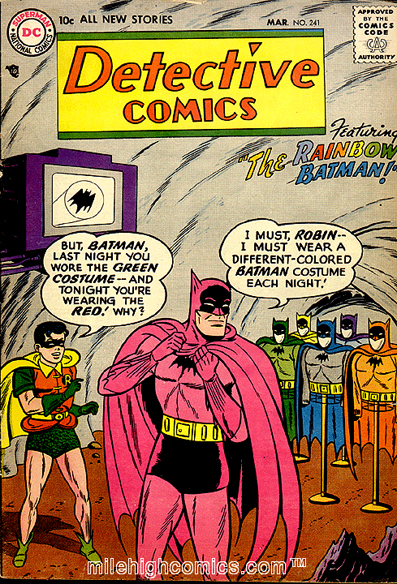
With the upcoming release of The Dark Knight, you’re probably going to be hearing a lot of interviews about how Chris Nolan wanted to make it “just like the graphic novels,” i.e. dark and grim and gritty. Now, the very notion of creating a Batman film that’s true to the comics is a bit ridiculous. The comics have spanned everything from the legendary Rainbow Batman to the archetypal darkness of The Dark Knight Returns. So, in some ways the Adam West Batman is true to the comics, in some ways Batman Begins is true to the comics. Unlike Marvel characters, and despite Grant Morrison’s best efforts, Batman doesn’t really have any sort of logical character arc, he’s a myth, a collection of elements that can be interpreted in a variety of ways. Writing Batman is like playing jazz, it’s the same few notes, but everyone plays them differently.

So, I don’t think a Batman movie has an obligation to be “true to the comics.” Batman Returns is one of my favorite movies of all time, but it doesn’t resemble any particular Batman comic. It’s the intersection of Tim Burton’s thematic concerns and the Batman archetype. It’s almost absurdly self indulgent, and at times ridiculous, but still brilliant. That same sentiment applies to Frank Miller’s latest take on the Dark Knight, or should I say The Goddamn Batman.

I’ve been following the online reaction to the series, and have been wanting to read it ever since I saw the legendary panel from issue 2. “Are you retarded? Are you dense or something? I’m the Goddamn Batman.” How could it be real? What kind of story could contain such a speech? I wasn’t going in looking for something traditional, I wanted the insanity promised by that panel. I wanted the Goddamn Batman, and Miller delivers. This is a series that is at times completely nonsensical, but hangs together, and really works for me as it goes along. It’s better than Morrison’s take on the character, and far better than Jim Lee’s previous run on the character, Hush.

Part of why I really like the book is the way it continues the stylistic approach of Miller’s brilliant Dark Knight Strikes Again. Rather than being a dark and tormented soul, the Batman of DKSA and this book loves what he’s doing. Nothing pleases him more than beating up a gang of crooks, the height of the series so far for me is issue #7 in which Batman assaults a gang, then proceeds to fuck Black Canary, with the masks on because “it’s better that way.” The book is perhaps the most quotable comic of all time, there’s so many over the top lines. How could the book seriously contain the line “I’ve taken enough grief about calling my goddamn car the goddamn Batmobile. I’m the goddamn Batman and I can call my goddamn car whatever the hell I want to call it.” “Sweet Jesus, the goddamn Batman!” indeed.

There’s some works where all logic and real world coherence is left behind in favor of an immersion in a creator’s obsessions. This is Frank Miller with the filter off, you could easily imagine him saying “I’ve taken enough grief about calling him the goddamn Batman. I’m the goddamn Frank Miller and I can write my goddamn Batman however the hell I please.” I guess people were expecting something more coherent, a dark and serious look at the character, along the lines of Year One. But, that era of comics is over. Frank Miller knows it, but the world’s a bit behind. The thing I love about this book is the way it’s still dark and gritty, but within that milieu is full of total insanity. Miller goes beyond parodying himself right from page 2, with those totally gratuitous shots of Vicki Vale in lingerie and heels. There’s no reason for it except he wants it to be there, so it is. I love the absurdity of that panel with a shirtless Alfred holding Vicki in the train, yes it’s ridiculous, but this is a comic about a man who dresses up as a bat. Batman’s insane, this world is insane and everything’s played totally over the top.

Reality is boring, and even if you don’t think so, don’t you get enough of it in the life you’re living here? Isn’t it nice to take a trip to the intersection of the DC Universe and Frank Miller’s brain, to spend a little bit of time in a world where Wonder Woman calls a man a sperm bank and Batman tells Robin to eat rats, all the while laughing maniacally. He loves being the goddamn Batman, and I love watching him be the goddamn Batman. This is the most exciting Batman comic I’ve read since DKSA, if Batman is the devil in the knight, fighting evil, shouldn’t there be an element of danger about the character. There’s a danger and exhilaration in what he’s doing, and you share that feeling as you read the book.

In this book, Batman is chaos, while the JLA is order. In their confrontations, we see the way that Batman can overwhelm people with power much greater than his because he is always one step ahead of them. Batman is fighting chaos with his own kind of chaos. His methods are infectious and empower others. That’s why I really like the time spent on Black Canary in issue 3. We see her listening to all these ridiculous taunts, and rather than just accept how things are, she decides to fight back, because that’s what the goddamn Batman would do. It’s the same for Batgirl, who hops out into the night rather than stay at home, because she wants to be like Batman. In Miller’s world, Batman is emblematic of the citizen’s right to take the streets back. That was the revolutionary message of DKSA and we see it here again. I’m guessing down the line we’ll see a confrontation between Batman and his gang, and the JLA.

It certainly seems like Miller and Lee will be on the book for a while. The Joker plot is just getting started, and I’m eager to see how he integrates Selina into this world. I felt like she would have fit in the role he had Black Canary play, but I guess he’s got something else for her to do down the line.

Much as I enjoy the insanity, throughout the book, it’s clear that Batman is putting on a persona. Robin constantly makes note of how fake his voice sounds, like a Clint Eastwood imitation. He plays at being this badass, but underneath it all, he’s just a scarred little boy. The last scene of issue #9 is the first moment of real emotion, when the momentum of everything that’s happened slows, and we see Dick mourn his parents for the first time. There, Batman sees that his approach might not have been the best. He’s turning Dick into something worse than himself. I like the way he can segue from this hilarious segment involving Batman and Robin taunting Hal with the yellow house into something pretty harrowing when Batman thinks Dick might have killed Hal. For the first time since issue #1, we see Batman without the mask. He may love being the Goddamn Batman, but he doesn’t want to see this kid become a murderer on his watch.

So, I’m not sure where the series will go in the future. I hope the over the top craziness continues, but I wouldn’t mind seeing some real emotion mixed in. What does Batman’s behavior do to the city? When will the wrong people get hurt, and how will Robin help to heal Batman’s deep wounds?

I also want to throw some respect to Jim Lee’s artwork. He’s one of those people who was so popular, I think it’s easy to say he’s overrated or take him for granted. This is my favorite Jim Lee art to date, he does a great job of conveying the characters’ emotions and can handle even the craziest things Miller can come up with. He captures the spirit of Miller’s own pencils, but gets his own style in there too.

For me, this is pretty much the perfect Batman book. It takes the spirit of Dark Knight Strikes Again and applies it to the present day of Batman continuity. Miller indulges all his whims, and that’s what makes the book work. You’ve got to take it on its own terms, get in tune with its over the top tone and just roll with it. I mean, are you retarded or something, this is the goddamn Batman.

Tuesday, July 01, 2008

Torchwood and The Sarah Jane Adventures

Over the past few weeks, I watched the entirety of Torchwood and all but the last two parter of The Sarah Jane Adventures. I don’t think either show is as strong as its parent show, but they each represent interesting extrapolations of the original premise. Unexpectedly, I wound up liking Sarah Jane a lot more, I think it’s truer to what makes Doctor Who great, and is generally better written than the hit and miss Torchwood. I don’t know that Sarah Jane could ever be as good a show as Torchwood could potentially be, but comparing the first season of each show, Sarah Jane was more consistently engaging and narratively coherent than Torchwood.

The biggest issue I had with Torchwood is that they decided to build a spinoff around one of Who’s most charismatic and exciting characters, then proceeded to take away everything that made the character work. It makes absolutely no sense to me why they make a big deal of Jack’s mysterious past when the viewer already knows what happened to him. Now, I suppose the viewer who’d only seen Who season one wouldn’t know exactly how Jack wound up at Torchwood in our present, but you’d still know all the basics of his story. It’s weird that they’d build up this whole mystery with Jack, and then resolve it over on Doctor Who.

This is the fundamental flaw of the series so far, and it makes the character who should be the exciting center of the series doesn’t contribute much. The other characters are all interesting in some ways, but are a bit too similar. Everyone is a morally ambiguous workaholic prone to making bad personal decisions when it comes time for them to take center stage in the plot.

I think this characterization works for Owen and Gwen. Owen is the most far gone, and by starting a relationship with him, Gwen is literally throwing away her personal life for Torchwood. The best episode of the season was the heartbreaking time displacement story which featured three excellent storylines. That was a wonderful example of a story only sci-fi can do that comments on something powerful and human. The second half of the show was much more consistent than the early episodes, but I was pretty let down by the finale, which featured some really awful CGI work. Compared to the three brilliant Doctor Who finales, it was a real disappointment.

The show really feels like the Angel to Doctor Who’s Buffy. After three seasons, Who was riding high, and it’s hard to go back to a shakier first season feel. And, like the first season of Angel, Torchwood has a lot of identity issues, switching between a variety of different storytelling modes. It even features its own alien/demon Fight Club knockoff episode. I’m hoping that the show will come into its own in the next season, like Angel did. For now, I like the show, but it frequently frustrated me.

Going into The Sarah Jane Adventures, I wasn’t really expecting much. I tended not to like the goofier episodes of Who from the early years, so a series targeted exclusively to kids didn’t seem like it’d be my thing. But, Sarah Jane, right from the beginning, was well written and smart. Yes, the stories were on the goofier side at times, but it’s always fun and feels a lot more like Doctor Who than Torchwood. Much of what makes Doctor Who special is the simple joy at the unknown, for Torchwood what’s out there in the night is a menace, for Who and Sarah Jane it’s probably something amazing. I like the latter worldview a lot more, and I think it makes for a better show, that struggle to still believe in the wonder of the universe in the face of enemies from other worlds.

The first few two parters are pretty good, not anything too special. Things pick up with “Whatever Happened to Sarah Jane,” a trip to an alternate universe where Sarah Jane died and Maria’s the only one who remembers. I always like these everything is wrong kind of stories, and the trips to the past and limbo are evocative. That demon who saves Andrea’s life is a pretty menacing villain, and I didn’t even mind the bizarre dwarf guy who runs around screwing up things in time.

The first part of the season finale continues that really dark, focused approach of “Whatever Happened,” as everything we know is one again wrong and Luke actually has a family. In some pretty intense scenes, Luke is torn away from Sarah Jane and taken by ‘his’ family. The second half is a bit of a let down as this challenging moral conundrum turns out to be yet another Slitheen plot. But, even this straightforward action climax is much better than the weak confrontation with the giant CGI beast in Torchwood.

One of the things I frequently find frustrating about spinoffs is this perverse refusal to acknowledge the parent show. Torchwood occasionally featured Who continuity, but I found it hard to place that show in the same universe as Who. Sarah Jane wholeheartedly embraces its legacy, and the moments where Sarah Jane talks about the Doctor are some of the series’ best, reinforcing the idea that she has kind of become the Doctor, leading her own band of Earth defenders. And, the series’ core philosophy is much closer to Who’s than Torchwood’s gloomy outlook.

But, even though I enjoyed the first season of Sarah Jane more, I do think Torchwood has a lot more potential. If they can stop misusing their main character and make Jack more like he was on Who, the show could pick up. We’ll see what happens in season two. And, either way, I’m really glad I watched both shows in light of the events of ‘The Stolen Earth.’

Final Crisis #2

It’s kind of difficult to review Final Crisis as it goes because these early issues are fractured and all over the place. That’s not really a complaint, it’s a universe spanning crossover, so you can’t expect to spend a lot of time in one place. What does definitively work in both this issue and its predecessor is the sense of dread. The whole universe seems to be spinning out of control, right into the arms of Apokolips. When Batman’s imprisoned and being tortured, you know it’s going down.

It seems like the series is going to be at least partially about knocking out all the big heroes, at which point a new team will come in and lead the resistance. The groundwork for this is laid in the brilliant opening sequence, the issue’s high point. Super Young Team reminds me of the mutant subculture we saw back in Morrison’s X-Men run. In a world where superheroes are real, they’re going to be cultural icons, and inspire fashion trends. That’s a great example of Morrison exploring not what superheroes would be like in our world, but what ‘normal’ people would be like in a superhero world. I’d definitely be up for a Super Young Team ongoing after this.

But, things really pick up with the entrance of Sonny Sumo, a Fourth World character. It’s nice to read this and actually know who he is. He appears to have taken his badassness up a few notches between his Forever People team up and now. The defeat of MegaYakuza is great, and everything gets kicked up again with the entrance of Shilo Norman, Mister Miracle. He’s seen everything bad that will happen during his time in the Black Hole in Seven Soldiers, and is now back to form a new team and save the world.

The notion of a team of underachieving heroes coming together to battle a huge foe is a large part of what Seven Soldiers was about. It’s a testament to Morrison’s writing that he’s made me more excited to see Shilo Norman than any other character in the issue. That’s how good Seven Soldiers was, because those characters weren’t as iconic, it was easier to engage with them as individuals. I think this issue is generally better when it’s b-list characters on screen instead of the big names.

The scenes with Turpin are oppressively nasty, as he deals with some kind of alien presence within himself. I’m not sure whether it’s Darkseid or Orion he’s carrying. I think Orion would make more sense, but Reverend Goode seems to think he’s Darkseid. Either way, the sequences make it clear that this is a world where the moral polarity has reversed and the heroes have to use villains’ tactics to get anything done. That’s an interesting idea, and I’m sure things will only decay further as the series goes on.

Ultimately, the series seems to be about heroes struggling to remain heroes in a world that’s losing all sense of morality. If evil’s won, how can we fight back? The residents of Apokolips are lodging themselves in heroes, seeding themselves through time so they can destroy the heroes at critical moments in the timeline. They’re like evil versions of John a Dreams, taking control of people at moments they know will be critical to the timestream, but instead of fighting for something good, they’re trying to undermine the heroes’ cause. How can you fight evil gods who have power beyond anything we can comprehend? That’s the big question of the series.

Even on the villain side of things, there’s a divide between Lex and Libra. Libra has wholly bought into whatever Darkseid offered him, he is glad to take advantage of his new power and destroy the heroes. Lex is not as certain, he senses that something’s wrong and lays the groundwork for his own resistance. I’m reminded of the parallel universe Luthor in JLA: Earth 2, maybe Luthor will always fight against the natural order of the universe? Lex in All Star Superman loves to be contradictory, so this Luthor might be just as eager to fight for good in a world gone bad and he was to fight for evil in a good world.

As for the big return at the end of the issue, it doesn’t mean much for me. If I hadn’t heard that the old Flash was coming back, I’d have just assumed it was the same guy who already here, since they look exactly the same. But, I do like the idea of a bullet fired backwards in time, it’s one of those inherently mind bending concepts Morrison does so well.

So, I really enjoyed this issue. More than the previous Crises, this feels very character focused. There’s a lot of stories going on, but it’s not just random action, all the pieces seem to be there for a reason, and I’m eager to see how it all comes together near the end. It’s such a big story, I don’t know how it’ll all fit in five more issues. But, I’m sure Morrison will make it work.

Sunday, June 29, 2008

Doctor Who: 'The Stolen Earth' (4x12)

This episode was almost too much to absorb on a single viewing. Darting across the Whoniverse, Davies includes virtually every major character from all three series for the biggest Who episode so far. The episode felt almost like fan fiction, a delirious person going on about Rose coming back, then Torchwood appearing, and Sarah Jane and the Daleks, and the Daleks destroy the world, and everyone’s working together to fight back. I would compare watching the episode to eating a whole bunch of candy, it just so shamelessly gives the viewer what they want to see, I kind of felt like I shouldn’t be watching it, like I needed to mix some vegetables in with the sweets. But, there’s no vegetables here, it’s everything you could have imagined and more, an unprecedented huge crossover.

Even though I don’t like either Sarah Jane or Torchwood as much as the parent show, it was awesome to see those characters, and their little worlds, brought into the action here. If the characters constantly are facing these Earth shaking conflicts, it would make sense that they’d work together. Besides the coolness of getting to see those characters, it also raises the stake for the story. If everybody’s involved, and everybody is so worried, clearly this is something major they’re facing. I think Davies did a great job of giving all the spinoff characters some nice moments without letting them overwhelm the narrative.

The gradual assembling of the troops provided the major action for the first half of the episode. A hightlight scene here was Martha putting on the Project Indigo vest and Jack revealing that it blasts her into the atoms. It’s a throwaway line, but really imaginative and conceptually interesting. It’s the kind of thing you’d hear someone say in a Grant Morrison comic.

But, the best scene has to be Wilf, Donna’s grandfather, attacking a Dalek with his paint gun. He’s so brilliant, not giving up even in the face of so much opposition. The Daleks are as menacing as they’ve been since “Parting of the Ways,” this infection flooding into the world and destroying it. Luckily, Wilf is saved by Rose and her big gun. Rose spends the entire episode trying to get back into the action, and finally get back to the Doctor.

The four way video conference sequence was very effective, particularly the surprise return of Harriet Jones, former prime minister. She kicks off the formation of the Doctor’s time army, the group that’s destined to battle Davros and his army of Daleks. Jones signs off in this episode, but she goes out strong. The trailer for this episode spoiled most of the guest stars, but she was a surprise.

Speaking of guest stars, there’s two major people missing from this episode. One is Mickey and the other is The Master. I’m not expecting to see the Master next episode, it’d be cool, and this regeneration opens up the potential for him to return somehow, but it wouldn’t make much narrative sense for him to come back, and the last thing this story needs is another extraneous plotline. However, Mickey’s got to be coming back, right? I’m hoping he’s the ‘command center’ or whatever it is that beams Rose up when she leaves the Nobles.

If I have one complaint about the episode, it’s that we don’t get much time with the Doctor and Donna. The dynamic between the two of them has made this season great, and they’re on the sidelines for most of this one. I think that was necessary, to make room for all the other supporting players, but I hope that they’ll be back at the center next week. Big questions remain about the future of those two. The insane Dalek Kahn tells us that the Doctor’s most faithful companion will die. All series, we’ve been set up for Donna’s death, is this inevitable? I feel like they might do a twist and wind up killing Rose instead, but that would just be cruel after already denying us the reunion of the Doctor and Rose.

But, there was some interesting stuff with the two of them. Donna remains uncertain about her destiny, does she still have the bug on her back? Why is she hearing drums? There’s been so much buildup for Donna’s destiny over the past few episodes, I’m really curious to see how it plays out. If the Doctor is knocked out of commission by his regeneration, she may have to take over as field leader. “Turn Left” was as much about Donna’s importance to the universe as it was about the Doctor’s. Can she alone prevent the world from plunging into darkness?

I’d never seen Davros before, but he seems like a significantly evil foe for the Doctor to battle. He reminds me a lot of the Emperor from Star Wars, particularly with how he shows up at the end of the whole saga, and still has the gravitas to pull off his role as villain. The fact that he was saved from the Time War opens up some interesting possibilities. It would be fitting to Davies to end his tenure by going back to the Time War and saving the time lords, opening up some new storytelling possibilities for the next era of the show.

There was a lot in the episode, but as it ended, I was only thinking about one thing, the absolutely insane cliffhanger they dropped in the final moments. The more the Doctor and Rose ran towards each other, the more nervous I became, and the sudden appearance of a Dalek cut short their reunion in true Joss Whedon fashion. Happiness must be punished, and this was a pretty brutal punishment.

And, they top everything when he starts to regenerate. Is this the end for David Tennant’s Doctor? Who will he regenerate into? What does it mean that he’s the “Threefold Man”? This is the best cliffhanger of the series to date.

I absolutely loved the episode. This entire series has been fantastic, but everything since “Silence in the Library” has been on a new level of greatness. Things are so epic, so over the top and exciting, with every emotion and action taken as far as possible. That seems to bother some people, and it really surprises me that people are criticizing an episode as great as this, but if you go in looking to hate something, you’ll be able to easily. I love the craziness, and I think Davies is guiding things to a great conclusion. The show really does make me feel like a kid again, this is how movies used to feel to me, these massive action spectacles that shake the whole world. It’s how Star Wars feels, and it’s how this episode feels. It taps into something deep in my subconscious, and just cuts straight to the core of my emotion. At its best, nothing hits me like Who does. And, this is Who at its best.

Doctor Who: 'Crossing Midnight' & 'Left Turn' (4x10/4x11)

After watching the brilliant “Forest of the Dead,” I decided the time was right for a binge watch of the other Who episodes that have aired. The show keeps going strong with one well done standalone and a flawed, but emotionally potent sprawling alternate universe. If nothing else, I’m totally psyched for a finale that looks like the definition of everything plus the kitchen sink. Russell Davis is bringing back basically everything that’s been in the show the past four years and tying it all into this one huge story. As such, ‘Turn Left’ functions largely as prelude, but there’s still moments in it that are totally heartbreaking.

I don’t have too much to say about ‘Crossing Midnight.’ After the epic brilliance of ‘Forest,’ I wasn’t too keen on what looked like a pretty formulaic standalone. But, as the episode went on, the light touch turned dark and we get some generally unnerving moments with the repeating demon. More than usual for a standalone episode, the Doctor got into real trouble. First, he was turned on by the other passengers, then he almost got spaced by the demon. The episode showed how necessary his companion is, without her, he just looks like a crazy guy. He needs that other person there to vouch for him.

But, sandwiched between two huge episodes, ‘Midnight’ can’t help but feel like a minor piece. There’s nothing particularly wrong with that, it’s an effective story, and I’m sure the budget saved on the episode will be well spent on the season finale.

‘Turn Left’ is a different matter all together. It’s a huge episode, that has at least some kind of tie back to virtually every episode since Donna’s first appearance, as well as our first shout outs to the other shows in the Whoniverse, all in the service of showing how central Donna has been to the Doctor’s life. I’m not sure if this arc was entirely mapped out when the season began, but if you told me before the season began that the big setup for the climax would hinge on the idea that Donna Noble was the most important person in the universe, I would have not been particularly enthused. But, as the season has gone on, Catherine Tate and Tennant have worked so well together, I really do feel like Donna is the most significant person in the Doctor’s life, and can buy her as the hinge of the entire universe.

It’s interesting that even though this is the episode we’ve been waiting for for two years, the return of Rose, she’s decidedly a supporting character, and I don’t mind that. In a lot of respects, her whole appearance here is a tease for her return to the regular universe next episode, making us speculate about her inevitable reunion with the Doctor, all the while depriving us of any interaction between them. The focus remains on Donna.

The episode is largely about setting up this idea that Donna has an important destiny, and it is through her relationship with the Doctor that they both can save the world. For a while there, I was thinking that Donna could possibly be another time lord. That’s why they’re drawn together at different times, why their destinies are intertwined. But, the episode doesn’t quite go in that direction. The implication at the end is that Donna is the nexus of travel between parallel universes. That’s why Rose always appears to her, and it’s why she was caught up in both the Mainframe alternate universe and this one. And, if the threat they’re now facing is one that crosses all universes, she would be essential to the fight against it.

The entire awful world we see here is likely a setup for what could happen to the real world should Donna and the Doctor fail in their mission. I did feel it was a bit repetitive to have Donna experience another alternate reality so soon after her trip to the library world. But, I think this one works because it functions primarily as a character building exercise. Donna has to experience what the world would be like if she wasn’t involved with the Doctor to understand how important she really is. Rose seems in awe of her when they first meet, she is working to support Donna and help her reach her destiny.

When I was talking about the first season of the show, I said how there two kind of heroes, ‘chosen ones’ and ones who choose adventure. The ‘chosen one’ narrative is the backbone of so many popular films, from Star Wars to Buffy to Harry Potter, it’s all about this one person who may not want to save the world, but is going to. But, the first season of Doctor Who offered an alternate narrative in Rose’s arc, she’s a girl who chose to become a hero, to abandon her ordinary life by choice and go out to the stars. I find that kind of narrative more relatable. I don’t have any kind of special destiny, I don’t have to run away from being a hero, I’m just going along, and I don’t know what I would do if I was put in a situation where I had to save the world. That’s why I find both Rose’s first season arc, and this year’s Donna arc very relatable.

Donna was living an ordinary, boring life, she wanted more and she went out and got it. But, now that she’s so wrapped up in this life, she’s faced with the burden of having to be the one to save the world. Yet, at the same time, she can’t believe that this is really happening to her. She’s so used to having people tell her she’s incompetent and useless, she can’t believe that her life would have any kind of cosmic significance. I think the episode works best not just as a “Days of Future Past” style awful what if, but also as a journey through Donna’s psyche, as she struggles to come to terms with her own importance, as well as her seemingly inevitable death. The bug on her back, goofy looking though it may be, gave things a weird Cronenbergy vibe. She knows something’s not right, there’s this ickiness under the surface that just shouldn’t be there. You could read the bug as her own self doubt, gnawing at her, always pulling her back. Most people cannot overcome this self doubt, but she does, and her overwhelming of the bug scares the fortune teller. What power does Donna really have, and what is her role in the grand scheme of things? That question still remains.

On the shallowest fan level, I loved the continuity porn of this episode, particularly the references to the spinoff characters. Davies is bringing it all together for the close of his run on the series, and it looks like next episode will be the grand universe spanning crossover we all secretly wanted to see. I always wished that Joss Whedon would do a storyline that really united the Angel and Buffy characters, and had them fighting together against a huge foe. We never saw it, but this three show crossover looks to be everything I could have dreamed of. From a pure story point of view, I’m not clear how they’ll manage to fit everyone into the episode, but from a fan point of view, it’s awesome. I’m guessing they’ll have the big crossover next episode, and then focus primarily on The Doctor, Donna and Rose for the last episode.

The episode reminded me of ‘Last of the Time Lords,’ with its absolutely oppressive feel throughout. Things just keep getting worse, and even though Gramps and Donna try to hold it together, you can see that the Earth is headed in a bad direction. I really like the dynamic in Donna’s family, and I’m dreading her inevitable final good bye to her grandfather. I hope he at least gets one trip up into space before it’s all over. Bernard Cribbins has made him into a fully realized character, who’s just this perfect font of wackiness and love, not unlike the other man in her life.

Two other things really stood out in the episode, one is the score. There were throwbacks to a lot of previous musical themes, and the building music gave everything an even bigger, more apocalyptic feel than usual.

The other standout element was Catherine Tate’s performance. It was pretty much already confirmed, but this episode cemented her as my favorite Who companion. I think she’s stretched the show in really interesting directions, and provided a totally new dynamic for the series’ core. Much as I love many of the individual stories in season three, I think it was retreading the same ground as Rose with the primary dynamic. Martha had her moments, but she never quite distinguished herself, Donna has owned the series from the moment she appeared. Her and the Doctor are equals.

The entire sequence from Donna’s trip to the army base on was amazing. This whole season, we’ve been teased with the idea that she’s going to die. She wants to know why River Song doesn’t remember her, why Rose says she’ll have to die. She may be a hero, but nobody’s ready to die, not after she’s started really living for the first time. When the truck hits her, she wants to believe that this is the death they were talking about, but I don’t think it is. Still, she is willing to make that sacrifice, and I fear she will be called on to sacrifice herself entirely before the series ends.

I’ve said it before, but I’ll say it again. No show hits me emotionally like this one does. It’s about our purposes in life, and the wonder in the universe. It’s about trying to be something more than the safe, ordinary path that society gives and adventuring like the Doctor. I think it’s great that this show is such a huge family hit in Britain. I love that a generation of kids is growing up watching this show, I can only imagine the kind of films they’ll go off and make after growing up on this.

Saturday, June 28, 2008

Doctor Who: 'Silence in the Library'/'The Forest of the Dead' (4x08/4x09)

As I got closer to the big Stephen Moffat two parter for this season, I was a bit worried that he was getting overhyped. I do love all his previous episodes, but I didn’t think they were quite as good as some did. The man’s only human, can we really expect him to make a masterpiece every time out? It’s still to be seen whether he can do as good a job running the whole show as he has writing individual episodes, but this two parter, particularly the second half, makes it pretty clear that he can write episodes as good as anything in the show’s entire run. For me, “Forest of the Dead” tops all his previous episodes for a trippy, intensely emotional experience that’s simultaneously mindblowing and heartbreaking.

The first episode is mainly about setting up mysteries. As such, I was left more with questions than really concrete feelings. I was thoroughly intrigued by the girl and her strange relationship to the library and even more so by the Doctor’s relationship to River Song. But, there was one really standout scene, Miss Evangelista’s passing to death. The residual soul energy conceit is brilliant because it allows for these emotional death sequences without the goofiness of the typical deathbed speech. On top of this, we’re exposed to her inner thoughts, the sad problems she has with self image, all laid bare in her moment of death. You can tell that Donna is the only person in a long time who’s offered her any kindness.

With this series, I’ve talked a lot about the use of science fiction conceits as a device to make explicit that which is implicit in our own emotional lives. The residual soul thing may not be real, but it gets us to an underlying truth of human existence in a way that just documenting the surface reality a camera can see on Earth does. This show gets to me more than any other TV show I’ve watched because the emotion is writ so large, the individual struggle becomes an apocalyptic moment. “Forest of the Dead” is full of those moments.

One of the great things about this episode is its ambition. We’ve got three parallel realities proceeding simultaneously in the second half. The first is Donna’s alternate life, constructed in the computer mainframe. I always love these kind of stories, I loved it when The Sopranos did it with Kevin Finnerty, and I love it here. Seeing the world that someone creates tells you a lot about who they are, it looks like on some level Donna wants an ordinary life. She ponders what it means about her that her ideal man is gorgeous and barely speaks, but isn’t her ideal man right in front of her?

This was the first episode to not feature a joke about Donna and the Doctor as a couple, and that constant hammering in of the idea happens for a reason. They are so good together, and I think on some level, The Doctor is her ideal man. After all, she does say she will travel with him forever, isn’t that moment kind of a wedding, the kind of commitment that we never saw from Martha. So, if she’s in ‘til death do them part, the question becomes how far away is that? This episode again hints heavily at Donna’s possible death, I hope it doesn’t happen, but I fear it will.

So, if The Doctor is Donna’s ideal man, what is the meaning of her vision. I suppose it’s her subconscious reaction to being taken away from the Doctor. Moon tells her that her experience on the Tardis was only a dream, so what else can she do but get on with her life and try to be as happy as she can. I don’t think Rose would be happy with the kind of life Donna imagines, Rose’s motivation for traveling with the Doctor was more about boredom than anything. For Donna, it’s loneliness, the chance to escape the emotional failures of her past and start a new life. So, another new life might not be so bad, if it’s a happy one.

It’s a testament to the writing that even though we know this world is a false one, it’s still heartbreaking to watch Donna lose it all. The intercutting of River’s energy surge and Donna’s husband being torn from her was a visual highlight of the episode. Another particularly effective moment was Donna’s kids telling her they felt they weren’t real, then quickly disappearing before her eyes. On some level, she’s aware that the world she lives in is false, but she wants to believe in it, and it still hurts her to have it torn away.

Elsewhere, the Doctor continues his attempt to find out what’s up with River Song. The effective thing about this sequence is the reversal of the typical range of knowledge. Normally, the Doctor is the wise one with all the answers, who’s seen it all and guides the other characters through their journey. Here, the Doctor is made to feel young, because he can’t quite match up to River’s memory of his older self. And, he’s frustrated by the way she hints at their relationship, but never fully reveals to him. He can’t know, and it’s frustrating.

The aforementioned energy spike destruction of River was another great moment. The Doctor is handcuffed, helpless to do anything as River sacrifices herself for the good of humanity. It’s a situation he’s put others in many times, and now he himself is stuck with nothing to do but watch.

A lingering question now is what the significance of him telling her his name is. Maybe this was covered in the old episodes, I’m not sure whether it’s simply a way to show us how close they were, or if it has some kind of specific meaning.

The final ten minutes or so of the episode were all brilliant, one emotional hit compounded on another. The moment where Donna’s dream guy teleports off planet, as tries to call to her, and the scene where Donna says “alright” is time lord code for really not alright. That line in particular felt just like something Joss Whedon at his best would have a character say.

The Doctor reloading River into the mainframe was a nice payoff to the sonic screwdriver plot. I was glad they didn’t resurrect her for real, but it was nice that she got some peace. That moments works so well because it pays off what was set up last episode with the residual souls. And, it all ends on that mix of melancholy sadness and peace.

“Forest of the Dead” was one of the best episodes of the series to date, full of ideas and emotion. That’s what I want from fiction, I felt like this episode was made just for me.

Saturday, June 21, 2008

Flex Mentallo #4: "We Are All UFOs"

At last, we reach the end of this great four part novel known as Flex Mentallo. The last issue clarifies a lot of what came before, and launches the superhero comic into a new age, writing future history. Not everyone has lived up to the promise of this issue, but Grant himself, Alan Moore and Frank Miller all embraced the new, it’s all true, love the stuff we were ashamed of and make it work message of this issue.

It all kicks off with Lord Limbo revealing that the “Polyverse” is in danger of being destroyed by “The Absolute.” This ties back to Crisis on Infinite Earths, and its destruction of the multiverse. The first time I read the series, I was familiar with the concept behind Crisis, this time I’ve actually read the series, as well as some more pre-Crisis comics, and have a better idea of what it really means to destroy the multiverse. The multiverse made it difficult to have a coherent narrative reality, to hew to continuity and definitely say what was ‘real’ and what was ‘unreal.’ Instead, there was a hugely complicated mesh of different realities that crossed over at times.

It makes it difficult to engage in the continuity of characters’ stories when you’ve got several different versions of them floating around. Who is the ‘real’ Superman, Earth 1’s younger Superman or the older Earth 2 Superman? For certain stories, it doesn’t really matter what’s real. 50s Superman told the most bizarre stories possible, and always returned to the same status quo by the end, so it doesn’t really matter what’s in continuity and what’s not. The status quo is all that matters, and any story elements that are really good will return of their own volition.

In a lot of ways, the old comics were a self regulating version of hypertime. The basic concept between hypertime was the idea that all the stories told about these characters are true, but there is a central timestream. The central timestream is made up of the stories that have resonated the most over the years, other elements that don’t fit into modern continuity branched off of the main timestream and died out. Hypertime makes it easier to manage continuity because it allows for a self repairing timestream, a continuity that serves the story rather than the other way around.

This whole opening sequence serves as a play on the in universe happenings of Crisis. These wacky Silver Age characters are facing an enemy so large he will engulf their entire world. So, they have to hide themselves in fiction. Much of the series’ arc is about the way that the world has changed, it’s become too ‘real’ for the wacky adventures of characters like Flex Mentallo or Lord Limbo. The wonder they represent as been reinterpreted as angsty darkness, much like the DCU itself. But, layered in the fiction is the spark of wonder that came before, the destruction of the multiverse is just another enemy to be beaten, and eventually these heroes will be liberated.

I love the whole opening sequence of the issue, the way this superhero conflict is reduced to its most potent emotional moments. Quitely’s art is obviously brilliant, but I’ve got to give special notice to Morrison’s words. He manages to build this whole crazy world and tear it down in three pages. My favorite panel is Nanoman and Minimiss shrinking down, trying to remember “Don’t forget the word…Sha…a…Sha…Oh God, it’s love, it’s…”
The s
So, the magic word, Shaman, which unlocks Wally’s subconscious, is associated with love. The whole arc of the series is on one level about Wally rediscovering his love of the world, moving beyond his self imposed isolation and re-embracing all the good things around him. He must pass through the darkness to get to the man in the moon, the trigger image that will let him unlock the heroes and help humanity, and himself, actualize its full potential. But, for now, the world is destroyed and the heroes lock themselves in comics to stay alive.

Next, we check in with Harry and the Hoaxer, standing amidst the dead bodies of the heroes from the superhero orgy last issue. This issue is all about leaving old paradigms behind and evolving into something new and better. Those heroes were trapped in their current mindset, and consequently, they could not become part of the new age. As Flex says on the next page, the heroes turned on each other, and tore each other to bits. People like “Deathtrappist” and “The Kill Klaw Klan” are clear parodies of those edgy Dark Age heroes like The Punisher or Youngblood.

I love the image of Flex broken up into many component images, floating through some kind of beautiful abyss. The single individual is broken up into many component pieces, all of which add up to become a whole. It’s one of the most striking depictions of an individual in a comic, representing a kind of extratemporal view of the individual. I also love the next page, where the blank green world gets filled in by Faculty X members, who shuffle like stage hands, wheeling in the props that make up the world of the Legion of Legions.

I’ve already talked about the way Faculty X, or the extratemporal version of The Fact, resembles John a Dreams. Outside of time, one’s role in the overall human narrative becomes clear. Certain actions have to happen to ensure certain ends, and these extratemporal beings fill in the little gaps in the timestream, they put people in the position they need to be to act. The stagecrew image is apt, except these guys work to make sure the people in the play don’t ever realize they’re in a reality that’s being manipulated.

From there, we make it back to Wally Sage, who is still spinning through time and space, eventually landing in the ceramic city of his youth. In the context of the narrative universe, Nanoman and Minimiss put trigger images into the world, that will eventually remind people of the world that exists behind our reality. One of these is the MoonMan, I feel like the ceramic universe is another one. It ties back into a childhood memory, all helping lead him to the magic word.

On the next page, Wally meets his younger self, in a time hopping scene that echoes what we saw with Wally and Flex earlier. In issue one, Wally recalls seeing Flex standing in the doorway of his school when he was a kid, a moment that we see from Flex’s perspective in the issue. The fulfillment of cross-time foreseen experiences is something that crops up in The Invisibles quite a bit, particularly with King Mob’s hopscotch through a dream universe during the Billy Chang Hand of Glory ritual. It’s a concept I used in my own film Universal Traveler. I’m not sure exactly why this sort of time travel stuff fascinates me so much, I guess part of it is that knowing that moments from the past can cross over with moments from the future indicates the existence of an ordered, purposeful universe. If young Wally sees old Wally, and old Wally eventually sees young Wally, it means that all time exists at all moments, and if that’s the case, it means that existence isn’t so much just random happenings, it’s a massive singular organism that exists in perpetuity. It goes back to that very basic Grant concept that all time exists and if we can step outside, we’d be able to see the dinosaurs right next to Shakespeare.

This leads us into the thematic core of the issue, and the series as a whole. Wally explains that the superheroes come from the place where ideas are made, and hid in our universe to avoid the absolute. The basic conceit of the miniseries is this idea that it’s the superheroes are real, and our universe that’s fake. This ties into the notion that Superman has to be more real than you, very few people have lived longer than Superman has, and Superman will probably still be having new adventures when we’re all dead. The nature of his adventures will change, they might no longer happen in comics, but the character will survive when we’re in the ground.

Now, you might say it’s preposterous that superheroes would have built the world, they’ve only been around for seventy years, but our universe has been around much longer than that. On one level, if you’re asking this question, this might not be the miniseries for you. But, to answer it, you can take two approaches. One is to look at the perspective of the series’ protagonist. Wally is a kid who was obsessed with superhero comics, for him, they are the models for his own behavior, they shaped his sexual development, and they’re what he’s trying to grow out of to become an adult. He essentially blocks out this childhood encounter for the first half of the book, casting Lord Limbo as an alien or a child molesting uncle rather than face up to the fact that as a child, he had the universe revealed to him in a superhero comic.

On a real world level, isn’t that what it feels like to be a kid and read a superhero book? It’s all about seeing into this wonderful world of power and possibility that’s so far apart from your own powerless place in the world. As a kid, you don’t have any responsibility, so having to save the world wouldn’t be a burden, it would be exciting and cool. It would mean you were needed. As a kid, you can believe that these characters are real, and it would be easy to believe in a secret history of the universe where the comics are real and your world isn’t.

So, if we’re to consider this series essentially the cosmic enlightenment of the human race from the end of The Invisibles, just seen from a different perspective, it would make sense that Wally would see the being coming to reveal the truth about the world and make us all into gods in a world of wonder and amazement as superheroes. That’s his template for dealing with the fantastic in the same way that Dane’s is aliens or Fanny’s is the gods of Mexican myth.

On another level, the notion that superheroes are real and our world is just a projection over their fiction ties into the notion of superheroes as the latest incarnation of the enduring storytelling mythology of the human race. Ever since the dawn of time, we’ve told stories and created gods to explain the secrets behind the workings of the world. In JLA, Grant made each of the big seven characters equivalent to a hero from Greek mythology. Are the exploits of Superman or Batman any more outlandish than what happened to Zeus?

Back then, Zeus was ‘real,’ he was worshipped as a god, and the mythology was the means of interacting with him. The stories gave him his power and dominion over the world. Stories explained the secret origin of why the sun rises, the hidden truth behind the seasons and other natural happenings. There’s always been an engine underlying reality, and what is religion but a series of stories that we believe? This story is essentially the tale of the second coming, of heroes who died for us and built the world as a stopgap until they can return and save us all. It’s the Jesus narrative all over again, the eternal human narrative of an all powerful savior coming to take us off this world and into paradise.

In that sense, superheroes are today’s manifestation of something that’s been with us for many years. They are the enduring mythological narrative that’s resonated throughout human history, all over the planet, in every religion. Whereas God used to live in a church, now he’s hidden himself in the pages of a comic book. If God came to us today, with special powers and uncanny abilities, we’d probably understand him as a superhero. Or at least Wally would.

“The world doesn’t have to be the way it is. We can be them” is as good a summation of all Morrison’s work as anything. At this point, Wally is no longer scared of the unknown. We first saw the freaky image of the boys in the circle from outside, now we’re above, and looking down on it, it’s amazing, not scary. Wally says that we made these stories to fill the gap, the missing wonder in our life, and discover the truth about reality. Lord Limbo had told Wally this when he was a kid, but he had suppressed it. It was implausible and didn’t make sense to his teenage self, but now, at his lowest ebb, it all surges back.

Next, we return to Flex, who is confronting the MoonMan. Wally’s self loathing teenage self. The MoonMan is all about taking away the wonder of the universe, exposing how implausible these things are and reducing things to a boring ‘realism.’ It’s all a matter of perspective. He says “I made you Flex. I made your whole sad, scabby little world to entertain myself,” as a way of reducing Flex to something insignificant. It means that Flex isn’t ‘real,’ when earlier we were astonished by the idea that Wally could believe in something so much, it would leap off the page and become real.

The MoonMan wants to bring “some realism” to Flex’s world, to hit him with black mentallium and destroy his world. Flex is an inherently unrealistic character. A huge guy wandering around in leopard print trunks with no personality other than being a noble, good hero. He doesn’t have moral complexity, he’s just a classic idea of a hero. He’s not fit for the post Watchmen/Dark Knight world of morally ambiguous characters who hate themselves as much as the enemies they’re fighting. We’ve been privelege to Flex’s inner monologue throughout the series, and most of his thoughts involve longing to meet up with his crimefighting buddies and have some adventures. It’s not realistic at all, and an angry teenager would rail against the absurdity of Flex, hating that he could have ever created something so stupid.

That page ends with Harry pointing a gun at the MoonMan, threatening to destroy him with “Six chambers of semi-jacketed realism.” Wally’s own self loathing teenage self is threatened with the very edginess he was trying to embrace, and he’s now forced to choose. Lying in the alley, Wally realizes that he took either M&Ms or Paracetamol. In ‘reality,’ he took the paracetamol, that’s what we’ve been led to believe the whole series, it’s not plausible that someone could take M&Ms and go through this whole experience, at least in our world. In Flex’s world, anything is possible, if Wally has the will to live, he can rewrite reality to accommodate that. Flipping through timespace, he can change the events that happened and heal himself. It’s what a superhero would do, and it doesn’t matter if it’s absurd, it’s still possible.

Wally describes the ceramic castle world as “My head…everybody’s head.” It’s the collective subconscious, the place where ideas come from, that’s where the Legion of Legions lives. Lord Limbo tells him that Nanoman and Minimiss are trapped in a comatose state within the universe. The universe isn’t fully alive yet, the limits and sadness we feel are the universe getting further and further from the initial spark of life. In this case, we once again have a concept that can be interpreted on multiple levels. On one level, this story is about Wally’s own life hanging in the balance. You could read this whole cosmic journey as Wally coming to terms with himself, the choice to live or die his own. Lord Limbo is like the spirit of Death, offering Wally a choice.

However, you can also read it on a cosmic level. Humanity itself is in a stasis state, something’s missing, we’ve all felt it ,and if we just remember who we’re supposed to be, the universe will explode into brilliant life. But, we need to believe strong enough to make it real. As Limbo says “Before it was a bomb, the bomb was an idea.” Everything we imagined can become real if we try hard enough. That line also ties nicely into the series’ opening image, The Fact throwing a bomb that creates a Big Bang which is presumably the universe coming into existence. So, it reinforces this notion of our universe as a construction. It’s an idea someone once had, and ideas can evolve and become better. “No more barriers between the real and the imaginary.”

But, Wally isn’t quite ready to face that yet. He says “I can’t be remembering this. I’m losing my fucking mind.” People find it difficult to deal with the extraordinary around them, they reduce things to the most boring, rational explanation rather than seeing the wonder all around us. That’s not to dismiss science or anything like that, just because we know why the sun crosses the sky, doesn’t make it any less amazing that it happens everyday. To look at a world without wonder is to see thigns like MoonMan Wally who decides he took pills rather than consider the world of wonder Lord Limbo showed him.

Earlier, Flex got a Fact card that said “The fish got changed more often than the water,” which refers to Harry replacing his wife’s fish so she wouldn’t know it had died. The MoonMan reduces Harry’s efforts to just “the sentimental fish story.” The MoonMan version of Wally is filled with disdain for real emotion and caring. He’s become so isolated, so ashamed of the things he does like that he declares “There is no love in this world anymore.” He thinks that growing up means giving up the optimism of childhood. To sum it up “Get with the program, happy endings are for kids.”

That’s a sentiment we see a lot in the world. Works of fiction that are called ‘realistic’ invariably focus on characters who suffer massive amounts of personal trauma while living in a boring, rundown world. Yes, that’s a part of the world, but it’s not the only thing that’s real. Stories can inspire us and do so many things, particularly with superheroes, who are inherently unrealistic, there’s no need to be bound by the constraints of our current reality. Superheroes can serve as an example, they can guide us to a better life, one where happy endings are the norm. What this story is saying is our reality doesn’t have to be this way, it’s not the only thing that’s real, so why should we only think in terms of the way things are now. Things can be better, we don’t even have to change the world, we just have to change our mind and see M&Ms instead of Paracetamol.

Ultimately, it’s Wally’s own creations who save him. Wally may be saying “There is no love in this world anymore,” but his own creation is holding strong. Harry’s love is stronger than Wally’s disdain for himself, and an idea can’t be killed by a gun. The Hoaxer pretty much sums it up when he says “I think you want everyone to be dead because looking at life makes you realize what you’re missing. Only a bitter little adolescent boy could confuse realism with pessimism.” This leads into an utterly absurd comic book moment where Flex flexes his muscles, displays the giant hero halo and defeats the MoonMan.

Of all Morrison’s work, Flex is probably the most relatable for me. In my own writing, I always fluctuate between infusing characters with my best, most optimistic self, and my most unhappy, self loathing impulses. I’ll make whole characters out of what I perceive myself to be at my worst, the thoughts I think when I’m most happy. And, that’s essentially what Morrison has done here, representing the different aspects of Wally’s personality in the various characters we see here. The adolescent Moonman Wally is Wally at his worst, filled only with disdain for everything around him and loneliness within.

The work has demanded reading on multiple levels through out, but in this moment all the realities telescope into one. Flex’s mission hasn’t really been about finding The Fact, it’s been about helping Wally overcome his own issues. Notably, Wally invokes Flex’s own creation myth when he criticizes superheros as “pathetic fucking power fantasies for lonely wankers who’ve had so much sand kicked in their faces they look like the opening credits of ‘Lawrence of Arabia’!” Wally is of course talking about himself, confronted with the utter absurdity of those characters he loved so much, he rejects them, but they don’t reject him. Earlier in the series, someone asked who would save the world, and the answer was the superheroes, that’s what they always do. So, in this series, the world is Wally’s mind, and it’s up to Flex to save him.

Flex is beyond the irony and self consciousness that so plagues Wally. Wally doesn’t know who he is, and he projects that insecurity onto Flex, asking him “Do you know what you are,” a question that is trying to puncture him, to point out how ridiculous he is, to point out the fact that he’s only a piece of fiction. But, Flex isn’t phased, he knows exactly who is, “I’m a superhero.” Flex knows his purpose is to help people, it’s to guide humanity forward, and he’s going to do that one person at a time. Morrison has talked a lot about superheroes as our evolutionary template. Typically, I interpreted that as being about gaining powers and abilities, literal physical evolution.

But, in this moment, we see the way that superheroes are also morally evolved. In All Star Superman, it’s not so much the powers that separate Superman from ordinary people, it’s his morality, his love and existence beyond a simple good/bad paradigm. Lex Luthor, his prime foe, is so petty and violent, all the worst traits of humanity. Superman is the best we can be, and so is Flex. He might not be a mature or realistic character, but if we believe that someone so good hearted can be real, it can make everything better.

Flex says exactly what Wally needs to hear at this moment, “Being’s clever a fine thing, but sometimes a boy just needs to get out of the house and meet some girls.” Essentially, the best way to get over all his psychological trauma isn’t to drift into an emotional cocoon and cut himself off from the world. The wonder is all around us, it’s in other people, and Wally’s best option is to embrace the world around him. Wally mutters about his adolescent desire to abandon the world, “to be the last boy on Earth,” but that’s all posturing. It’s not what he really wants, Flex shows him the way.

And, in a glorious panel, Wally re-embraces life. He decides that it wasn’t paracetamol, it was M&Ms. The adolescent, self-hating part of his psychology has been defeated and he’s realized he’s got “a brilliant life.” So much of the way we feel about the world is a matter of perspective. You can focus on the positive, the things you’ve got going for you, or dwell in what you don’t have, that’s the difference between happiness and sadness. I think we’ve all got that self loathing piece of ourselves in there deep down, it’s easier to feel alone sometimes than to reach out to the world. But, in that huge burst of light, Wally chose to look at the good side, to see the M&Ms, and that made all the difference.

The last few pages of the series show us the birth of a new age. As I mentioned before, I see this as the equivalent of the final issue of The Invisibles, as all the gears of the universe whir into action and kick start the next stage of evolution. Wally is seeing it as superheroes crashing into our world, all the technology we imagined becoming real, an entire world waking up and becoming what it was meant to be. I love the way Quitely has the spiraling freeze frames of Nanoman and Minimiss cycle through the page, and stop at the moment when they become aware. They made the universe and now it’s waking up again.

Then, we find out that the person Wally’s been talking to this whole time was The Fact. Early in the series, he says how nice this person was, how helpful he was on guiding Wally along. The Fact listened to what he had to say, he kept him hanging on at the worst points in his psychosis, and enabled him to actualize his potential. The Fact is kind of like God in this world, he set Flex on his journey and he kept Wally going through his. Flex has faith on him he knows he’s “out there somewhere and I know we can trust him.”

Flex wraps up his role in the miniseries standing on the bridge of a ship, waiting for the Legion of Legions. He’s got faith. I love the final lines he speaks directly to the reader “All we can do is hope. This is Flex Mentallo signing off. I’ll be right here if you need me.” Flex is less a character than a god, an incarnation of pure heroism, built to save us when we most need it.

Morrison just keeps piling on elements as we move to the end, kindly informing us that “You have been inhabiting the first ultra-post-futurist comic: characters are allowed full synchrointeraction with the readers at this level.” This presages Wally unlocking the code. The narration goes on to tell us that the key is in the man in the moon, which has two readings. One is that it was in Wally himself, once he overcomes the emotional issues that were personified by the MoonMan version of himself he unlocks his evolutionary potential and is able to grow out of his childhood state and become an adult, along with the rest of humanity.

The other reading is more cosmic, it’s the idea that the superheroes were waiting behind the moon, like Barbeltih was in The Invisibles. We saw this back in issue 2, with the crazy guy at the bar. Hearing the activation code, Nanoman and Minimiss start kicking the universe into being, and Wally completes it by writing Shaman.

The word Shaman has a bunch of layers. One is the obvious play on Shazam, subverting out expectations by giving us a different magic word. Sha-Man could also be a superhero name. The reading I like most is the idea that superheroes are today’s religious figures, they’re the ones guiding us forward, so a magic superhero would be a Shaman. Shaman are all about exploring consciousness, trying to heal wounds and help people. That’s what the best superheroes do, they’re explorers, charting humanity’s path forward. The whole thing reminds me a lot of Zatanna, the most distinctively magic superhero Morrison’s worked with.

And, the crossword ties into the crossword he used in Seven Soldiers #1. Crosswords are like magic spells, awaiting letters you fill in to complete them. Language is magic and completing the puzzle means launching the spell. That leads the wonderful image of Wally bursting with light and energy, evolving into the superhero he was always meant to be. The whole series is about Wally coming to terms with his issues, and realizing that he already is a superhero, he just had to remember to see it that way. Nothing in his life changed except his perception, he realized that the things he created in the past were great, not something to be ashamed of. His life wasn’t a waste, he wants to live, and he’s now living more than ever before.

The series ends with one last nod to the reader, as The Hoaxer thanks us for our paricipation in the experience. Then, the superheroes hit, hundreds of them soaring down onto the Earth, coming home. This is evolution, this is the change of reality, leaving our limits behind us and becoming a more real, more exciting and better world again. It’s all real at the end here, Wally is saved, the world is saved, and the heroes are coming home.

That pretty much covers it. This is one of the densest, most idea packed works of fiction in any medium ever made. But, it’s also light and effortless. You can do a close reading and try to understand everything, or you can just sit back and get lost in the moment. Other than The Invisibles, it’s my favorite thing Morrison has ever done. It lay the groundwork for Seven Solders and All Star Superman, and it was the start of an artistic relationship with Quitely that would produce some of the most amazing comics in the medium’s history. If you haven’t read the series yet, hunt it down, whatever you pay, it’s worth it. Hopefully, Flex will soon be freed from his rights prison and liberated again to save the world all over again.

Sunday, June 15, 2008

Doctor Who: 'The Wasp and the Unicorn' (4x07)

“The Wasp and the Unicorn” is a pretty light episode, but it’s thoroughly enjoyable, taking a plot that sounds pretty weak on paper and making it work thanks to the really fun execution. I found the earlier Doctor meets historic writer episodes a bit ponderous, with their frequent references to classic literature, and all too obvious ties between the Doctor’s actions and what we saw in the author’s books. This episode does similar things, but always with a wink, and, like much of this season, what really makes it work is Donna.

Whereas Rose and Martha seemed awed simply to be traveling around with the Doctor, Donna plays things with a mix of enthusiasm and questioning. She’s excited to be caught up in this world, but also points out the ridiculousness of the genre conventions they’re messing with. It reminded me of the way Buffy used humor to make stories that are really goofy work. The humor doesn’t undermine the narrative reality, it’s an added pleasure on top of the story. Played straight, this episode would not work, but the jokes make it fun.

There’s not too much in depth to discuss here, so I’ll pretty much just do a list of the stuff I liked. I really enjoyed the cheesy dissolve and sound effect accompanying the flashbacks, and the digressive flashback within a flashback to the can can dancers. Another fun scene was the Doctor’s reaction to the poison and the farcical attempt to cure his poison. And, the constant misdirects in the big reveal scene were a lot of fun.

Typically, it’s been the historic episodes that didn’t work for me, but both “Fires of Pompeii” and this episode were great. “Pompeii” was the season’s high point so far, and this was a pleasant surprise. Other than the Sontaran two parter, the season’s been really strong so far. I think part of it may be watching the episodes spaced out a week, instead of bunched up on DVD, but I feel like the stories are more distinct and significant. There hasn’t been that feel that some episodes are just filler that I got from the previous years.

And, I think a large part of that is the fantastic chemistry between the Doctor and Donna. They’re making this season work, and I’m dreading these hints about Donna’s fate. The more she says she’ll never stop traveling with the Doctor, the more I’m worried that she’ll wind up dead down the line. Either way, we’re moving closer to the epic many character season finale, and I’m eager to see how Davies pulls everything together.