Monday, May 30, 2005

The Rest of the Summer...

Now that the last Star Wars film has been released, the major thing I've been looking forward to for years now is gone. But that doesn't mean that there isn't some cool stuff coming up soon.

One week from today we've got the new season of Six Feet Under. It's been a while since I watched the show, I finished the fourth season back in September, but watching the trailer for the new season has me excited to see it. The people behind SFU make the most amazing trailers for the new seasons. The one for the fourth season was what made me watch the show in the first place. The trailer for this year was excellent as well, nicely showing the changes the characters have undergone over the course of the series, as they drive by past and future incarnations of themselves.


Judging from Yahoo's preview of the season, it looks like Billy is going to be playing a big part, which I'm happy about. Him and Brenda are my favorite characters on the show, and his interaction with the other characters always produces odd, uncomfortable moments. TV series need those characters that make people break out of their normal behavior patterns, because that's how deeper character traits are revealed.

This is the last season of Six Feet Under, and hopefully it'll be a satisfying ending. The past four seasons have been so great, I seriously doubt that Alan Ball and co. will screw things up, and I'm really looking forward to seeing what their final statement is.

I'm not really looking forward to any of the major movies coming out this summer. I'll definitely go see Batman Begins, War of the Worlds and some other stuff, but the slate is genuinely uninspiring. I guess it's more my changing film taste than a change in movie quality. Now, I look forward to the Holiday award movie season more than the summer blockbuster season. One film I do really want to see is Burton's Charlie and the Chocalate Factory. It looks like a return to the over the top visual style that has been on hold in his past two films. Plus, Johnny Depp is always entertaining.

Richard Linklater's Bad News Bears is another movie I do want to see, though I'm really not sure how good it will be. It seems to be along the lines of Bad Santa, which I did really like, but I don't really want to see a rehash of that. Plus, this one doesn't have Lauren "Fuck me Santa" Graham, who was essential to the success of the film. But it's Linklater, so I'm going to give him the benefit of the doubt.

The other big summer release I'm most looking forward to is not even happening here, it's happening in Korea, where Chanwook Park's Sympathy for Lady Vengeance gets a release. Park is the master behind Oldboy and Lady Vengeance is the finale of his 'Vengeance Trilogy.' Oldboy's one of the most well made films I've seen, and I can't wait to see his next. Even though I didn't like JSA or Sympathy for Mr. Vengeance as much as Oldboy, his films are always interesting because Park has such a great eye. He composes shots that are always interesting to watch, that's his greatest strength as a filmmaker.


I'm not sure if it's just because we get their best stuff, but it seems like the films coming out of Asia are much more concerned with being visually interesting than American films. In American movies, the story and characters are definitely priority and the visual is an afterthought, while the directors there seem to be much more visually motivated. Both are important, but I find the Asian approach much more interesting to watch. A film like WKW's 2046 uses the medium so much better than the most critically acclaimed films here, things like Million Dollar Baby. That was a good story, but it's utterly uninteresting from a filmmaking standpoint.

A lot of people seem to equate style with showiness, and the idea is that it must inherently detract from the story, but that's not the case. In the best films, the stylistic choices are beautiful on their own and also enhance the viewer's enjoyment of the story. I would point to Irreversible, a film that is so technically dazzling and calls a lot of attention to its style, but all in the service of immersing you in the emotional beats of the story. Million Dollar Baby makes you feel for the characters, while Irreversible makes you feel what the characters are feeling, and that's a huge difference.

Friday, May 27, 2005

Artists I've Been Listening To...

First off, the North American trailer for Wong Kar-Wai's 2046 is now available here. It looks great, and really captures the feeling of the film. I suppose I'd be inherently partial to it because it focuses so much on the stuff from the future sections of the film, which I'd consider to be the best thing WKW has ever done.

The film drops on August 5, but I already have the DVD. However, I will be seeing it in the theater very soon. On June 15, Wong Kar-Wai is appearing and doing a Q&A at a screening of the film at Lincoln Center. I've never seen a WKW film in the theater, and 2046 is a really astonishing visual experience, so that alone is worth it, but it's also WKW live. I always like to meet film people and hear them talk about the process, especially if they are total storytellers. While Martin Scorsese may have made some great films, he doesn't usually make the stories himself, so you can't get a sense of his whole process, whereas with WKW or Joss, they do everything, and are a lot more interesting to talk to. In the past few years, I've met a lot of my idols, and this is another one to add to the list. I'd still really like to meet Alan Moore and Grant Morrison, though that's not likely to happen unless I make it over to the UK.

So, that should be very cool. Now I'm going to quickly go over some of the music I've been listening to lately because I've definitely been branching off in some different directions.

Electric Light Orchestra - I've been listening to a lot of the Electric Light Orchestra, a band from the 70s that is most famous for their songs "Mr. Blue Sky" and "Evil Woman." When I was very young I remember hearing "Evil Woman" on some Disney special, over a montage of their villains, but I could never remember what the song was. This was when I lived in my old house before 1990, I don't know how I could have remembered this for so long, but last year I heard the song in Mocon and it came back to me. The song had remained with me for 15 years, it's a great song, but even so I found that pretty strange.

Anyway, I grabbed the song and some of their other stuff, but only started listening to the albums recently. I've been listening to a lot of A New World Record and Out of the Blue, both great albums, though I prefer Record. Electric Light Orchestra is an ancestor of a lot of the current artists I love most. Perhaps the best description of the band I could give would be a combination of Daft Punk and The Polyphonic Spree, probably my two favorite current artists, so ELO is understandably a favorite of mine. From Daft Punk they drew a synth based, quasi-dance sound, with frequent use of vocoder, the Electric part. From The Spree they draw the frequent use of big orchestration, with a ton of different instruments at work, the orchestra part. On their best songs, they rock hard, while sounding unlike any other band around.

Their most bizarre song is "Mission," about some aliens who come to earth. It's all over the place, and has the sort of over the top hyperbole that only 70s rock can provide. If you recall "Stonehenge" from Spinal Tap, this is the sort of song that was parodying. Definitely worth checking out. Other standout tracks are the really rocking "Do Ya" and "Livin' Thing," as well as the more subdued "Summer and Lightning" and "Turn to Stone."

Annie - Annie is a relatively new artist, who has put out just one album, Anniemal, which actually hasn't even been released here. Said album is awesome, an amazing pop confection, where pretty much every song is catchy, solid listening. She hails from Iceland, and has more electronic based production than your average album made here. I love the electronic stuff found in much of Europop, and this is one of the best examples of it. Her voice isn't that great, but woven into the music, it's phenomenal.

Her best song is "Heartbeat," which uses a pounding drum over the chorus to simulate her heartbeat as she gets to know someone over the course of a night. I love driving repeated riffs in a song, and the hearbeat drumming just propels the song forward. I think pop has gotten a bad name, and the perception is that albums that sound like this are just "commercial," while darker, less instantly accessible albums must be more artistically relevant. However, music is ultimately about sound, and this album just sounds great all the way through, perfectly constructed pop.

Belle and Sebastian - I really liked their soundtrack for the movie Storytelling and I finally caught up with their albums. So far, I've heard If you're Feeling Sinister and The Boy with the Arab Strap. I really like their sound, it's got a lot of varied instruments and similar to The Smiths, an interesting mix of heavy subject matter and light music. It's really pleasant sounding music, with a bit of 60s flavor. Their best tracks are "Stars of Track and Field" and "Like Dylan in the Movies."

Rachael Yamagata - She's another fairly new artist, with only one album to her credit, Happenstance, and it's a great album. Yamagata reminds me a bit of Aimee Mann in that she is a singer/songwriter, but places a lot of emphasis on the backing tracks and overall production. Too many singer/songwriters focus only on the lyrics, but her tracks are fully realized songs. She rocks pretty hard, and has a great range of darker stuff, like "Under My Skin," and light, poppy tunes, like "1963."

She does a great job of writing lyrics that sound good when sung. "Be Be Your Love" has a great chorus that might not read well, but sounds great in the context of the song. Similarly, "I'm loving you like it's 1963" paints a picture of the world the song is trying to evoke and sounds great as a chorus. While I do love Aimee Mann, her songs are rather similar, while these have great variety, both in terms of music and in terms of theme and atmosphere they are trying to evoke.

Wednesday, May 25, 2005

Review Revue

Being break, I've been watching a bunch of films.On March break, I watched a string of absoultely phenomenal films. I loved practically everything I watched. On this break, I have not been so lucky, I've seen some good films, but everything I've watched has its flaws.

subUrbia
This is the only Richard Linklater film I had not seen, largely because it has not been released on DVD. However, the library had the VHS, so I broke one of my major rules and watched a pan and scan presentation of the film. Despite those bad viewing conditions, I was pleasantly surprised by this film, and feel like it's a major piece of the Linklater canon. Linklater's films are notoriously talky, so it's appropriate that he should adapt a play.

The film touches on a lot of classic Linklater themes, chronicling the existence of a group of high school friends, who still live in the town where they grew up, even as they long for something better. It's quite similar to Slacker in that everyone talks big, but always ends up just talking, never doing. The film resonated for me because I am in a similar situation as the characters are, and even though I am going to college, that doesn't change the fact that I'm basically just hanging around.


These people are contrasted with their high school friend, Pony, who has made it big with his band, and is touring. They first sort of skirt around the issue of his success, but eventually it comes to the surface and the other characters are forced to confront their own lack of progress when they see how much Pony has done. Linklater is the master of talky films, and he gets great performances from his cast here, and keeps things interesting despite the fact that not that much happens in the film. I think it does a good job of capturing real life dynamics between friends and people who are drifting away. I'd imagine Linklater felt a lot of what Pony did when he returned home as a successful filmmaker. I feel like Linklater has a better handle on what my generation and the people slightly older than me are going through, and his films reflect the reality of our lives.

Miller's Crossing
I also watched the Coens' Miller's Crossing. Now, this is a film that has been quite acclaimed, with some people calling it their best. I don't know, but I just didn't like this film. I didn't feel the inventiveness and energy that is present in the Coens' other films, and it reminded me a lot of Richard Linkler's really weak Newton Boys. Both films seem to use a period setting as an excuse for not doing anything else interesting visually or with the narrative. This film was just a series of extended dialogue scenes as we moved through a whole bunch of double crosses that don't really lead anywhere. I didn't like the lead character, Tom, and tommy guns and fedoras alone cannot save a film. I really feel like I missed something with this film, because I don't understand how it could be so acclaimed. Perhaps in a few years, I'll give it another look, but for now, it goes in the bad column.

The Last Temptation of Christ
This is a film I've been wanting to see for a while, ever since I saw the X-Files episode, Amor Fati. This was an episode written by David Duchovny as an homage to Last Temptation, and it's arguably the best episode of the series, as well as one of the most interesting symbolic narratives I've ever seen. It took me five years , and two library checkouts to finally see the film, and it was a bit of a letdown after all that. The idea behind the film is to show Jesus' human side, his weakness and temptation, but the central piece, a fantasy sequence in which he marries Mary Magdalene is a very small piece of the film.


The vast majority of it is a fairly standard Jesus biography. I know that story so it wasn't too exciting to see all those scenes acted out again. I know about the water into wine, I know about Lazarus, and that stuff takes the focus away the film's core. The movie is too long, at 163 minutes. At least 20 minutes could have been cut out without hurting the story. And, the fantasy sequence is too short, that's the core of the film, but it comes about almost as an afterthought. I guess the X-Files episode might have skewed my expectations, but I feel like that episode used the premise a lot better than the film did.


That said, the film looks great, and really places you in a different world. Scorsese always makes good looking films, and this is no exception. Willam Defoe is great as Christ, but Harvey Keitel just doesn't work in this movie. He seems to be from New York not Jeruselam and his performance punctures the illusion of this world.

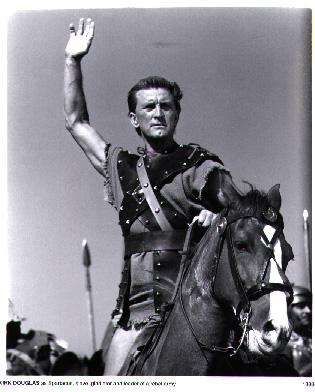
Spartacus
I've been going through Stanley Kubrick's film, seeing the ones I've missed, and last night I arrived at Spartacus. This was another long film, at 3 hours, 16 minutes. Watching this film was sort of strange. I was never particularly emotionally engaged with it. Classic Hollywood films were designed to minimize the evidence of the filmmaking, editing and camera movement were not supposed to draw attention to themselves. However, I feel like this also prevents the filmmakers from using these tools to draw you into the story and put you in the headspace of the characters. Now, Kubrick was never someone known for the high emotional content of his films, though I would dispute that in a few cases. However, this film adheres to classical Hollywood norms and as a result you're firmly put in the observer category, and never really engage with the characters.


That said, I was never bored by the film over its really long run time. Watching Miller's Crossing, I found myself checking the watch a number of times, but here I was just going through it, enjoying the film, but not loving it. I find it difficult to analyze most of Kubrick's pre-Strangelove stuff because he seems so tied to classical Hollywood convention, his films lack the personal input that's evident in his later films. Basically everything after Strangelove is either a great film, or a film that aims very high and doesn't quite make it, but is still essential viewing. But his early stuff doesn't particularly stand out from your typical classical Hollywood film. The one scene in this film that seemed different was the really bizarre snails and oyster scene, where an old man propositions Antoninus, asking him if he eats snails, oysters or both, with 'eating snails' a clear reference to gay sex. The scene seems out of place, but is also really entertaining, so I'm glad it's there.


The film remined me a bit of Revenge of the Sith, the Roman political machinations were a clear inspiration on the narrative of Star Wars. Also, the acting style really is quite similar to that of the prequels, which is what Lucas said. As much as I love those movies, this acting style is not the best. The characters are not emotionally engaged with the material here, and the ridiculous love scenes here are such a contrast to the astonishing emotional subtlety of something like Barry Lyndon. There truly was a revolution in 70s Hollywood, and I'm really glad it happened, because movies like this are good, but not great. And, the acting in Sith is so much better than the awful line delivery here. So, even if he is modeling things on the classical Hollywood style, Lucas is doing a much better job than they were. This film did fulfill the classical Hollywood doctrine of making an accessible entertaining film, but unfortunately sometimes the bigger the audience you target, the less personal the film is.

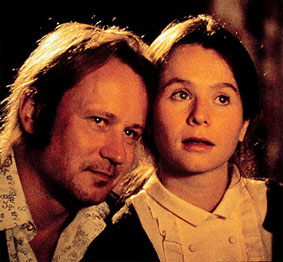
Breaking the Waves
So, today I went from the compromised populism of Spartacus to the extremely personal, challening filmmaking of Lars Von Trier. Von Trier is a filmmaker I had mixed feelings on going in. I loved Dogville, it's one of the most creative and rewarding films I've ever seen. However, I really disliked Dancer in the Dark, which seemed like an exercise in cruelty.

Von Trier's films are all revisionist melodramas, updating the idea of the suffering female hero. That's the one thing all his films, that I've seen at least, have in common, and in this film, there is a lot of suffering. The primary thing that made me like Dogville over Dancer was the fact that in Dancer in the Dark, we just watch a series of awful things happen to the main character and there's no variation, it's just a series of awful events. Dogville uses a similar narrative structure, but at the end, upends the idea of the suffering heroine, and allows her to get revenge for what she's gone through. That revenge is so powerful because we're conflicted. What she's doing is wrong, but after so many awful things happened to her, can we really let this town off the hook? Also, Grace was very smart, while Bjork in Dancer was borderline retarded.


Bess, the lead in this film, also treads on that border, she's mentally unstable. However, I think the characters in this film are much truer than those in Dancer. Bess' actions are motivated, we understand what she's doing, but she's laboring under the false belief that what she's doing can save her husband. It's a pretty harrowing film, and Bess' final fate is not easy to watch.

The style of the film is really intersting. Von Trier uses a constantly roving handheld camera, a style I happen to love, as well as a lot of jump cuts. He's clearly someone who was made for digital filmmaking, though I belive this was shot on film, it's got a grain that makes it look like most digital films. I really like the chapter headings, placid nature scenes with 60s and 70s rock music playing in the background. They're a nice contrast from the handheld, dogme world of the film. Von Trier uses no score, all the music is source.

The last scene has me a bit confused. I think Von Trier intended to show that Bess had made it to heaven, but I guess it's something to ponder. It's a good looking shot whatever the meaning was.

Ultimately the film sort of bothers me because of the level of suffering Bess goes through. The entire narrative is just bad stuff happening to her, and there's not that catharsis that Dogville offers. However, she is more relatable than the Bjork character, so this film falls somewhere in between the other two Von Trier films. Von Trier, like Gaspar Noe, makes films that challenge you, and I'm really glad I watched this movie, even though I do have a lot of issues with it.

Well, there you have it, next on the to watch list are La Dolce Vita, Velvet Goldmine, Three Kings, The Killing and A Fistful of Dollars.

Saturday, May 21, 2005

Doves Live and Turning 20

In addition to seeing Star Wars on May 19, I also went to a Doves concert. Doves are one of my favorite bands, their second album, The Last Broadcast is in my top ten albums all time, and their recent album, Some Cities, is excellent as well. They fall in roughly the same genre as Coldplay, but are much better, a bit dancier and a bit more rock.

Anyway, their concert Thursday was excellent. They opened with Pounding, my favorite song of theirs, and it rocked pretty hard. Other highlights were 'Here It Comes,' 'Words,' 'Black and White Town,' and the concert closer, 'There Goes the Fear.' The crowd wasn't that into it at first, but as time passed, they got more into it. It's always cool to see a band you really know in concert, because you can appreciate the songs a lot more. I really liked the variations they did, extending some solo instrumental parts and such.


I always like when bands mess around with the songs live, we already know the songs, and there should be some variation. I saw Aimee Mann last year, and it was a fun concert, but she was so close to the recording, there was no sense of discovery. When the crowd is really into it, it's fine to stick close to the recording, but generally speaking, it's good to mix things up. So, I would have liked a bit more variation, but as it was, Doves put on an excellent show.

So, it was quite a birthday. I think such a great Star Wars movie was really the best gift I could have received. That was the film I'd wanted to see since I was very young, and a huge part of my life now has resolution. I'm really happy to see that the film has been so well regarded by the general public because if you didn't like this movie, you're pretty much not going to like any Star Wars film.

And with that I'm now twenty. I guess that's a big change, the decade change over is always huge, but I think thirty is a bigger change, especially the way society is going now. Twenty is still young, especially because I'm in college, two years from now is going to be a much bigger change. This change is all mental, peoples' perception of me. When I was younger, I thought change was just happen, you'd get older and all the things that older people have would just come to you, but it's not that way, any change that you want, you have to work for. Another year passing doesn't mean anything unless you make it mean something.

Friday, May 20, 2005

Star Wars: Episode III: Revenge of the Sith

Well, at midnight on May 19, I finally saw the last Star Wars movie. I saw it again earlier today, so I feel like I've finally been able to process the film enough to write about it. There's going to be spoilers below, so beware.

This wasn't a perfect film, but watching the final scene, I knew that it was right, that things ended the way they should, and the ground was properly paved for the original trilogy. I'd spent a lot of time speculating about how the prequel trilogy would end, and I imagined that it would be with Obi-Wan dropping Luke off with the Lars, and going off into the desert, and that's pretty much how it happened, but the scene itself was gorgeous, and I loved the recall of Luke standing outside watching the two suns setting. It's all cycles, and that moment was the perfect bridge between what had come before and what would come after. The other two films had moments that felt very Star Wars, but this was a Star Wars film through and through.

I had a strange feeling watching the movie, because I had a vague idea of everything that would happen, but to actually see it enacted was strange, I've speculated so much about how certain things would transpire, to finally see them happen was overwhelming. The big moments in the film lived up to the mental image I had created over so many years of anticipation. Obi-Wan defeating Anakin, the emperor taking power, Padme giving birth, it all lived up to my mental image.

The major drive behind this film is Anakin's conflict about his place within the jedi. He always seems an outsider among the Jedi because of his strong emotions. Unlike the other Jedi, he has not been training since birth, he has personal attachments, and these attachments are what cause him problems. The other Jedi would have no need for the powers that Palpatine could give him, because they would have no one that they need to protect. However, Anakin came to the Jedi late, and has attachments, specifically to his mother and Padme. Because of what happened to his mother in AotC, he is extremely protective of Padme, and it is his fear of losing her that drives him to Palpatine.

The thing I liked most about the film was the sheer scope of the events. This is an entire galaxy in trouble, and both the individual lives and the life of the republic are at stake. The best films gnerally revolve around the biggest moments in the character's lives, and these are definitely the most important moments for pretty much every character. And this importance is reflected in the dazzling visuals. The film is gorgeous, and the effects are better integrated into the narrative than in any of the previous prequels.

There's so many great moments, it's difficult to single out stuff. Pretty much everything after "Order 66" is phenomenal, and stuff that I've been waiting to see for a long time. There's an incredible feeling of hopelessness hanging over everything that happens, notably in the Yoda/Emperor fight. Yoda has been built up as such a legend and to see him struggling and ultimately get defeated is harrowing. Respect has to be given to the effects team behind Yoda, because he's utterly convincing, and you really feel for him, particularly as he falls from the senate and climbs out through some tunnels.

Some of the best stuff in the film is the parallels with the original trilogy. The opening sequence gives us the best portrait of the Obi-Wan/Anakin relationship, but also a great revisit of the Emperor/Vader/Luke confrontation in Jedi. The set is designed to resemble it and seeing Anakin give into his anger and kill Dooku lets us know that things are not destined to go well. That fight is also revisited when Mace Windu battles the emperor and we see Anakin save the Emperor, instead of Luke as he does in Jedi.

I think one of the major problems with the film is that there's no clear moment where Anakin goes dark, it just sort of happens. I'm not sure if that was intentional, it does make a point about evil, he doesn't all of a sudden say, "I'm evil," it's just that he keeps having to do more and more morally questionable things in pursuit of his goal.

The whole story is motivated by the fact that everyone around him treats Anakin like a child, except for Palpatine. No one will listen to his fears, Yoda basically says, death is a part of life, so don't worry about it. Palpatine sees his concerns and reaches out to help him, and that's why he ultimately sides with Palpatine over the Jedi. I think through the whole trilogy, he feels constrained by authority, that's his major problem with Jedi, they restrict him from expressing his emotions. Padme stops him from going public with her impending pregnancy. And he sees the senate as something constricting the republic from moving forward. I think a major part of the reason he goes with Palpatine is because he sees it as the best way forward to power. He hopes to lead, with Padme, and give her the chance to do what she wants as a leader. So, when she rejects his outreach, he sees it as Obi-Wan's influence and frustrated, lashes out at her.

One of the best things about the film is the way Lucas makes it so tragic. I think people have been waiting the whole time to see the Jedi fall, but when we finally get there, it's really sad. The montage of Jedi death is really affecting and you get such a sense of betrayal. Similarly, when the Darth Vader suit finally appears, it isn't so much a birth as it is a death. I'd been waiting for the suit for three films, and when it finally appeared, I didn't want him to go in it. It was a sad moment, not cool, and that's an accomplishment.

I love the cutting between the rebirth of Vader and the death of Padme. One of the most interesting things was the scene in which the Emperor tells Vader that he killed Padme. This is why Vader doesn't look for his kids in A New Hope, and it makes things even more tragic. Seeing this, Anakin cannot go back, he has nothing left, and has to embrace the empire, and that's a sad moment. The Emperor has manipulated him all along, told him what he wanted to hear, and at the end, Anakin has no one left, except for him. Ian McDiarmid was great in this movie, particularly in the scene where he tells the story of Darth Plagus.

The other acting was hit or miss. I thought Hayden Christensen was great in pretty much every scene except those with Natalie Portman. Ewan McGregor was excellent and Yoda was phenomenal as well. It was mainly just Natalie who didn't work. I don't know if it's just that she didn't engage with the material, but she was not very good. There's also some issues with the dialogue.

However, I'd rather have a film with these flaws that aims so high than something that doesn't even try. The sheer visual and thematic scope of the film exceeds nearly every other film ever made. So much happens, and it's so emotionally deep, that what the film does overwhelms what it doesn't. Watching the final scene, I felt like the story really was complete, and that's what this film had to do.

George Lucas said that he made the prequel trilogy to show the Star Wars saga is actually the tragedy of Darth Vader, and with this film, he has succeeded in doing that. Anakin never seems evil, he's just misguided and manipulated by everyone around him, and the one person who actually treats him as a person is actually the biggest manipulator of all.

And, it makes the conclusion of the saga even stronger. What Luke does is merge the emotion driven fighting of the Sith with the inherent good of the Jedi. The Jedi in this era are so remove from emotion, they are unable to deal with real world problems. Having been told to ignore his emotions for so long, Anakin can't deal with his problems in this film. At the end of Jedi, Luke draws on his emotions, and Anakin does too. It's his love for Luke that compels him to throw the Emperor into the reactor. The new Jedi will not ignore their emotions, but draw their strength from them, and in that way, Anakin has brought balance to the force.

The Star Wars saga is the greatest story ever told in film. Nothing else ever attempted can match the scale or thematic depth of this series, or the entertainment value. These films show what cinema can do, they inspired a generation of filmmakers, they inspired me and they will inspire many more people in the future.

Wednesday, May 18, 2005

The Phantom Menace and Attack of the Clones

Yesterday, I rewatched the first two Star Wars films, in preparation for seeing the final Star Wars movie tonight. As I said yesterday, I've been waiting for this film for a long time. While I was very excited about the other prequels, this is the one that really matters, this is the story they were designed to tell. Those two are basically groundwork for Revenge of the Sith, and that probably explains why they were cracked on so much. There's also the fact that they're flawed films. But, it's a six film story, so to really understand the first two films, you need to see everything, which means that I can't completely appreciate them yet.

Just in assesing the prequel trilogy generally, I would call both films flawed masterpieces. While the films are far from perfect, they aim so high and have such massive scope, in terms of themes and character arcs, these films are doing more than any other popular entertainment made in recent years. That's why I have a problem with people completely dismissing the films, I'd rather see a film that aims so high and doesn't quite make it than a film that plays it safe and doesn't even have anything more going on that what is on the surface. These films are completley unique, and for that alone, they deserve respect. So, while they can be viewed simply as action blockbusters, there's also a lot of intersting stuff going on beneath the surface, much like in Batman Returns, a film that people do not consider the depths of, because they are not used to heavy thematic development in their popular entertaiment.

My favorite thing about the prequels is Palpatine's arc. It's something that's generally below the surface, and very easy to miss if you focus on the action and other things that are going on. Basically everything that's happened so far is the result of what Palpatine has done. The reason that Qui-Gon and Obi-Wan end up on Naboo in TPM is because Palpatine has manipulated the Trade Federation into setting up the blockade. The genius of Palpatine's plan is that he can't lose. He creates the problems in the Republic, in the guise of Darth Sidious, and as a result of these problems, he gains power in the senate. The most important event in Episode I is when Amidala agrees to make a vote of no confidence in Chancellor Valorum, which allows Palpatine to take power.

At the end of Episode I, there's a big celebration and we hear joyous music, but this music cue is actually a speeded up version of the Emperor's theme from Return of the Jedi. This is appropriate because the only person who's really won as a result of what happened in the film is Palpatine. He gets more power, and the credit for breaking up the blockade on his home planet.

In Episode II, his plan has evolved, and he has now created not a temporary distraction, like that on Naboo, but a galactic wide problem, the separatist movement. He has Dooku start this movement, as an excuse to get the Senate to vote for the creation of a 'Grand Army of the Republic.' This army will become the stormtroopers that serve the Empire in the original trilogy. There's something really foreboding about seeing Yoda fly in with an army that looks so close to the stormtroopers in the original film. So, at the end of the film, Palpatine 'reluctantly' oversees the creation of this army, an army that was created to fight a menace that he in fact was responsible for. It's a genius plan, because he can't lose. The more the seperatists win, the more power he can take, 'in defense of freedom,' and when they defeat the seperatists, he gets the prestige of having won a major war, which will lead to more public approval for his role in government. So, the 'phantom menace' of the title is in fact Palpatine, who has been manipulating everything from the beginning, and probably will continue to do so in III.

Watching it this time, I think I got a lot more of what Lucas was trying to do with the relationship between Anakin and Padme in Attack of the Clones. The film was widely criticized for the awkwardness of the romantic moments, but I think that was appropriate. This is a guy who's been living with the jedi for ten years, and has never been put in a romantic context, he's just been carrying the memory of Padme around with him for all those years. So, when he finally does meet her again, he doesn't know what do, and brings out a whole bunch of cheesy lines, because he doesn't know how else to behave around her, he can't find a way to express his feelings, so he brings out classic lines like the sand one that don't sound good to us, but are the only way he would know how to behave.

Which brings up the question, why does Padme go with this guy who clearly has a slightly unhealthy obsession with her? This is something I hope III will address, since it's sort of unclear. If I had to guess, it would be that he is the only person who's approached her as a person, not as a queen/senator. Like Anakin, she lives a life that doesn't allow for romance, which means that it would have a sort of forbidden air, and I guess she's attracted to that. I don't think their relationship is ever meant to be healthy or even romantic really, Anakin is someone who is used to being able to do what he wants, and if he wants to be with her, he will.

Anakin gets this attitude from the first father figure in his life, Qui-Gon Jin. In TPM, you see him going along, using his force powers to get whatever he wants from people. He doesn't care about the council, he just does what he wants, and always seems to end up getting his way. When he winds up wtih Obi-Wan, I get the sense that it's almost a stepfather relationship, like Qui-Gon is his real father, and Obi-Wan is just filling it, and that's part of why Anakin resents him so much. Parent issues are at the core of the whole series, and for Anakin, a lot of it has to do with idealizing his mother. What happens to him as a result of his mother's death is not really addressed in II, and I'd imagine it'll figure heavily in III.
That said, while there's so much great stuff in these films, it's not like there aren't flaws. The first 40 minutes or so of Phantom Menace are pretty weak, and Jar Jar just doesn't work there. He's fine once you get to Tatooine, but when it's just him and the two Jedi, it's not good. Similarly, the people do behave in a strange way. It's not realistic, and certain people seem to have trouble with performing in these films. I think Christopher Lee and Ewan McGregor are great, but Natalie Portman just doesn't work in the film. I love her in other stuff, but this is not her finest hour. Watching it this time, I really got Hayden Christensen's performance, and I can understand what he was doing. Samuel L. Jackson is another person who really seems to get what's going on here, and is great.

I think a bigger problem is that the action scenes here don't have the strong emotional drive of the original trilogy. While they are huge and cool, nothing can match the emotional intensity of either of the Luke/Vader fights, I'm hoping this'll change in the next episode. I think part of it is that there aren't pauses. In those fights, the stops are as important as the action itself, and by holding things off, it makes the action that there is so much more intense. While thousands of people fighting may look cool, I'd much rather see two people I care about fighting, the stakes are so much higher, as exemplified by the end of House of Flying Daggers. Also, particularly at the end of Clones, there's two many scenes that seem to be about showing off effects, with no character stakes.

So, I'm really psyched for Revenge of the Sith. The best way to see a Star Wars movie is at a screening full of fans who have been waiting for this for as long as I have. The Episode II midnight showing might be the best moviegoing experience I've ever had, but it could very well be topped tonight. In twelve hours, I will have seen Episode III.

Tuesday, May 17, 2005

Counting down to Revenge of the Sith

Well, I'm not 34 hours away from the start of Revenge of the Sith. I've been very pleased by the advance reviews. The New York Times called it better than the original Star Wars, and general consesus seems to be that it's the third best film of the saga.

Now, it annoys me that people crack on Return of the Jedi so much. If you can get past the ewoks, which aren't great, but also aren't that bad, you've got the best space battle ever put on film. The assault on the death star is absoultely awe inspiring. To think that all those things in the frame are models, it's a huge leap from the already excellent battle in Episode IV. And Jedi also has the best lightsaber duel of the series. The emotional tension in the Luke/Vader/Emperor scenes is huge, culminating in the great scene when Luke chops off Vader's hand. The score in those scenes is the best in the trilogy, and visually it's gorgeous.

So, don't hate on Jedi. That said, I'm glad to see that people like the new film more than it. While I like the prequels more than most people, I recognize their flaws, and I feel like this film is going to be the one that feels the most Star Wars. It's been such a long wait, it's almost hard to believe that I'll actually be seeing the movie in two days.

Sunday, May 15, 2005

House of Flying Daggers

I watched House of Flying Daggers a few days ago and was extremely impressed by it. House is by Zhang Yimou, the director of Hero, as well as other non-martial arts films like The Road Home and To Live, both of which I watched back in March. I'd heard a lot of mixed opinions on House, some people said it was much better than Hero, while others said it wasn't very good. I think it's a much better film than Hero, and that's saying something because I loved Hero.

Visually, Hero probably is stronger than House, but that's not to say that House isn't a gorgeous film. The scenes in the woods are so densely atmospheric, as are the scenes in the wheat field. I love the scene towards the end where Jin and Mei are lying in a field and the blue and green of their costumes stands out so much. The final scenes, in the snow, are also great looking.


However, what makes this film so great is the emotional content. Jin and Mei's journey through the countryside is really sweet, and does a great job of getting you emotionally attached to the characters. Then, everything falls apart once Leo turns up. I love the fact that there's no villain here. She loves Jin, even though logically she should be with Leo. But, the whole point of the film is, love isn't logical, and that's why she can't go with Leo. The end of the film is tough, but it's how it should end. In the society they live in, it's just not plausible for Jin and Mei to live a free life.

The acting in the film is top notch all around. Zhang Ziyi is great here, fully pulling off the blind act, and later in the film too. She makes you believe that she really is deeply in love with this guy, even though they've only known each other for three hours. The scene where Jin places a flower in her hair is some of the best visual acting I've seen. In this film, she acts mainly with her face, it doesn't matter what she's saying, her face tells you everything you really need to know.


Takeshi Kaneshiro is great here too. He was so brilliant in Wong Kar-Wai's Fallen Angels, and here, he does a great job playing the 'Han Solo' role of the lovable scoundrel. In the moment when he turns back to go after her, you can see the way the events of the film have changed him. Andy Lau is solid too, making you sympathize with the character even as you're hating everything he's doing.

This is an impeccably made film. The visuals and sound, particularly the music, are all fabulous, but it's all in service of the story's emotional beats. The final images are haunting, and really evidence of Zhang Yimou's power as a filmmaker. Next from him, I want to seek out Raise the Red Lantern.

Thursday, May 12, 2005

The New Lynch Film and Digital Filmmaking

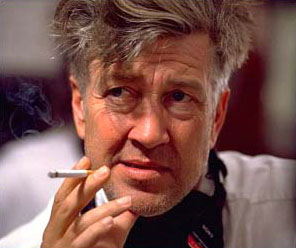
Yesterday I found out some awesome news, namely that David Lynch is working on a new film, and has been for two years, with the hope of premiering it one year from now. You can find out more here.

In the time since Lynch made Mulholland Drive, I saw that film, watched all of Twin Peaks, as well as every other film he's made. Lynch, while he might not be the most consistent director, is the person I'd want to see a new film from right now if I could, either him or Paul Thomas Anderson. So, I'm really happy to see that Lynch is working on something new. I've spent so much time studying his other films, I feel like I've really got a good idea of how he approaches filmmaking, and want to see where a new film will fit in with the things he's done before.

This new film sounds similar to his others, in that it's about "a woman in trouble." He also brings back a lot of people who have worked with him before. I'm glad to see he's working with Laura Dern again because she's changed a lot since they last collaborated, and she was brilliant in We Don't Live Here Anymore. Justin Theroux was great in Mulholland Dr., so it's good to have him back.

The most interesting thing in that article was the fact that Lynch was doing the film on digital, and he's apparently converted to the digital side. As much as part of me would love to make a film on film, digital really is the way of the future, and to ignore that will only leave you back with the guy complaining about "talking pictures." The thing that's interesting about digital is that unlike the move to color and other similar advances in sound and picture quality over the year, digital gives the audience roughly the same, if not a slightly worse picture than film, however the big difference is in what it does for the filmmaker.

If you compare film to writing a novel, having to shoot on film is like having to pay a huge amount of money for each piece of paper, which would mean you would have to be very precise in writing your novel, and try to minimize the mistakes. This means you wouldn't be able to experiment as much, or change things midway through. This is basically the situation you have shooting on film. It's extremely limiting, both because of the cost and becase of the time limits on the film itself, you can only shoot about 15 minutes before having to switch the film. Lynch makes the point that by just leaving the camera running, you can let the actors get much deeper into character, and just keep working until they get it right, with no worries about running out of film. There are basically no limits on how much you can shoot, and that's very liberating to a filmmaker.


I read a book of interviews with Lynch, and throughout them, he focuses on the fact that what he's trying to do with film is channel information from an unconscious place, what Alan Moore would call the immateria. So, he works not with strict plans, but on feeling, on what feels right at the time, and that means that it is difficult to have to do the strict planning required for shooting on film. Shooting on digital, it's a lot easier to get an idea and execute it right there, and as a filmmaker that's what it's all about.

I think too many people think of film as translating written word to the screen. They view a screenplay as a set of instructions rather than as a loose guide. Making a film, while it incorporates elements of writing and of painting is ultimately about the fusion of the two, and that means that to truly be a filmmaker, you have to be telling your story as you work on the film, not beforehand in the script stage. Joss Whedon called television "radio with faces" and too much of film could be called theater on a screen. To truly be a filmmaker means working on your story on film, and revising things as you shoot.

Wong Kar-Wai was the first person who really made me think about this. He provides a loose outline for his films, and then shoots a whole bunch of stuff, gradually 'finding' the film. For example, In the Mood For Love began as a light comedy about food, and turned into a heavy drama about the negative space in an affair. Looking at the documentary on the Criterion DVD, you can see elements from the 'first draft' of the film, and it's completely different from how it ended up. Now, most stories end up in a very different place from where they started, but where WKW is unique is that he works out his stories not through many drafts of a script, but through filming stuff, seeing what works and building off of that. So, he is quite literally making a film as opposed to filming a script. And, it sounds like that's what Lynch is doing now.

The difference may sound insignificant, so let me see if this simile will work. Imagine if you were writing a song, and you wrote the lyrics and the music, and then recorded the song once, and used that. It would make a lot more sense to play through the song, and see what works, because then you will actually working in music rather than on paper. To shoot the film and revise as you shoot is to work on film rather than on paper.

Now, obviously this is difficult because film is very expensive, and that's where digital comes in. If you're someone like Lynch, who can get his actors to work cheap, and has the clout to spend as much time as he wants, you're basically set. You can make whatever film you want, without limits.

And the great thing about this is the only thing separating me and Lynch is his clout and money. But, digital has levelled the playing field, and that's something driving me this summer. The only excuse for not making a great film is my own laziness, something I have to conquer, and also the fact that I need to motivate people and help them share my vision. That may sound pretentious, but it's really what it's all about, I need to motivate people, and that's something I'm not usually that good at, or at least not compared to others, but one man cannot make a film. I need help.

I think digital is the most important thing to happen to film since sound. It completely changes the game, and gives directors like Lynch a completely new control over his vision. Done right, digital looks amazing, as in Sin City. And what it means is that even if I never 'make it' as a filmmaker, I can still make films.

Monday, May 09, 2005

Crash

Yesterday, I went to see the movie Crash. The primary draw for me was the fact that this is a movie with a huge ensemble cast, and the characters sort of pass through each others' lives as time passes, much like in Magnolia, a film I loved so much it's made me partial to any of these big cast movies, such as PT Anderson's Boogie Nights, or Robert Altman's Nashville, both of which are also excellent films.

Crash isn't as good as either of those two films, but that doesn't mean it's not a really good film, it's certainly worth seeing. What makes this film different than those films is there is a stronger thematic connetion between the interactions in this film, all of them are built around race in some way. So, the film takes characters who are sort of racial archetypes and plays around with our perception of them. For example, we see a white woman who is suspicious of a Hispanic locksmith who she says looks like a gang member, then it turns out that he is in fact a devoted family man, trying to make a better life for his daughter.

The thing that holds the film back from greatness is in some respects its short running time. We don't really get to know that many of the characters, so it's difficult to get really emotionally involved with them. The amazing thing about Magnolia is the fact that all nine of the characters are so well developed, and none of them fall into archetypes. Almost all the characters here are in some way archetypal, but I think that might have been intentional. The goal is to show the conflict people have with other races and with their own racial status, but that turns the film into a more intellectual exercise than an emotional one. I think a critical thing to making these big cast movies work on an emotional level is to connect them through the score and, while the music here is good, it doesn't work like in The Hours or Magnolia to bring to mind the universal similarities of all the characters.

But, this film still has a ton of interesting stuff going on. I was really surprised to see that the best performance in this film was by Ludacris, who was really entertaining, and nicely in the character. He probably best exemplifies the difference between what someone says and how they act, which is the core of this film.

The crowd I was at with this film didn't really seem to like it, practically everyone was gone before the final shot even ended. This is one thing I don't get when people go to the movies, are you in so much of a hurry to get out of there that you can't even stay until the credits start? I like to give the film a minute or so after the credits start before I leave just to let it sink in. It shouldn't be a race out of the theater, the real world will still be there no matter how long you stay in the theater.

I dont' mean to sound critical of the film, since on the whole, it's a thought provoking, really well made piece of entertainment. Too many times when you go to a movie, you leave with a sort of empty feeling, like nothing of substance occurred. This film has a lot of substance and leaves you fulfilled. It's the sort of film 70s Hollywood was famous for, smart, complex entertainment.

Saturday, May 07, 2005

2005 So Far

In discussing 2004, I said that it was the Amnesiac to 2003's Kid A, not much had changed, and the stuff that was new had become commonplace, and I said that 2005 would not be another Amnesiac. But, so far it has been and it hasn't been. I think I've been much happier so far than last year, but things haven't really changed, maybe I just better learned to focus on what was good.

I guess the thing that made me happiest this year was that I actually made a movie, albeit one that still hasn't been edited, but filming's always been the holdup, and Jordan and I wrote something and filmed it. When I get home I'm going to edit it, or at least see that it gets edited somehow, hopefully in time for the LMC contest. I think more than being a great movie, this movie was important because it really taught me about the limits of what we can and cannot do, first limit, don't try to film 60 pages of script in 10 days, but also other more subtle things that have guided me in trying to create new stories. And, perhaps most importantly, I had a lot of fun filming the movie. This was the first time I ever really enjoyed the actual process of filming, and even though there were still the usual headaches, it was much more fun than I had filming stuff before.

Maybe that was partially because I was more in control. It's frustrating to be filming a project and not be able to do what you want. Sometimes in the long run it makes a better film, Tabula Rasa was great, and that was a completely group effort, but there were times when I wish I could have shot it more my way. But, on Ricky Frost, I tried to assert myself more, and was just pushed in the leadership position, so I did my best to run with it.

Anyway, that was good, but it was January. What have I done since? More of the same really, going to class, I had some really good classes this semester. Youth Culture was by far my best non-film class that I've taken here and Action Film was one of the best film ones. I guess part of what I liked about Youth Culture was that it was all new stuff. Last semester I took US History, and it was a decent class, but I'd done it before. This might not seem as important in the overall scheme of things, but it was new to me and that was exciting. And I'm actually enjoying doing my school work more than I ever have. Writing the paper on Batman Returns was a lot of fun, and it's something I'm proud of. Similarly, the paper I'm doing on how the stress on college admissions is changing high school has been fun to research and lets me revisit some issues from the past.

I feel like I'm much less stressed than other people here. Working in the computer lab, I see people pulling all nighters, all dayers, working ridiculous amounts, and not having much fun. I feel like for some people, the stress is as much a part of the work as the actual working is. It's not really work unless you go around telling twelve people how much work you have, when worrying about the work is pointless. You still have to do it either way and whining about it won't make it go away (in most cases, but even if it does make it go away, you'll have put so much effort in whining, you could have been finished with the original assignment by then).

But this isn't to say that it's all good. Things are going along, and while I am happy, I feel like there's so much more I could be doing. All my time is occupied, but could it be occupied in a better way? There are things I'm missing out on because I always go with the shelter of what is the same, what is safe, rather than risking something new that could potentially turn out bad, but at the same time could work out incredibly well.

And Wednesday I'm done with school and home for the summer. This is the chance to either do that something new, or go back into old patterns. I know what I should do, but can I muster up the courage to actually do it? Hopefully. Either way, at least I've got a job waiting for me, running the LMC camp again. It was actually a lot of fun last year, and I made a lot of money, which is really all you can ask for in a job, especially one that's actually in my industry. I feel like I've learned a lot about film I can convey to these kids, and my ego loved being placed in a position of authority.

So, the year is still up in the air. It's had a good start, but needs a little more to make it to a good finish. We'll see where things go.

Thursday, May 05, 2005

Happy Together

Classes are over for this semester, I've got a few papers to do then I'll be out next Wednesday. It was a good semester, it may sound frivolous to take a course like The Action Film, but I really learned a lot. That course was interesting in the way it used things you wouldn't usually analyze to construct an image of American popular culture throughout the twentieth century. My other classes were pretty good too, probably the best semester yet.

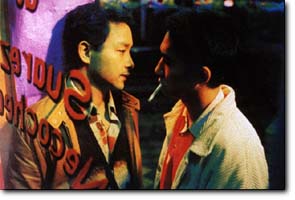
Anyway, I recently rewatched Wong Kar-Wai's film Happy Together. He made Happy Together after Fallen Angels, and this film is an extension of the visual style he was already developing there. The film is about a couple of gay guys from Hong Kong who go to Buenos Aires, and drift apart and together over the course of the film.

This is a film that's at times difficult to watch, because of the relationship between the characters played by Leslie Cheung and Tony Leung. I have trouble Leslie constantly take advantage of him, and yet they always get back together. What the film becomes about is the process of Tony asserting his independence and getting the courage to leave Leslie.


I love the parts with Chang Chen. His friendship with Tony is great fun to watch, and this is the only time in Buenos Aires that the character is genuinely happy, excluding the scene where he cries into the tape recorder, which isn't happy, but is still an incredible scene. Another great scene is later in the film where Chang is at the lighthouse talking about his memories. This film has some of WKW's best voiceover.

Most of Wong Kar-Wai's films take place in a glamourous world, where even though people are emotionally upset, they're always remarkably well dressed and move through beautiful environments. Here, everybody seems poor and the main characters' apartment is small and cramped. It's still a gorgeously shot film, but the environments aren't as cool looking as in Fallen Angels or 2046.

This is a really adventurous film, the ultimate exploration of the visual style first seen in Chungking. A lot of the film is in black and white, and the color all seems to be treated in some way to draw out certain visual elements, most notably in the soccer scenes and the scenes with the falls. My favorite shot is early in the film. We start on Tony and seem to dollying away from him, then the camera pulls back and we see we're in the car with Leslie, driving away. Really simple, but it works so well. I also really like the vivid red liquids throughout the film, in the Chinese restaurant and the slaughter house.

The film visually is amazing, really experimental, but it's tough to find the same amount of beauty in the shots as in Fallen Angels because Buenos Aires just isn't as cool looking as Hong Kong. The whole film really is about the longing for home, for Hong Kong. Tony Leung only has one reason to be in Buenos Aires, and that's Leslie, so once they break up, and Chang Chen leaves as well, he feels this ennui and a strong desire to get back home. The last chunk of the film has an impatience about it. He's working in the slaughterhouse to get enough money to go back , and it really feels like you're making this journey with him. What's remarkable about the film is that when he does make it back at the end, you feel the same sense of being home that he does. I've never been to Hong Kong, and I'm sure it would be an absoultely alien world, but in the film, it feels so comfortable and welcoming, and in the absoultely phenomenal final scene, where Tony rides the train around the city at night, with the title song playing, there's such a feeling of peace, after a lot of trauma.

Why is this? I think it's partially because of my knowledge of WKW's other films. It feels odd for his characters to be in Buenos Aires, so when they get back to the site of his other films, it's comforting, that's a part of where the feeling of home comes from. I think it's also from Tony Leung's acting, he always seemed pained when he's in Buenos Aires, but when he makes it back, he seems happy for the first time in the film. Also, I think a lot of the feeling of the people making the film went in to the film itself. I know WKW originally intended to end the film with Tony dying, but instead chose to give him the happy ending of making it back to Hong Kong. It was a long shoot and I think the crew's longing to return home becomes a part of the film. In that afforementioned last chunk you can really feel this.

This film is part of what I would consider a loose stylistic trilogy with Chungking and Fallen Angels. It's interesting that they all end with the same feeling, the sense that happiness won't last forever, but if we can just find happiness in small moments, that's enough. So, the endings aren't exactly ecstatic, but they're upbeat, and you get the sense things are getting better. This is a stark contrast to his 60s trilogy, which ends with emotional ties broken and characters distraught.


One of the reasons I like it when WKW makes films in the present is because of the choices he can make musically. Happy Together has one of his best soundtracks, notably the Frank Zappa songs. The music really helps make the visuals more stylish.

So, the only thing that really hurts the film is my mind is Leslie Cheung, who plays characters that really bother me. This character is a throwback to Yuddy in Days of Being Wild. I guess what annoys me most about his characters is the fact that people are drawn to him even though he's such a mean guy. This may be bringing out my own issues, like, why are women always attracted to these charismatic, but shallow and nasty guys, instead of people who are actually nice and really care about stuff. But, you're not viewing the film in a vacuum, it's all about the personal emotional connection, and what you bring to a film has a large impact on what you get from the film. So, my distaste for people like Leslie may result in a skewed view of his relationship with Tony. But, I feel like I can take an objective enough point of view to recognize that while Leslie may have some redeeming characteristics, the work is ultimately about Tony liberating himself from this emotionally manipulative person, and expressing himself as an individual.

I think Happy Together is an incredible piece of work. It's at once different from everything that WKW has done, and at the same time, contains everything that makes his films great. The stylistic experimentation is his boldest to date, and it's full of really affecting emotional moments. This is the film that really put him on the world map, critically speaking, and with good reason. Watching this is watching the medium used to its full potential in the service of storytelling and visual artistry.

Monday, May 02, 2005

Ten Works that Changed My Life: Part II: 5-1

5. Buffy the Vampire Slayer - I don't think any work had a hold on me for such a long time as Buffy did. 144 episodes, plus 112 for Angel, just the sheer time I put in watching the show means it would have a big impact on me, but add to that the fact that this was such an amazing story and you've got something that really changed the way I look at storytelling. I think that Buffy did that no other work I've encountered has done is allow you to watch characters grow and change over a really long period. It's amazing to compare Willow from season one to Willow from season six because there's so much change, but at the core, it's still the same person, and I feel like that's what real life is like. So, Buffy had these massive character arcs, which proceeded along over seven years. It's just such a big story, following seven years in these peoples' lives.


Also, Buffy has made me much more open to relationship driven storytelling. This was a work where the plot was always secondary, it was primarily about the characters, and that's changed the way I would approach stories. In what I'd consider the best season, season six, there's not much outside plot, all the conflict comes organically out of the interaction between the characters. Seeing that sort of story opened me up to stuff like Six Feet Under, which is quite similar to Buffy, only without the vampires. This is the work that solidified for me the potential of telvision as a completely unique storytelling medium.

4. Twin Peaks - I wasn't sure whether to put Twin Peaks or Buffy higher up on this list, but I chose Twin Peaks, because it was Twin Peaks that led me to watch Buffy, it was the first TV series that really addicted me, and led me not only on to many other TV shows, it also led to me to all of David Lynch's other films. I think what Twin Peaks does that is so unique is create an atmosphere that makes the series like a place you can go to, rather than a bunch of people that you watch. So, the show really is about the town, not about the specific characters. Watching this show was such a strange experience, it's still the most bizarre TV series ever made, I remember watching the red room sequence for the first time, it was perhaps the most stupifying thing I'd ever seen, and still is, with the possible exception of the series finale, which left sitting there stunned for literally five minutes without moving, wishing that I could have just a little more.


It was actually Mulholland Drive that led me to watch the show, but TP really solidified my interest in David Lynch's work, and led me to check out all his other films, he's perhaps the most influential director for me in terms of the films I'd want to make. The surrealism, most notably in TP, was unlike anything I'd ever seen before, and I'd love to make stuff that otherworldly. Watching Lynch makes every other dream sequence or fantasy scene just seem pathetic, with the exception of Buffy's Restless. In Fire Walk With Me, Lynch makes a film that is incredibly surreal, constantly making you question what's going on, and yet keeps an emotional throughline, so that even if you don't know what is going on, you can feel what the characters are feeling, and I'd love to make a film that does the same thing. What this series also did was raise the bar on what I thought television was capable of. I'd never seen something with this level of serialization, or with lingering consequences like this. It was so refreshing, and sent me off to look for other series that would replicate the experiences. If I hadn't seen Twin Peaks, I probably would not have seen Buffy. Anyway, I guess most importantly, the show really made me think of what qualifies as strange in new ways, and the wordless storytelling in 2.7 or the last episode made a huge impact.

3. Watchmen - Before I read Watchmen, I was a casual comics fan, reading the occasional X-Men book. After reading Watchmen I was hooked for life. The book completely changed what I thought was possible with the medium of comics, it was the first comic book I read that I would consider art, and the way it used the medium was awe inspiring. This was also one of the first works that I really analyzed deeply on my own. Rereading the book, I discovered so many layers, and was just astounded by the world that Alan Moore had created. Part of what was so striking was the sense of discovery, I just picked up this book after hearing about it online and was stunned to find such an amazing work of art. I read a lot on the book after going through it, and it sent me out in search of a comic that would match it. In this search, I read a ton of great stuff, and eventually did find a comic to top Watchmen.


Part of the appeal for Watchmen, much like I talked about with Twin Peaks or Magnolia, is the way that it blends this perfect construction with incredibly emotional stuff. The Jon on Mars chapter is a really intricate view of 4D time, but it's also a really sad story of a man drifiting away from humanity. Very few things have hit me as hard as the end of this book, particularly the series of panels at the end of Chapter 11 and the opening of 12. So, this book made me want to make comics, and really changed what I thought was possible with the medium. I've thought about this book more than almost anything else I've read.

2. The Invisibles - After reading Watchmen, I went on a long quest to find a comic that would match it. I read some great books, but nothing that was on the level of Watchmen. Then in May 2002, I picked up the first volume of The Invisibles. This was a book I'd heard about because it was supposedly the basis for The Matrix, and I'd heard all kinds of things about it, like you didn't have to read it in order, etc. So, I pick up the first book, and I remember thinking, this was better than The Matrix, then I picked up the second book. I remember reading 'Best Man Fall,' and being shocked because I had had the exact same idea for a story, but Morrison did it so well mine was rendered irrelevant. Then, I got Entropy in the UK, and on the first page of the book, it just clicked. The whole book came together in one page, it was Gideon Stargrave driving a boat, blowing stuff up, and the sun looking like Barbelith, with a Pink Floyd quote below it. It was all there, the big ideas, the pop, the cool, and from then on, the series became an obsession for me.

I read through Kissing Mister Quimper, and then had to wait three months for the last trade to be released. So, I decided to reread it, and it was there that the series basically took over my thought process. I had an epiphany on almost every page, and by the time I reached Kissing Mister Quimper again, I was just in awe of what Morrison had done, and felt like I got it, I understood the book. Then, I read the last volume, all 12 issues in one day, the last six in one sitting, and I realized I didn't know anything, but there was something amazing there. Barely coherent, reading that last issue, Robin emerging from the timestream and hugging King Mob overwhelmed me. After that, I went onto the Barbelith message boards, and read everything I could about the book.

At the same time, I started loaning out comics to my friends, and I gave some of them The Invisibles, and as they read them, we began to talk about the ideas in the series, so that for months after finishing the series, I was still processing it and discovering new layers. While reading the books was a massive thing, it was really these discussions afterward that made it so valuable. The Invisibles was a gateway that opened me up to all kinds of new ideas about time, the universe, everything. An entire worldview is contained in the series.


But, the thing that made the series so important to me is that it's not just this dry instructional text, it's so incredibly pop. The Invisibles really created this concept of pop! for me, and it's guided me as I've gone along, uniting many of the works that I love the most. I think a lot of the reason I love Wong Kar-Wai so much is because he taps in to this same sort of pop as Morrison does. Morrison's work is so cool, every single moment is fun to read. So, it effects you both on the surface and very deeply. I think The Invisibles is the greatest work of fiction ever, and it exerts a huge influence on everything I create.

1. Star Wars Trilogy - Even though The Invisibles is so great, there is still one work that has exerted an even greater pull on my life, and that is the Star Wars trilogy. I can't even remember a time when I hadn't seen Star Wars, it's so ingrained in to me, they've always been there. It's like, you know you shouldn't eat grass, but can you remember a specific moment where you found out it's a bad idea, I just know these films. Star Wars has always been with me, I saw it when I was very young, and it was there that my love of film and science fiction began. Even at that very young age, I never wanted to be Luke Skywalker or Han Solo, rather I wanted to tell stories with people like Luke and Han. Star Wars was the first film I loved, and Empire is still my favorite film of all time. Sometimes I'll think there's got to be a better film than Empire, but then I watch it, and it does everything I love about cinema. The visuals are amazing, the score phenomenal, the characters really well developed, and you can't help but get caught up in the story. I've seen the film at least 50 times, and still, every time I see the lightsaber duel, the pure emotion of it is dazzling. I may not want to make something exactly like Star Wars, but I hope to one day make films that build a world like Star Wars does, to take you away from everyday life and give you a glimpse of something fantastic. If I hadn't seen Star Wars when I was young, it might not have hit me as hard, and I might not have gotten the desire to make films. So, I guess that's why it's the most influential work on me, it's always been there and it always will be. There's something so perfect about the fact that the Star Wars saga ends on the same day that I turn 20, because more than anything else that I've encountered, Star Wars has really shaped me.


It's been some good times watching movies and TV and reading comics. Looking at this list, it seems that the things that affect me most are those that blend some supernatural or sci-fi elements with well developed characters, and high emotional content. These are the works that make the world seem extraordinary in some way, and show that there is magic beneath that which seems ordinary.

Saturday, April 30, 2005

Ten Works that Changed My Life: Part I: 10-6

Here, I'm going to write about the ten works of art that made the biggest impact on me, the works that changed the way I look at the world, and the way that I created fiction. If I hadn't encountered these works, I would be a very different person.

10. The Beatles 'Magical Mystery Tour' - When I was young, about eight or so, I was watching a documentary on The Beatles with my parents and I heard this song called 'I am the Walrus,' which was just the most bizarre song I'd ever heard. The lyrics were nonsensical, but reallly vivid, and the music was really off beat. I'd say this was the first song I really loved, and I have a really vivid memory of hearing it for the first time and just falling in love with that sound, so I listened to the whole 'Magical Mystery Tour' album, and that was the first album I really loved. It's still one of my favorite albums, and 'I am the Walrus' still stands out to me as one of the best songs ever made. This is the album that made me open to older stuff and made me explore a lot of different types of music.


9. Batman Returns - I first saw this film when in 1992, at the Mamaroneck theater. I remember getting a little poster for the film when I went to see it, and I also remember loving the movie. A few years later, I bought the movie on VHS and watched it a whole bunch of times. When I was younger, this film was #4 on my top films list, behind only the Star Wars trilogy. At the same time, I loved both the original Batman and Beetlejuice, and when the film Ed Wood came out, I realized they were all directed by the same director, Tim Burton. A few years later, when I was in eighth grade, I decided to rent Edward Scissorhands, because it too was directed by Tim Burton. I watched this and loved it, and it gave me a greater understanding of the thematic development of Batman Returns, something I applied when I watched it again. I also started to really investigate Danny Elfman's scores, and I bought the soundtrack to Batman Returns, my favorite score of his. So, what this film did was set off my first investigation of a filmmaker's whole body of work. Tim Burton was my favorite director for a long time, I sought out all his films and read a bunch of books on him. Even my Nightmare Before Christmas shirt, which I always wear, was a result of this.


So, I guess what makes the film so special to me was that it was really the lynchpin for my love of Burton's work. It was the thing that I loved enough to seek out his other work. I always loved the film in a way that went beyond just liking the action, there was something deeper there. Subsequent to viewing all Burton's work, I've gone through a number of other directors: Gilliam, Lynch, Wong, Linklater, Tarantino, etc. but I don't think I ever was so immersed in one director's work as I was in Burton's. A few weeks ago, I revisited Batman Returns and was struck by how amazing it still was. It's Burton's best film, visually magnificent, thematically rich, and still #8 on my all time best films list. I wrote a 23 page paper on the film, which I finished last week, and I felt like that wasn't even enough room to say what I wanted to about it. The film was crucial to making me view cinema as not just a bunch of random movies, but instead as the product of a director with a unique vision.

8. Chungking Express - Last year about this time, I saw the film Chungking Express in class, and I loved it. I bought the DVD soon after, and enjoyed it even more the second time. I love this film, but perhaps more important, it really changed the way I view the medium. I used to view cinema primarily from a storytelling context, and, while I appreciated technique, I saw that primairly as an additional cool element, but what this film, and Wong Kar-Wai's subsequent work did, was to make me see how every single frame of a movie could be an amazing experience in and of itself. His perfect synching of music and visual produces moments that don't need to be understood in the context of a story, but instead stand alone as just dazzling images. When I was shooting Ricky Frost over winter break, I just imitated a bunch of Wong Kar-Wai shots, particularly with the so called 'Chungking effect,' aka using a low shutter speed. This sent me off to Wong Kar-Wai's other movies, and watching them really changed the way I approach and create cinema. I would argue since seeing this film I have been in the Wong Kar-Wai stage, where his was the dominant type of story that dominated my views, and I viewed things in the context of his work. More than most of the works on here, he's made a huge impact on how I want to create cinema.


7. Blade Runner - Blade Runner is a film that reignited my love for science fiction, in a way that no film since has done, it's a film that really showed me how cinema has the potential to create entirely new worlds. And, watching this film sent me down a number of intersting paths. After seeing the film, I began to seek out the work of author Philip K. Dick, and reading his book VALIS exposed me to a ton of new ideas, paving the way for The Invisibles. In addition, it sent me to the internet, where I became a part of the alt.fan.blade-runner newsgroup, where I have been talking about the film for five years. I've never analyzed anything as long as I've talked about this film, and this paved the way for a lot more online participation in the film scene. Also, from reccomendations on the newsgroup, I found a number of my other favorite films, including Brazil and Leon: The Professional. Also, the work's primary theme, what is human, as well as its noir influences, has influenced a lot of what I've done. I guess what this film does is show me how well cinema can transport you to another world.


6. Magnolia - I think the moment Magnolia really clicked for me was when we see Claudia put an Aimee Mann song on, and quietly sing with it, then we cut to another character, and he's singing it too, and we cut to every character singing along to the song, a moment that could seem so goofy, but in the context of the work, is the most unbelievably heartbreaking moment, and that's when I knew that this wasn't just any movie, it was something so special. And, as the film was ending, I was wishing that it would go on just a bit longer, because I didn't want to leave its world, quite a feat considering it's a three hour film. As I said about Blade Runner, this is a work that creates a world, but this one is much more in our everyday world, what it does is take a bunch of individual dramas, and by weaving them together, makes it into a film that contains virtually the entirety of human emotion. I think that's what makes the work so special to me, the fact that by creating all these parallels, it makes simple stories into something so much larger.

I feel like more than any other work, I wish I could make something like Magnolia, something that's at once incredibly intimate and also epic. It instantly made me love multi-character films, with narrative weaves between the lives of many people. It made me want to make films like this, where we see many perspectives, and are able to compare them. The film I want to do over the summer is three different narrative strands that cross over, clearly influenced by Magnolia. In addition to this, the filmmaking technique completely changed my belief in what cinema could do. PT Anderson so perfectly used really showy technique to support characters' emotional development, and build an atmosphere around the film, so that even as we go through the lives of many characters, we feel like it's one unified story. This is largely due to the use of music, both Jon Brion's score and the Aimee Mann songs, which unite the characters. No matter how many times I see the film, I can't help but smile as Claudia does at the end of the film, because I feel like I've been through everything she's been through over the course of this day. One day I hope to make a film that is on the scale of Magnolia, and will have the emotional impact on other people that this film had one me.


Alright, that's it for the first five, tomorrow see what could possibly eclipse these absolutely brilliant works, and influenced me even more.

Thursday, April 28, 2005

Days of Being Wild

Yesterday, I watched Wong Kar-Wai's Days of Being Wild for the second time. Days is his second film, and the first one I would really consider a Wong Kar-Wai film. His first, As Tears Go By, was a really typical late 80s Hong Kong gangster movie, that, despite some interesting shots, didn't quite work. When the best part of your movie is a montage set to a Cantopop version of 'Take My Breath Away,' you know things aren't going that well.

However, with Days, he makes a huge leap, and essentially creates the Wong Kar-Wai style that we know and love. Big cast, drifting narrative, episodic structure, voiceovers, great use of music, it's all here. The first time I saw the film I liked it, but I didn't love it. This time I loved it. In almost all his films, I feel like it takes until the second viewing to really appreciate things, because on the first viewing, you're so busy trying to figure out where you're going, you can't really appereciate the journey. If you have to worry about keeping track of character and plot arcs, it's difficult to just get lost in the amazing images and atmosphere of the film. The thing I find ironic about WKW's movies is that on the first viewing, you usually don't get the plot, you just get this feeling of what it is. It's not until the second or third viewing that you can really understand how the narrative works. This is so far removed from classical Hollywood tradition, and I think it's a big part of why his films have so much repeat value. It's almost like listening to an album, there is an overall progression, but it's not designed just for an end, each song or moment can sort of stand alone. So, like an album, you can watch the film a bunch of times and just get lost in the atmosphere of things

Days of Being Wild is the first part of WKW's 60s trilogy, which includes this, In the Mood for Love and 2046. The first time I watched this film I had seen In the Mood for Love, but I wasn't really aware of the connection between the two, and without 2046, I wasn't aware of the overall narrative arc of the piece. Seeing the three films as one story is so rewarding, and makes this already top notch film even better.

Days is almost like an overture to the next two films, introducing themes and character types that will be further developed in the two films to follow. Of all of WKW's favorite actors, Leslie Cheung is my least favorite, I'm not sure if it's him personally or just the roles he plays, but I don't like any of his characters. He always seems to play a quasi-abusive, very self centered character, and this film is no exception, but the film is an examination, and eventually, condemnation of this lifestyle, so it makes for an interesting sort of dance, as the film sees how far it can push him without making you outright dislike the guy. He's a tragic figure, and when he does die at the end, it's a sad moment, but when you see the way he treats Su-Li Zhen or Lulu/Mimi, it's tough to feel bad for what happened to him. He brought it on himself.

Looking at the overall narrative of the trilogy, York would seem to be who Tony Leung's Chow was in his younger days, and it's the personality he tries to reclaim in 2046. At the end of this film, we see Tony Leung combing his hair and getting ready for a night on the town, and he is clearly being set up as another York. The thing that changes for Chow is that he gets married, and settles down, and after that, he falls in love. York seems to be too emotionally distant to really feel anything for anyone, people get close to him, but he won't let them in. For Chow, the person he lets in is Maggie Cheung's Su-Li Zhen, who was previously in a relationship with York, which we see chronicled in this movie.

Perhaps Su-Li Zhen sees something of York in Chow, though at the end of this film, she claims to be over him. However, the last time we see her she is alone, shutting the doors on her ticket booth. So, despite having been successful in overcoming her attraction to York, and moving on from him, something that Mimi/Lulu is unable to do, she is still left alone, and it might be this loneliness that compels her to marry someone she doesn't love, and the same loneliness that leaves her open to the true love that Chow gives her.

One of the most heartbreaking scenes in this film is when we see the phone ringing, but Andy Lau isn't there to pick it up. The whole episode with Maggie Cheung and Andy Lau wandering around the city at night is probably my favorite sequence in this film. In many ways it ties into Fallen Angels, which was all about lonely people wandering through the city at night. It's an absolutely gorgeous sequence, the shadows of Andy Lau's policeman hat obscuring his face, and the same shadows leaping off of buildings onto Maggie. When I first saw the film I didn't think much of it visually, but in those scenes, you can really see the roots of WKW and Christopher Doyle's best work, and shots like the hitman and the agent sitting in the restaurant during Fallen Angels.

Anyway, this episode perfectly captures that feeling at the end of Fallen Angels, best said in the film's final words, "We didn't have far to go, and I knew I would be getting off soon, but at that moment, I felt such warmth." In Days, both Andy and Maggie leave to go their seperate ways, but they always have that night, and the connection they shared that deeply affects each of them. Andy, after not hearing from her, goes off to be a sailor, quite similar to Chow who leaves Hong Kong at the end of In the Mood For Love. At the end of the film, we see Su-Li Zhen calling the payphone, but no one answers. This is an exact parallel to the end of In the Mood For Love, in which she calls Chow, wanting to go away with him, but he has already left. It's heartbreaking both times, and to think of how much her life would have changed if either one of them would have answered those calls. Instead, Maggie remains trapped, and Chow and Andy wander aimlessly.

When we meet up with Andy again, he's clearly still thinking about Maggie, and wishing that she'd have called him. He goes along with York on his criminal exploits, and eventually is with York as he dies. I originally thought of Chow as being attractive to Su-Li Zhen because of his similarity to York, but I think it also has a lot to do with his similarity to Andy. Unhappy with York and her husband, Su-Li Zhen needs someone to confide in, in 1960 it is Andy, in 1966, it is Chow. Both offer her sympathy and genuine interest, which neither her husband or York did. Sadly for each of them, she is too late to realize how they feel about her, and by she does realize, there's no one on the other end of the phone.

2046 is a more obvious reprisal of Days of Being Wild, as Tony Leung's Chow moves into the York position, of having copious amounts of women, but not being able to connect with any of them, despite, at least in the case of Zhang Ziyi, their real love for him. Watching 2046 the first time, I was really surprised and moved by the sequence in which Chow runs into Lulu/Mimi from Days, and we get a reprise of the music, over photos of Leslie and Mimi. Just like Chow, she has been burned by someone she loved, and is now alone. The cycle continues when she does the same thing to Chang Chen, and he attacks her, almost killing her.

Just like York, we see Chow having a bunch of relationships which are meaningless to him, but mean a lot to the women involved. That said, I think Tony Leung does a great job of making us sympathetic towards his character, something that Leslie Cheung couldn't do. This is also due to t Also, I think York is just off in his own world, and never could fall in love, whereas Chow is lost because he can never find a love that matches what he had with Su-Li Zhen. But, this leads to similar results. The relationship between Chow and Zhang Ziyi is essentially the same as between York and Lulu, and things go bad for all involved.

The two films have similar endings, York is riding the train alone, and Chow is riding alone in the back of a car. York is dead, but I didn't feel too much for him, however what happens to Chow really got to me, as he longs for this past he can never get back. Because of his love for Maggie, he cannot enjoy living the bachelor life he used to live, and he ends up just trying to get back there, but forever unable to.

So, Days of Being Wild does a great job of setting up the stuff to come in the next two films, and is really interesting on its own also. I used to say this wasn't really essential to the story of In the Mood For Love/2046, but looking at it now, I'd say it probably should be watched because even if it isn't connected to the plot of the two latter films, the characters and atmosphere all start here.

Monday, April 25, 2005

Kubrick's Lolita and The Heroic Trio

As I mentioned on here before, my birthday is shaping up to be pretty ridiculous. I've had the release of Episode III at midnight for a while, then over break I found out the Doves were doing a show in New York on May 19, so between those two things, it seemed there was no room for things to get even better. But wait, I got an e-mail telling me that Aimee Mann was doing an in store performance and signing of her new album on May 19, at 6:30, so I can fit it in before the Doves concert, and I'll be in the city anyway, so it'll be free. So, not only am I getting a new Star Wars movie, I'm also seeing two of my favorite musicians back to back, all on my birthday. It's going to be such a crazy day, really the way to start my 20s.

Besides that, I saw a couple of interesting films recently. Over the weekend, I watched Stanley Kubrick's 1962 film, Lolita. Now, Kubrick is indisputably one of the masters of cinema, and 2001 is one of my top ten films of all time, and now that I've seen Lolita, I've seen all except three of his films. However, while Kubrick has made some absolutely genius films, I would draw a clear line between his pre 1964 output and his post 1964 output. The films he makes post 1964, starting with Dr. Strangelove are all visually dazzling, really challenging films. 2001, A Clockwork Orange, Barry Lyndon, The Shining, Eyes Wide Shut, all these are great films. However, his earlier films seem to be very much the products of the Hollywood studio era, whose strict regulations compromise his vision.

Lolita has the potential to be a great film, but the film that Kubrick makes, while entertaining, is ultimately a failure, largely because restrictions on content prevented him from telling the story. Obviously, even today, Lolita walks in territory that makes a lot of people uncomfortable, and I can understand why people would be very wary about how to depict things in this film, but what ultimately happens is Kubrick is able to show so little that the film loses its emotional impact.


The film is about a middle aged guy who falls in love with the teenage daughter of his landlady, and the story goes on to explore the effect that relationship has on him. Considering the primary relationship in the film is between Humbert and Lolita, this is the whole reason the film exists, it's very unfortunate that the content restrictions means we don't ever really see what their relationship entails. The first chunk of the film is pretty solid, as we see Humbert caught in a love triangle with Lolita and her mother.

However, once he and Lolita go out on the road, things get really muddled. Picking up on some clues, you come to realize that he and Lolita have a sexual relationship, but you never get a moment in the film where he makes the choice to actually be with her in that way. How he could do this would seem to be the most interesting question coming out of this material, but the film just skips over that and we have to infer what's going on between them. I have no problem with not telling everything, but playing detective takes you out of the story, and I was too busy trying to figure out exactly what was going on to be emotionally affected by anything. You can't understand Humbert after a certain point in the story, and while the film never is boring, it's not emotionally engaging either.

Peter Sellers' performance is emblematic of this. He's great, and the scene where he is introduced dancing at the school is so 60s, great stuff. But then, as the film goes on, there are lengthy segments that seem to be improvised that are more about Sellers' performance than adding to the story. He is funny, but doesn't add anything to the main story.

Ultimately, this film is a victim of its time. Maybe in the 70s or 80s Kubrick could have made a great film of Lolita, one that really examined the relationship between Lolita and Humbert, but this one can't show anything, so we don't understand the characters, and as a result, it's not a successful film. And it's not just the content restrictions that feel outdated, this film feels very studio era, like it could have been made in the 40s or 50s. If you want to learn about how much movies changed with the end of the studio era compare this film to A Clockwork Orange, made a mere nine years later. There's a big difference.

Then today in action film class, I watched a very different film than Lolita called The Heroic Trio. It's a 90s Hong Kong action film that I wouldn't call a great film, but was incredibly entertaining. It's a really bizarre and over the top sort of superhero film about an evil guy who's kidnapping babies, and the trio of ladies who have to team up to destroy him.

The most notable thing about this film for me was Maggie Cheung. She's one of my favorite actresses, and arguably the best actress in the world today. Her work in 'In the Mood For Love' is astonishing in how little it takes for her to convey huge emotions, and in ten minutes of 'Ashes of Time,' she steals the movie. Other than Wong Kar-Wai, she was also great in 'Irma Vep,' playing a fictionalized version of herself. In that film, we see clips from the film that inspired the director to cast Maggie, and as I soon found out, those clips were from The Heroic Trio.


Her role as Chat the Thief Catcher in The Heroic Trio is very different from everything else I've seen Maggie Cheung in. Other than Irma Vep, I'd only seen her in more serious films, and my image of her is from the suffocating world of In the Mood for Love. So, I was surprised to see how funny she was in this film. She provides the comic relief, and is at such high energy throughout the film you almost feel bad that she has to hold back so much in her recent films. She just looks like she's enjoying making the movie so much, and that sense of fun is contagious.


The film is really bizarre. The main villain is really bizarre looking, and his underworld dungeon is a nasty environment. The changes in tone are quite drastic. One minute Maggie Cheung's motorcycle is spinning across a room, the next imprisoned children are eating the flesh off a dead man. But, throughout it, there's this sense of pop irreverence, that they're all having fun, making this wacky film. There's a lot of interesting angles and off kilter stuff throughout the film. My favorite shot is Chat riding her motorcycle in front of the two other trio members on horses.

It's not a film you watch expecting it to make sense, it's a film you watch for some bizarre, over the top fun.

Index

I figured since I've got so many posts on here, I might as well put together an index, so that people can figure out exactly what I have talked about over time. And that page is now available here at pmeaney.web.wesleyan.edu/blogindex.html, so bookmark that and you can read all these great articles any time.

The index is not complete yet, I've only got through January, but in the next couple of days, I'll finish it up, and also add a link to the side of the page, so you can get to it easier. And also, on the index page, I'm going to make a list of the posts I think are the best reading. So, look forward to that, and in the meantime catch up on some classics you might have missed.